

Introduction
Here is the strange truth about cactus plants. They are some of the hardest houseplants to kill, yet new owners lose them all the time. The plant shrugs off a forgotten week, a skipped watering, a sunny windowsill nobody waters. What it cannot survive is too much love. Overwatering is what kills most of them, and that one mistake is the whole reason this guide exists.
A cactus is built for a different world than your fern. The fern wants steady, even moisture. A cactus wants the opposite. Think of it like watering a desert that floods hard but rarely, soaks deep, then dries out for weeks before the next storm. Get that rhythm right and the plant almost takes care of itself.
There are far more of them than the shelf at the garden center suggests. The cactus family holds roughly 1,750 to 2,000 species. They spread across about 127 to 139 genera, and nearly all of them come from the Americas. That range covers tiny golf-ball plants and 40-foot giants. Once you know the basic groups, picking the right one for your room gets a lot simpler.
Most cactus pages stop at the care basics and call it done. This guide goes further. You will get clear cactus care steps and a tour of the popular types of cactus worth owning. You will also learn the one detail that makes a plant a cactus, the little spine cushion called the areole. I will also flag the common look-alikes that get sold as cacti but are not, so you stop buying the wrong plant.
If you want a green thing that survives a busy schedule, an indoor cactus is hard to beat. It is genuinely low maintenance, and it asks for less than almost any other plant you can buy. Let's start with what a cactus really is, then move into the simple care routine that keeps it alive for years.
Common Types of Cactus Plants
The cactus family is huge. It holds somewhere between 1,750 and 2,000 species across about 127 to 139 genera. That sounds like a lot to sort through. But a small handful of friendly types of cactus cover most of what you find on store shelves. A few giants live in this family too. The saguaro is the biggest cactus in the United States. It stands about 40 feet tall on average and can reach up to 50 feet in the wild.
I lined up a golden barrel cactus and a small Mammillaria pincushion side by side. They sat on my own south-facing kitchen windowsill in dry Tucson. One spring the pincushion popped a tidy crown of pink flowers up top. The barrel just kept fattening in its pot. It never bloomed that year, and it still looked great. These two indoor cactus picks reward you on very different clocks. So pick the one that matches how patient you feel about your plants.
Here are the most common types of cactus you will meet as a new grower, plus two look-alikes worth knowing. Each one below tells you what to expect from its shape, light needs, and watering habits.
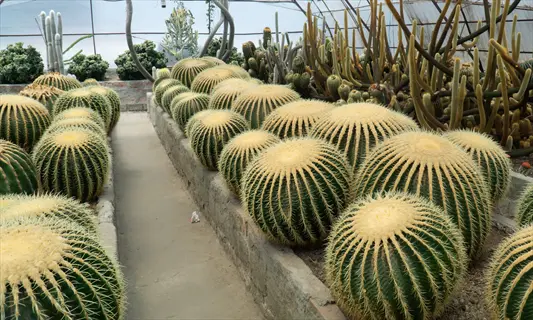
Golden Barrel Cactus
- Look: A rounded, ribbed globe covered in golden-yellow spines that glows when backlit by a bright window.
- Size: Slow growing indoors, staying small for years, though it can eventually reach a foot or more across.
- Light: Wants bright direct sun for several hours daily to keep its tight shape and rich spine color.
- Water: Soak only when the gritty soil is fully dry, then let it dry out completely again before watering.
- Origin: Native to Mexico and a classic desert cactus, prized as an easy, sculptural beginner houseplant.
- Note: A true cactus with areoles, making it a reliable, low-maintenance pick for a sunny windowsill.
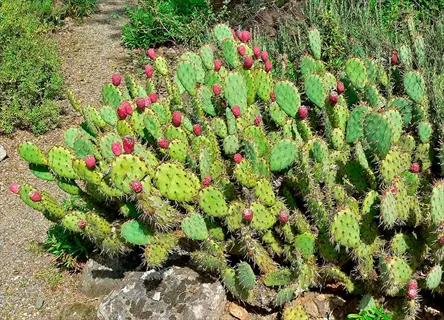
Prickly Pear (Opuntia)
- Look: Flat, paddle-shaped pads studded with spines and tiny barbed glochids that detach easily into skin.
- Size: Spreads into a branching, pad-stacking plant and can grow large in warm climates or big pots.
- Light: Thrives in full direct sun and tolerates heat, making it a tough, forgiving desert cactus.
- Edible: Both the pads, called nopales, and the fruit are eaten and are notably rich in vitamin C.
- Water: Drought tolerant and easy to overwater, so let the soil dry fully between deep soakings.
- Handle: Use thick gloves and avoid the glochids, which are far harder to remove than larger spines.
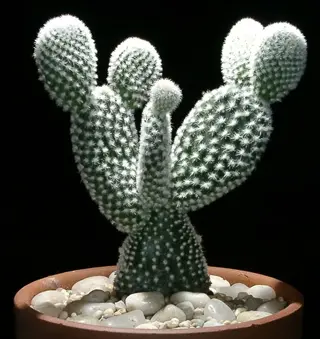
Bunny Ears Cactus
- Look: Pairs of flat, fuzzy-looking pads that grow in branching ear shapes, giving it its playful name.
- Size: Stays compact and shrubby indoors, making it a favorite small cactus for sunny shelves and sills.
- Light: Prefers bright direct light to stay full and avoid stretching toward the nearest window.
- Glochids: Those soft-looking dots are dense clusters of tiny barbed glochids, so never pet this plant.
- Water: Treat like other desert cacti, watering deeply only once the soil has dried out completely.
- Origin: A true Opuntia cactus from Mexico, popular as an inexpensive, easygoing starter plant.
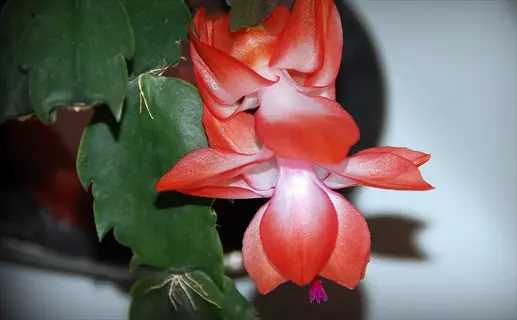
Holiday Cactus (Jungle Cactus)
- Look: Flattened, segmented green stems that arch and trail, ending in bright tubular blooms near winter.
- Type: A jungle or forest cactus, not a desert one, so its needs differ from spiny windowsill cacti.
- Light: Wants bright filtered light rather than harsh direct sun, which can scorch its soft segments.
- Water: Needs more frequent watering than desert cacti and dislikes drying out as severely as they do.
- Bloom: Sets flowers in response to cool nights and shorter days, rewarding patient seasonal care.
- Origin: Native to humid Brazilian forests, where it grows on trees rather than in dry desert soil.
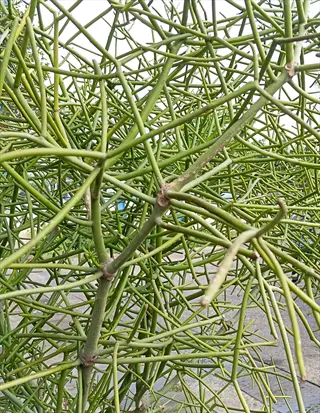
Pencil and Coral Cactus (Look-Alikes)
- Warning: Despite the name, pencil cactus and coral cactus are Euphorbia, not members of the true cactus family.
- Tell: They lack areoles, the cushion-like spine bases that define real cacti, which is the key to telling them apart.
- Sap: They ooze a toxic milky sap when cut that can irritate skin and eyes, so handle them with caution.
- Why listed: They are commonly sold as cacti, so knowing the difference protects both your safety and your expectations.
- Care: They still want bright light and dry-leaning soil, but they are not interchangeable with true desert cacti.
- Takeaway: When a plant is sold as a cactus, check for areoles before assuming standard cactus care applies.
One split matters more than any name on the tag. Spiny desert cacti like the golden barrel cactus and prickly pear want bright direct sun and bone-dry soil between drinks. Jungle types such as the holiday cactus and fishbone cactus grew on trees in humid forests, so they need filtered light and more water. Most variety lists blur these two groups together, and that mix-up is how people drown a holiday cactus or scorch a barrel.
The pencil cactus and coral cactus deserve one more flag. They are Euphorbia, not true cacti, and they leak a toxic milky sap when cut that stings skin and eyes. The quick test is to look for areoles, the small cushiony bumps where real cactus spines grow. No areoles means it is not a true cactus, so do not assume standard cactus care or handling applies.
What Makes a Cactus a Cactus
Ask 10 plant lovers what is a cactus and most will point at the spines. But spines alone tell you almost nothing, since plenty of plants grow sharp points without being cacti at all. The real answer hides in a tiny feature you can spot with your own eyes once you know where to look.
Every true cactus carries small cushion-like spots called areoles. An areole is the felt-like bump where spines, flowers, and new branches all grow from. No other plant family makes them. That one trait sets cacti apart from every other succulent. It also settles the whole cactus vs succulent debate in one move.
Here is the part that trips up beginners. All cacti are succulents, but not all succulents are cacti. A plant earns the succulent label by storing water in its stems, leaves, or roots. Many unrelated families do that too. The areole is the deciding test. If a spiny plant has no areoles, it is not a cactus, full stop.
The cactus family, Cactaceae, holds somewhere between 1,750 and 2,000 species. Nearly all of them come from the Americas. They split into two broad camps. Desert cacti like the barrel and saguaro soak up bright sun and bone-dry soil. Jungle cacti such as the holiday cactus grow on trees in humid forests. They want more water and softer light.
- Always have areoles, the cushion-like spots that produce spines, flowers, and new branches.
- Belong to one plant family, Cactaceae, almost entirely native to the Americas.
- Are themselves a type of succulent, storing water in fleshy stems.
- Most desert kinds carry spines that grow only from those areoles, never randomly.
- Never have true areoles, even when they look spiny or sculptural.
- Come from many unrelated plant families found around the world.
- Store water in leaves, stems, or roots but are not cacti.
- Include look-alikes such as Euphorbia, which has toxic sap and no areoles.
Look for areoles, the small felt-like bumps that spines and flowers grow from. If a spiny plant has no areoles, it is not a true cactus, no matter what the label says.
Think of the areole as a cactus signature. It is the one stamp every true cactus carries, and no look-alike can fake it. The pencil cactus at the garden center is a good example. It is a Euphorbia with milky toxic sap and zero areoles.
Once you train your eye to find that little cushion, you stop guessing. You can settle the cactus vs succulent question at a glance, even with a strange plant you have never seen before. That one habit makes you a sharper grower before you ever pick up a watering can.
Indoor Cactus Care Basics
Good indoor cactus care comes down to one habit more than any other. Clemson Extension says how you water is the single most important factor in growing cacti well. Soak the soil only when it has gone fully dry, then let it drain. A cactus that sits in water will get root rot, and a rotting plant rarely comes back.
Light and warmth round out the basics. Give your plant several hours of bright, direct sun each day at a south or west window. The right cactus temperature runs from 65 to 85 degrees Fahrenheit (18 to 29 degrees Celsius) while the plant is growing. In winter it wants cooler air, around 45 to 55 degrees Fahrenheit (7 to 13 degrees Celsius).
That winter chill is part of a real rest period called cactus dormancy, and many beginners miss it. Cacti slow down from late fall through winter and want cool temperatures with little to no water then. Nebraska Extension notes that this same cool, dry rest is what triggers many cacti to bloom. So a dry winter is not neglect. It is how you earn flowers.
The base of my first cactus turned soft and brown. This was a few weeks after a generous winter drink on a south-facing Tucson windowsill. I thought the cold had hurt it. The cold had not. I had soaked a plant that wanted to be bone dry. Every cactus I owned after that one lived because I left them thirsty all winter.
Feeding follows the same seasonal rhythm. Use a low-nitrogen fertilizer such as 5-10-5 once a month from June through September, which is when your plant does its real growing. Clemson and Nebraska Extension both say to skip feeding through winter, since a dormant cactus cannot use it. Match your watering, your warmth, and your feeding to the season and the plant mostly cares for itself.
The surest way to kill cacti is to overwater them.
Watering, Light, and Soil
Most people learn how to water a cactus the wrong way, with small sips every few days. That habit drowns the roots over time. The goal is the opposite of a houseplant routine, and once you see why, the whole thing clicks.
Use the soak and dry method. Water like a desert storm, a rare but thorough flood that runs out the drainage hole, then leave the plant alone through a long dry spell. The soil should go bone dry before you water again, and your finger or a wooden skewer pushed deep is the only test you need. A cactus must never stand in water, because soggy soil is what kills it.
Soil choice is the other half of the job. Cactus roots rot in soil that stays wet, so a regular potting mix alone traps moisture and fails. A well-draining soil with extra grit or perlite mixed in drains fast and protects the roots. Aim for a gritty blend that water races through in seconds rather than one that holds water like a sponge.
Light is just as important. Cactus light requirements split along two lines. Desert cacti want bright direct light for several hours a day. A south-facing window gives the strongest indoor light you can offer them. Jungle cacti like the holiday cactus are different, and they want bright filtered light instead of harsh midday sun.
Watch the plant for clues. A cactus that stretches tall, thin, and pale is telling you it wants more light, and that stretching has a name, etiolation. The table below maps watering and light to the four seasons so you have a quick reference to come back to.
Winter is the part people miss. From about mid-November through March most cacti go dormant and want little to no water, just cool, bright air. That dry rest is not neglect. It is the trigger that pushes many cacti to bloom when spring returns.
Pests, Problems, and Propagation
Most cactus pests fall into a short list, and the worst trouble is not a bug at all. Too much water causes more dead plants than every insect combined. Get watering right and you dodge the biggest problem before it starts.
When cactus pests do show up, they tend to be aphids, spider mites, mealybugs, or scale. Extension guides point to these few culprits again and again. The fix is usually quick once you spot them early, so check your plants every couple of weeks.
A soft, mushy base that turns brown is the warning sign you never want to ignore. That is root rot from overwatering, and it spreads fast through the stem. The chart below walks you through the common problems and the exact steps to fix each one.
Soft, Mushy, Browning Base
- Cause: Almost always overwatering, which leads to root and stem rot, the fastest way to lose a cactus.
- Fix: Stop watering, remove the plant, cut away any rotted tissue, and let it dry before repotting in dry, gritty soil.
- Prevent: Always let the soil dry completely between waterings and never let the pot sit in standing water.
Mealybugs, Scale, and Spider Mites
- Spot them: Look for white cottony tufts (mealybugs), small bumps (scale), or fine webbing and stippling (spider mites).
- Treat: Dab pests with a cotton swab dipped in rubbing alcohol, or rinse and treat with insecticidal soap as needed.
- Source: These insects and mites, alongside overwatering, are the main problems cited by extension guides for indoor cacti.
Stretched, Pale, Leaning Growth
- Cause: Too little light, called etiolation, makes a cactus grow tall, thin, and pale as it reaches for a window.
- Fix: Move it to a brighter spot such as a south-facing window, or add a grow light during dark winter months.
- Note: The stretched portion will not shrink back, but new growth in good light returns to a healthy, compact shape.
Propagating From Offsets (Pups)
- Method: Many cacti produce small pups at the base that can be gently separated and grown into new plants.
- Callus first: Let the cut surface dry and callus for a few days before potting, which helps prevent rot.
- Also try: Stem cuttings handled the same way, and some species grown from seed, round out cactus propagation options.
Making more plants is easier than you expect. Cactus propagation runs three main ways, and few guides line them up side by side. Many cacti grow from offsets, the small pups that crowd the base of the parent. Others grow from stem cuttings, and some species you can start from seed.
The one rule that ties all three methods together is patience. Any cut surface needs to dry and harden first. Pups and stem cuttings both need a few days to callus before you set them in soil, or they rot instead of root. Give them that time and your odds jump.
I grew one golden barrel on my own south-facing Tucson windowsill into four pots over a single summer. The parent had three small offsets crammed against the pot edge, fighting for the same inch of soil. I pulled each pup loose and set them on a dry shelf for a few days. The cut faces hardened into pale, dry scabs before I potted them in gritty soil. Three pups rooted, and now four matching barrels line that same sunny sill.
Cacti Beyond the Windowsill
The golden barrel cactus on your shelf is the size of a grapefruit. Out in the wild, one of its cousins, the saguaro cactus, can stand taller than a four-story building. Same plant family, separated mostly by time, space, and water.
A saguaro is a true desert giant, not a houseplant you could ever keep. It grows only in the Sonoran Desert, and it takes its time. In its first 10 years it gains only about an inch of height. By the time you meet a tall one, that plant is roughly 125 years old, and many live 150 to 175 years, with a few pushing past 200.
Most of that giant is water. A large saguaro can reach up to 50 feet and weigh over two tons, holding so much water that it weighs 80 to 90 pounds per foot of trunk. Picture that next to your potted barrel cactus, and you start to feel the scale. Here is how the wild numbers stack up.
Because the majority of a saguaro is made up of water, a large plant may weigh 80 pounds for each foot of its main trunk.
Cacti do more than survive harsh land. Some feed people on it. The prickly pear crop, Opuntia ficus-indica, uses up to 80% less water than some traditional crops. That makes it a serious drought-resilient crop for a warming world, and federal money keeps backing it as both food and biofuel.
The fruit pulls its weight on nutrition too. Cactus pear holds 180 to 300 milligrams per kilogram of vitamin C, which beats an apple, a banana, or a grape you might grab. So prickly pear nutrition is no side note. The same family that gives you a slow houseplant also grows a tough, low-water food crop. Next time you water your little spiky friend, you can thank a whole desert lineage.
5 Common Myths
Cacti barely need any water, so the less you give them the healthier and happier they will be.
Cacti need a deep soak whenever the soil dries out. Chronic underwatering causes shriveling, while overwatering is the bigger killer.
Every spiny plant sold as a cactus, including pencil cactus and coral cactus, is a true member of the cactus family.
Pencil and coral cactus are actually Euphorbia with toxic milky sap. True cacti are defined by areoles, the cushion-like spine bases.
Cacti only live in hot, dry deserts and cannot survive anywhere with shade, humidity, or regular rainfall.
Jungle cacti such as holiday and fishbone cactus grow in humid forests on trees, needing filtered light and more frequent watering.
All cacti are tiny, slow houseplants, so they never reach an impressive size in nature or live very long.
A wild saguaro can top 40 to 50 feet, weigh over two tons, and live 150 to 175 years, with some passing 200.
Cacti are purely decorative and serve no practical purpose beyond looking interesting on a sunny windowsill.
Prickly pear feeds people and livestock, supplies vitamin C, and grows as a drought-resilient food and biofuel crop on dry land.
Conclusion
Good cactus care comes down to two things you cannot fudge. Give the plant bright light and water it less than you think you should. Get those right and a cactus is one of the most forgiving plants you can own. The rest is just knowing which types of cactus sit on your shelf. A desert species and a holiday species want different things from you.
If you take one fact from this whole guide, make it this one. Overwatering is the number one way people kill cactus plants, and extension experts say so without much hedging. Let the soil dry out all the way, then soak it deep, then leave it alone again. A thirsty cactus bounces back fast. A waterlogged one rots from the roots and rarely comes back at all.
It helps to know what your little indoor cactus really is. The same family includes desert giants that live 150 years or more. It also includes a prickly pear crop that grows food on a fraction of the water corn needs. That tough, water-storing design is the reason your windowsill plant asks for so little. You are caring for a small piece of one of the most resilient groups of plants on Earth.
So slow down and watch yours across the seasons. A cactus grows on its own clock, sometimes only an inch or two a year, and that pace is part of the reward. Water with a light hand, chase the sun, and check in now and then. Do that, and your cactus will quietly outlast almost everything else you bring home.
Glossary
- areole
- The small cushion-like spot on a cactus from which spines, flowers, and branches grow, and the feature that defines true cacti.
- dormancy
- The winter rest period when cacti stop active growth and need cool temperatures and little to no water.
- etiolation
- When a cactus grows tall, thin, and pale because it is not getting enough light and is stretching toward a window.
- glochids
- Tiny, hair-fine barbed bristles on cacti like prickly pear and bunny ears that detach at the lightest touch and are hard to remove from skin.
- keystone species
- A species, such as the saguaro in the Sonoran Desert, that many other plants and animals depend on within its ecosystem.
- nopales
- The edible flat pads of the prickly pear cactus, eaten as a vegetable and rich in vitamin C.
- soak and dry method
- Watering a cactus deeply only after its soil has dried out completely, then letting it dry fully again before the next watering.
- succulent
- Any plant that stores water in fleshy leaves, stems, or roots; all cacti are succulents, but not all succulents are cacti.
External Sources
Frequently Asked Questions
Is a cactus a good indoor plant?
Yes. Cacti are slow-growing, low-maintenance houseplants that do well indoors with a bright window and careful watering.
How often should you water a cactus?
Water only when the soil is fully dry, then soak deeply. This usually means every couple of weeks in summer and far less in winter.
Do cactus plants like full sun or shade?
Most desert cacti want bright direct sun, while jungle cacti such as holiday cacti prefer bright filtered light.
Where should I put a cactus in my house?
A sunny south or west-facing window is best so the cactus gets several hours of bright direct light each day.
What is the lifespan of a cactus?
Many indoor cacti live 10 years or more, while a wild saguaro averages 150 to 175 years and some live over 200.
Do cactus plants like deep or wide pots?
Most cacti have shallow, spreading roots, so a wide, snug pot with a drainage hole usually works better than a deep one.
What time of year should you plant a cactus?
Plant or repot cacti in spring or early summer during active growth, so roots recover quickly before the dormant season.
Do coffee grounds help cactus plants grow?
Coffee grounds offer little benefit and can hold too much moisture or acidity, so a proper cactus mix is safer.
What is the most common mistake when growing cacti?
Overwatering is the most common mistake, since soggy soil causes root rot far faster than dryness ever harms a cactus.
Why can't you touch some cactus plants?
Cactus spines and tiny barbed glochids can pierce and lodge in skin, so most cacti are handled with care or thick gloves.

