
Introduction
Few shade plants give you as much color for so little fuss as begonias. They bloom from spring to frost, fill a hanging basket or a dim corner indoors, and come in leaf patterns you would not believe are real. That range is exactly why begonias plants confuse so many gardeners. One care routine does not fit all of them, and that is where most advice falls apart.
The genus is huge. With more than 2,100 species, Begonia ranked as the 8th largest genus of flowering plants as of 2023. That scale means a wax begonia in a sunny bed and a Rex begonia on your shelf want almost opposite things. So good begonia care starts with knowing what you actually have, not with a generic plant tag.
Most guides stay vague. They tell you to water when dry and keep things warm. This one gives you the real numbers. You want soil pH of 5.5 to 6.5. You want a warm spot at 60 to 80°F (16 to 27°C). And you store tubers at 40 to 55°F (4 to 13°C) over winter. Each figure comes from real university research. Once you hit them, your plants turn a corner.
Here is the one fact that ties it all together. Begonias evolved on shady tropical forest floors, under the canopy where light is soft and the soil drains fast. That single trait explains why they crave shade over harsh afternoon sun, why they rot in soggy ground, and why cold below 55°F sets them back. Get the forest-floor idea, and their needs stop feeling like a list of rules.
This guide walks through the main types of begonias one by one. You will meet wax, tuberous, cane, rhizomatous, and Rex. You will learn to grow them outdoors for bright color and indoors as living foliage. You will also learn how to feed, propagate, and overwinter each one. Let's start with the types. Everything else flows from which begonia is in your hands.
Main Types Of Begonias
Most care advice treats begonias as one plant. But the main types of begonias want very different things. The University of Minnesota Extension puts them in four main groups. Those are wax, tuberous, cane, and rhizomatous. Add Rex to that list and you cover almost every begonia you will see at a garden center.
Iowa State Extension goes a step further. It says the American Begonia Society counts seven types in all. So these five cover the ones you are most likely to grow yourself. The split that matters to you is simple. You grow some begonias for their flowers. You grow others for their leaves.
Wax begonias and tuberous begonias are the flower stars of the group. Wax types push out small red, pink, or white blooms all season. Tuberous types have the biggest flowers of any begonia. Each bloom spans 2 to 4 inches (5 to 10 cm) wide, which is why you see them in so many hanging baskets.
Then you have the foliage crowd. Rex begonias and many rhizomatous begonias earn their spot through bold, patterned leaves, not blooms. Their flowers are small and almost beside the point. You grow these for the swirls of silver, purple, and green across each leaf. If you love texture more than color, you will want one of these on your shelf.
Cane begonias sit in the middle, and they are the easiest begonias to grow indoors per Iowa State Extension. If you want a first begonia that forgives a missed watering, start here. The chart below pairs each type with the one care fact that sets it apart from the rest.
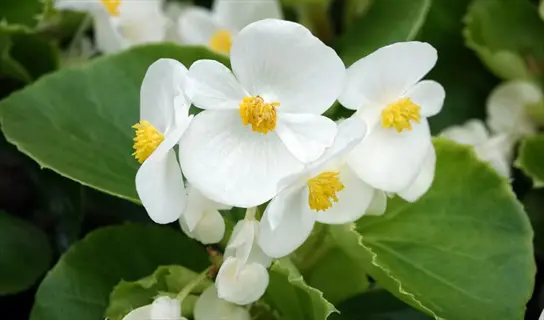
Wax Begonias (Semperflorens)
- Look: Compact bedding plants with glossy green or bronze leaves and small red, pink, or white flowers all season.
- Light: The one begonia group that tolerates both partial shade and full sun, and handles drought and heat once established.
- Size: Typically grow 6 to 12 inches (15 to 30 cm) tall and are usually spaced 6 to 8 inches (15 to 20 cm) apart.
- Use: Workhorse bedding and container annuals for mass plantings and edging in sun or shade.
- Care: Low maintenance and self-cleaning, dropping spent flowers without the need for deadheading.
- Best for: Beginners who want reliable color in beds or pots with minimal fuss.
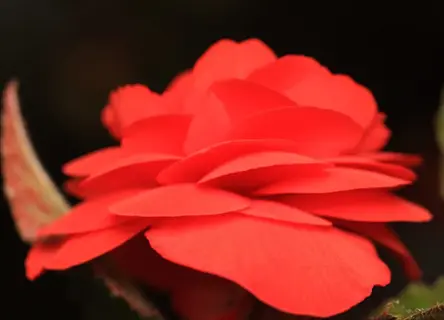
Tuberous Begonias
- Look: Large, showy flowers 2 to 4 inches (5 to 10 cm) wide in upright or trailing forms, prized for hanging baskets.
- Light: Prefer cool shade to partial shade and dislike hot afternoon sun and high heat.
- Dormancy: Grow from tubers and go dormant every year regardless of how they are grown, so they are not year-round houseplants.
- Feeding: Heavier feeders than most begonias and respond to a dilute balanced fertilizer through the growing season.
- Storage: Dormant tubers are stored cool and dry at 40 to 55°F (4 to 13°C) over winter.
- Best for: Gardeners who want dramatic blooms and are willing to lift and store tubers each fall.
Cane And Angel-Wing Begonias
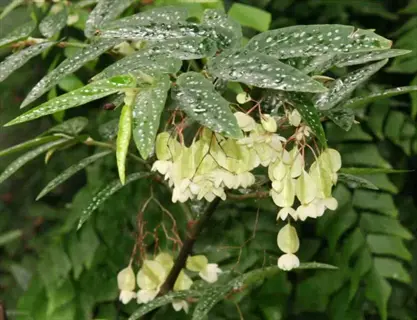
- Look: Tall, bamboo-like jointed stems with wing-shaped leaves, often silver-spotted, and clusters of dangling flowers.
- Light: More adaptable to varying light and moisture than other groups, which makes them forgiving.
- Indoors: Considered the easiest begonias to grow indoors and a strong pick for a first houseplant begonia.
- Examples: Includes popular Dragon Wing and angel-wing types grown for both foliage and bloom.
- Size: Can grow tall over time and may need a stake or pinch-pruning to stay bushy.
- Best for: Indoor growers who want a long-lived, low-drama foliage and flowering plant.
Rhizomatous Begonias
- Look: Grown chiefly for bold foliage, with leaves that on some types reach up to 3 feet (about 1 m) across.
- Growth: Spread by thick surface rhizomes rather than tall stems, forming wide, low mounds.
- Light: Prefer bright indirect light to partial shade and make good shade-bed and houseplant choices.
- Use: Large-leaved kinds are sometimes used as hosta substitutes in shady spots.
- Care: Let the surface dry slightly between waterings, since shallow rhizomes rot in constantly wet soil.
- Best for: Foliage lovers who want texture and form more than flowers.

Rex Begonias
- Look: The showiest foliage begonias, with leaves in swirls of silver, purple, green, and red, prized over their small flowers.
- Light: Need bright indirect light indoors and protection from direct sun that fades the leaf color.
- Humidity: Like higher humidity, which makes them well suited to terrariums and pebble-tray setups.
- Toxicity: Underground parts contain calcium oxalate, so keep them away from pets that may dig or chew.
- Care: A type of rhizomatous begonia, so treat the shallow roots gently and avoid soggy soil.
- Best for: Indoor collectors who grow begonias for dramatic leaf patterns.
One quirk stands out across these groups. Wax begonias are the only type that handles full sun and drought once established, while the rest want shade or bright indirect light. Match your spot to the type first, and the rest of the care gets much easier.
Light And Location Needs
The question of begonias sun or shade trips up more new growers than any other care detail. You hear a flat shade and stop there. The real answer has a useful twist that changes where you set your plants.
Begonias come from the forest understory, the shady ground under tall trees. Up there the leaves block the sky, so only soft light reaches the floor. That is why your plants want partial shade, not the open blast of a midday yard.
Now the part that matters most for your plant. A bit of morning sun is fine, and it even helps. But hot afternoon sun will burn the leaves of most types. Extension experts back this up. Give yours soft early light, then shade it once the day heats up.
Wax begonias are the one big exception. They take full sun better than any other group. So you can set yours in brighter, more open spots. The rest of the family still wants cover from harsh afternoon rays.
Begonias are a forest understory plant, so they are adapted to shadier environments rather than full sun.
For where to plant begonias, a simple rule covers most cases. An east-facing window indoors or dappled shade under a tree outdoors mimics the forest floor these plants evolved on. Indoors, aim for bright indirect light rather than a sunny sill.
Your outdoor range depends on your climate. Begonias grow outdoors in USDA Zones 8b to 11 per UF/IFAS, with NC State listing Zones 10a to 11b. The hardy begonia, Begonia grandis, is hardy down to Zone 7 per Clemson. So colder gardeners still have a good option.
Temperature and steadiness matter as much as light. Begonias want warmth of 60 to 80°F (16 to 27°C) and calm, even conditions. Keep them away from cold drafts and the dry blast of heating vents, which dry indoor plants out fast in winter.
Watering, Soil, And Feeding
The lower leaves on my Rex begonia turned yellow and went soft, almost mushy, on a shaded back porch one summer. I had kept the pot wet because the plant looked thirsty, so I watered it more. The leaves only got worse, and a few dropped off at the lightest touch.
So I stopped watering and let the top inch of soil dry out between drinks. I also moved the plant to a pot with bigger drainage holes and a looser mix. Within two weeks the new leaves came in firm and healthy. The problem was never thirst. It was too much water, and that is the mistake most people make with begonias plants.
Vague advice like keep the soil moist sets you up to fail. There is a clear rule instead. Water deeply only when the top inch of soil starts to dry, and always water at the base. Watering begonias this way keeps the leaves dry. Dry leaves face far less fungal disease, and the roots get to breathe between drinks.
Your soil matters as much as your watering can. Begonias want well-draining soil that holds organic matter yet never stays soggy. The best begonia soil pH is 5.5 to 6.5, which is acidic to neutral. Keep the mix loose so water moves through fast. Standing water at the roots leads straight to root rot, and a wet plant can fall apart in days.
Most begonias are not heavy feeders. A slow-release fertilizer made for annual flowers, used at the package rate, feeds them all season. Tuberous types are the one exception and need more. Even so, go easy on fertilizing begonias. Too much plant food, like too much water, makes the flower buds drop. The basics below break down water, soil, feeding, and the warm 60 to 80°F (16 to 27°C) range begonias like.
Watering Without Root Rot
- When: Water when the top inch (2.5 cm) of soil begins to dry, aiming for consistently moist but never soggy soil.
- How: Water at the base of the plant rather than overhead, which keeps leaves dry and lowers fungal disease pressure.
- Risk: Begonias are highly susceptible to root rot and will collapse fast if roots sit in waterlogged soil.
- Indoors: Empty saucers after watering so pots never stand in drained water that keeps roots wet.
The Right Soil And Drainage
- pH: Aim for an acidic to neutral pH of 5.5 to 6.5, which suits begonias best per extension guidance.
- Texture: Use a loose, organic-rich mix that holds moisture yet drains freely, since standing water is the main danger.
- Containers: Choose pots with drainage holes and a peat-free or well-aerated potting mix for indoor begonias.
- Beds: In the ground, amend heavy clay with compost so water moves through instead of pooling around the roots.
Feeding And Fertilizer
- Most types: Most begonias are not heavy feeders, so a slow-release fertilizer for annual flowers at label rates is plenty.
- Tuberous: Tuberous begonias are the exception and benefit from a dilute balanced fertilizer through the season.
- Stop point: Stop feeding tuberous types at the end of August to help trigger natural dormancy.
- Caution: Excess fertilizer, like excess water, can cause flower bud drop, so do not overdo it.
Temperature And Humidity
- Range: Begonias thrive at 60 to 80°F (16 to 27°C) and most do not tolerate cold below 55°F (13°C).
- Humidity: Foliage types like Rex prefer higher humidity, helped by a pebble tray or room humidifier.
- Drafts: Keep plants away from cold drafts, air conditioning vents, and hot heating registers that stress them.
- Outdoors: Bring tender begonias in before nights regularly fall below 55°F (13°C) in fall.
Soggy soil, not dryness, kills most begonias. Let the top inch dry between waterings, water at the base, and never leave pots standing in drained water.
Planting And Overwintering
Timing makes or breaks your results when planting begonias outdoors. These are warm-weather plants, and cold soil sets them back fast. The safe rule on when to plant begonias is to wait until the last frost has passed and the soil reads at least 60°F (16°C). Push them out too early and they sulk for weeks.
If you grow tuberous types from tubers, the start date sets your bloom date. Tubers you sprout indoors in February bloom in June, and ones you start in March or early April bloom in July. Set each tuber hollow side up in a tray and keep it around 70°F (21°C) until shoots appear. Then harden them off and move them out once that frost danger is gone.
A pot of tuberous begonias bloomed for a third straight summer on my shaded back porch. They were the same fat tubers I had lifted and tucked away cool and dry each fall. The first year I left a batch out through a hard October night. By morning the stems were black and mushy, and I lost every one. The pot that came back was the one I had pulled inside before the cold.
So overwintering begonias of the tuberous kind starts in the garden, not the basement. Wait for the first light frost to blacken the leaves, then lift the tubers with the soil still clinging to them. Skip the wash. Water on a dormant tuber invites rot, and you want them dry, not clean.
Storing begonia tubers well is simple once you have the numbers. Cure them in a frost-free spot for a week or two, then trim off the dried stems. Nestle them in a perforated bag with peat moss or vermiculite so air keeps moving around them. Hold them at 40 to 55°F (4 to 13°C) in a dark, dry corner like a basement or unheated room.
Do not panic when the plant fades in fall. Tuberous begonias slide into begonia dormancy no matter how you grow them, in a greenhouse or out in a bed. That winter rest is normal, not a sign the plant is dying, and a tuber stored right wakes up ready for another season. The steps below walk you through it.
Let the first light frost blacken the foliage in fall, which signals the tuber is heading into natural dormancy.
Carefully dig the tubers, leaving soil attached and the stems on, and avoid washing them, which can invite rot.
Let the tubers dry in a frost-free spot for a week or two, then trim the dried stems away from the tuber.
Nestle the tubers in a perforated bag with peat moss or vermiculite so air moves around them while they rest.
Keep them at 40 to 55°F (4 to 13°C) in a dark, dry place such as a basement or unheated room over winter.
Sprout the tubers indoors hollow side up at about 70°F (21°C) and move them out after the last frost.
How To Propagate Begonias
Learning how to propagate begonias is the fastest way to turn one plant into a whole shelf of them for free. From a single healthy leaf you can grow several new begonias, which makes these some of the most rewarding plants you can multiply at home. Once you see how easy it is, you will never buy a second plant of the same type.
You have four solid methods to choose from, and your plant type decides which one works best. Begonia cuttings, both stem cuttings and leaf-vein cuttings, are the go-to for most growers. Division and seed each have their place too. Here is how each one works, step by step.
Stem Cuttings
- Cutting: Take a healthy stem cutting about 2 to 4 inches (5 to 10 cm) long just below a leaf node.
- Rooting: Place it in moist, well-drained media or water, where roots typically form in about 3 to 4 weeks.
- Best for: Cane, wax, and many trailing types that grow on upright or branching stems.
- Aftercare: Pot rooted cuttings into a light mix once roots are an inch or so long and keep them warm.
Leaf And Leaf-Vein Cuttings
- Whole leaf: Lay a healthy leaf on moist media and pin it down so new plantlets form where veins are cut.
- Vein wedges: Cut a leaf into pie-shaped wedges, each with a main vein, and each wedge can grow its own plantlet.
- Why special: This ability to grow new plants from leaf pieces is rare among plants and works well for Rex and rhizomatous types.
- Conditions: Keep the media warm and humid, such as under a clear cover, until plantlets are large enough to pot.
Division
- Method: Split rhizomatous and cane clumps into sections, each with roots and growth points, when repotting.
- Timing: Divide in spring as growth resumes so each piece can establish over the warm season.
- Best for: Mature rhizomatous and cane begonias that have outgrown their pots.
- Benefit: A fast way to get full-sized new plants rather than waiting on cuttings.
Seed
- Sowing: Start the very fine seed indoors about 16 weeks before outdoor planting, pressed onto the surface of moist mix.
- Germination: Seed germinates in 15 to 20 days at 70 to 75°F (21 to 24°C) with bright, indirect light.
- Patience: Seed is the slowest method but lets you grow many plants and try named varieties.
- Aftercare: Transplant seedlings on once they have a few true leaves and harden them off before moving outdoors.
Stem cuttings suit most growers because they root in about 3 to 4 weeks and need almost no gear. Cut a piece 2 to 4 inches (5 to 10 cm) long, just below a leaf node, and set it in moist mix or water. That speed is why it stays the easiest place for you to start.
Leaf-vein cuttings are the real showstopper here. You can slice one leaf into pie-shaped wedges, and each wedge grows its own baby plant. Few plants on earth can do this, so a Rex or rhizomatous begonia gives you a free crop from a single leaf. Use division instead when you want full-sized plants right away, and save seed for when you have time to spare.
Problems, Pests, And Safety
Most begonia pests and diseases trace back to one habit: too much water and too little air around the plant. Soggy soil and stale, humid air give rot, mildew, and blight the exact conditions they need to take hold. Fix the moisture and the spacing first, and you head off most of what follows.
Root rot is the killer to watch. The roots rot fast when soil stays wet, and the stems turn mushy right at the soil line until the plant folds over. Water at the base, let the surface dry between drinks, and start with a clean, pasteurized mix so the fungus has no foothold.
Two leaf problems show up next. Powdery mildew leaves a white, dusty coating on the leaves. Penn State Extension ties it to crowded plants and damp, still air. The other is bacterial leaf spot, caused by the bug Xanthomonas campestris pv. begoniae. It shows water-soaked patches ringed by yellow halos. More space and dry leaves hold both in check.
Sap-feeders weaken your plants too. Watch for mealybugs, thrips, spider mites, and whiteflies. You might reach for insecticidal soap, but here is the snag. Clemson Extension warns begonias can be touchy with it. So spot-test one leaf first and wait a day before you treat the whole plant. And if buds drop before they open, that is usually too much water or food, not a disease.
So are begonias poisonous? Yes, to a point. NC State and UF/IFAS Extension confirm begonias hold soluble calcium oxalate. That makes them toxic to cats, dogs, and horses. The roots and tubers are the most toxic part. So the risk goes up at planting time and again when you store tubers for winter. Keep both well out of a curious pet's reach.
Begonias are toxic to cats, dogs, and horses because of soluble calcium oxalates, and the roots and tubers are the most toxic part. Keep plants and stored tubers out of reach; the ASPCA Poison Control line is (888) 426-4435.
5 Common Myths
All begonias are annuals that die off completely at the end of every single growing season and never return.
Many begonias are tender perennials. Hardy begonia returns in Zone 7, tubers store and regrow, and cane and Rex types live for years indoors.
Begonias need full, direct sun all day long to bloom well and produce their brightest, most colorful flowers.
Begonias are forest-understory plants that prefer shade to partial shade. Only wax begonias tolerate full sun, and afternoon sun can scorch most types.
Watering begonias a little every single day keeps them healthy and guarantees lush growth with no problems at all.
Daily watering causes root rot, the top killer of begonias. Water deeply only when the top inch of soil starts to dry, and keep soil well drained.
Begonias are completely safe houseplants, so it does not matter if curious cats, dogs, or children nibble the leaves.
Begonias contain soluble calcium oxalates and are toxic to cats, dogs, and horses. The underground roots and tubers are the most toxic part of the plant.
Tuberous begonias can be grown as year-round houseplants and will keep blooming indoors through winter without any rest.
Tuberous begonias enter dormancy no matter how they are grown, so they are not year-round houseplants and need a cool winter rest period.
Conclusion
Almost every rule for begonias plants traces back to one fact about where they come from. These are forest floor plants, so they want shade to partial shade, steady warmth, even moisture, and soil that drains fast. Get those four things right and most of your work is done.
The numbers give you a clear target to hit. Keep your soil at pH 5.5 to 6.5 with lots of organic matter and good drainage. Hold the temperature at 60 to 80°F (16 to 27°C), and don't let cold dip below 55°F (13°C). If you grow tuberous types, store the dormant tubers at 40 to 55°F (4 to 13°C) through winter. Overwintering begonias comes down to those few steps, and they work.
The real key is matching your care to the plant in front of you. The main types of begonias each ask for something a bit different. Wax types shrug off sun and heat. Tuberous types must go dormant, so they can't live indoors all year. Cane types are the easiest to keep as houseplants. Rhizomatous and Rex begonias grow for their bold leaves and want higher humidity in a bright, shaded spot. Good begonia care starts with knowing which group you have.
Keep one safety note in mind too. The roots and other parts hold calcium oxalate, so they can upset cats, dogs, and curious kids. Set your pots and beds where pets and children can't dig or chew. Depending on the type you pick, begonias fit a shaded outdoor bed or a bright windowsill just as well.
Here is the part that should give you confidence. Begonias reward attention to drainage and light far more than they reward constant fuss. Water at the base, give them the right amount of shade, and they mostly take care of themselves. And when you want more, a single leaf can start a whole new plant.
Glossary
- calcium oxalate
- A natural compound in begonias that is toxic to pets and can irritate skin, found mostly in the roots.
- dormancy
- A natural rest period when a plant stops active growth, as tuberous begonias do over winter.
- fibrous-rooted
- Describes begonias with many fine roots, such as wax types, rather than a single tuber.
- forest understory
- The shaded layer beneath taller trees where begonias naturally grow, which is why they prefer shade.
- leaf-vein cuttings
- Pie-shaped leaf pieces, each with a main vein, that can grow into new begonia plants.
- rhizomatous
- Describes begonias that spread by thick surface stems called rhizomes rather than growing tall.
- root rot
- Decay of roots caused by soil that stays too wet, the most common reason begonias die.
- tuberous
- Describes begonias that grow from a tuber, a swollen underground storage organ, and go dormant each year.
External Sources
Frequently Asked Questions
Do begonias come back every year?
It depends on type and climate.
- Wax and tuberous types are grown as annuals in cold regions
- Hardy begonia (B. grandis) returns to USDA Zone 7
- Begonias are perennial in frost-free Zones 8b to 11
Are begonias good indoor plants?
Yes, several types do well indoors.
- Cane and Rex types are well suited to indoor growing
- Provide bright indirect light and 60 to 80°F (16 to 27°C)
- Tuberous types go dormant and are not year-round houseplants
How do you overwinter begonias?
Method depends on type.
- Dig and store dormant tubers at 40 to 55°F (4 to 13°C)
- Bring fibrous and cane types indoors as houseplants
- Move plants in before nights drop below 55°F (13°C)
How often should you water begonias?
Not every day.
- Water when the top inch of soil begins to dry
- Keep soil consistently moist but never soggy
- Water at the base to avoid fungal leaf disease
Do begonias grow better in pots or in the ground?
Both work well.
- Pots give better drainage and easy overwintering
- Ground beds suit mass plantings in dappled shade
- Containers help control light and moisture for fussy types
What is the lifespan of a begonia?
It varies by type.
- Annual wax types last one growing season outdoors
- Tuberous begonias can return for many years from stored tubers
- Cane and Rex types can live for years as houseplants
What are common begonia problems?
Most issues trace to moisture and air.
- Root rot from soggy soil is the most common killer
- Powdery mildew and Botrytis blight in damp, still air
- Bud drop from excess water or fertilizer
Can begonias grow in just water?
Cuttings root in water, but it is not ideal long term.
- Stem cuttings root in water in about 3 to 4 weeks
- Water-grown roots transplant best into soil
- Long-term water culture lacks nutrients and oxygen
Do coffee grounds help begonias?
Only in small, composted amounts.
- Begonias prefer acidic soil at pH 5.5 to 6.5
- Use composted grounds sparingly, not a thick layer
- A slow-release fertilizer is more reliable
Are begonias toxic to pets?
Yes, begonias are toxic to pets.
- The toxic principle is soluble calcium oxalates
- The most toxic part is underground roots and tubers
- Signs include vomiting and salivation in cats and dogs