

Introduction
Almost everyone ends up with an African violet at some point. It sits on a kitchen windowsill in a little plastic pot, blooms for a few weeks, then quits. Most people blame themselves and toss it. The truth is simpler. Beginners get two things wrong, watering and light, and this guide fixes both so your plant keeps flowering.
Here is the part that hooks people. A healthy African violet can flower year-round indoors, and each cluster of blooms lasts 3 to 6 weeks. Give it the right light and you can get up to 3 flushes of flowers a year. That is real value from a plant that fits in one hand. Few houseplants this small reward you that often.
Plenty of care pages cover the same basics, then go quiet the moment something goes wrong. This African violet care guide goes further. You get plain troubleshooting for limp leaves and missing blooms, real pest help, and the why behind every rule so the advice sticks. It treats the violet as the beginner houseplant it should be. No more guessing.
We cover it all in order. You start with care basics, then light and blooming, then how to water without rotting the roots. After that comes soil and repotting, then pests and the problems that trip people up. We finish with the indoor flowering plant varieties and the origin story. The species is Saintpaulia ionantha. It comes from the woods near the Tanzania and Kenya border. It became a household hit after the Blue Boy hybrid reached the United States in 1927.
African Violet Care Basics
Good african violet care comes down to a routine, not a checklist of separate chores. You tune light, water, temperature, humidity, soil, and feeding together, since they all push on each other. Get your routine right and your plant blooms for months at a time.
Two levers make or break that routine. The first is overwatering, which is the top reason these plants die. The second is light, which is the top reason they refuse to bloom. Get those two right and the rest of your african violet care turns forgiving, even if you slip up here and there.
Start with light, since your blooms depend on it. These plants want bright indirect light for 14 to 16 hours a day, with 8 to 10 hours of darkness at night. A north, northeast, or northwest window suits them well. Give them too little light and the leaves grow long and reach, and your flowers never show up.
Now the part that trips up most people. Watering african violets the wrong way rots them from the bottom up. Set the pot in about 1 inch (2.5 cm) of room-temperature water once a week. After 30 minutes, pour off what the plant did not drink. Cold water spots the leaves, so let it sit out first. And never leave the pot in a saucer of water.
I pulled a half-dead purple violet off my mom's north-facing kitchen windowsill. Its crown had gone soft and brown. It had sat for weeks in a saucer that nobody ever emptied. The leaves peeled off in my fingers like wet paper. So I knocked it out of that packed, soggy pot. Then I set it in fresh soilless potting mix, half peat and half coarse perlite, in a pot I left a touch small on purpose. Three weeks later the crown firmed up and pushed out two new leaves.
That airy mix matters because it drains fast and holds air around the roots. Aim for a pH of 6.0 to 6.5 and keep your mix moist, never soggy. Pair it with steady warmth near 70°F (21°C), an acceptable band of 65 to 80°F (18 to 27°C), and humidity around 40 to 60%. These plants come from the humid highlands of Tanzania and Kenya, so they like a little moisture in your air.
Feeding is the easy part. Use a weekly weakly feeding of balanced fertilizer at about quarter strength. Mix it into the water you give the plant each week. Once a month, flush the soil with plain water to clear out salt. One more reason these make a great first plant for you: they are non-toxic to people and pets. So a curious cat or toddler is no cause for panic.
Overwatering, not neglect, kills most African violets. Let the surface dry slightly between waterings and never leave the pot standing in a saucer of water.
Light and Getting Blooms
A violet that keeps pushing out lush green leaves but never flowers is almost always a light problem, not a feeding problem. The fix is a brighter spot, not more fertilizer. Pour on plant food in a dim corner and you just get bigger leaves and still no blooms.
So why won't my african violet bloom? Most of the time you missed the african violet light requirements. These plants are photo accumulators. They must soak up a set amount of light before they set buds. A dark spot never lets them get there, so a shady shelf gives you leaves and no flowers.
In the wild these plants grow under a thick forest canopy near the equator. So they want steady bright indirect light filtered like a sheer curtain. Set yours near a north or east window where the glow is strong. Skip the direct afternoon sun, which scorches the leaves. Give the plant 14 to 16 hours of light plus 8 to 10 hours of dark each day to trigger flowers.
Light is measured in foot-candles, and your targets are easy to hit. A windowsill that gives you roughly 1,000 foot-candles for 6 to 8 hours works well. No bright window? Reach for grow lights for african violets. Around 600 foot-candles for 14 to 16 hours does the same job. Hang your fluorescent or LED tubes about 12 inches (30 cm) above the leaf tops and the plant gets what it needs.
North or East Window
- Placement: Set the plant within about 3 feet (1 m) of a north, northeast, or northwest window where light is bright but never direct afternoon sun.
- Why it works: This mimics the filtered canopy light of its native habitat, giving steady brightness without the scorching that a hot south window causes.
- Watch for: Pale, stretched, or reaching leaves mean the spot is too dim, while bleached or brown patches mean the light is too harsh.
Fluorescent or LED Grow Light
- Setup: Hang tubes or panels about 12 inches (30 cm) above the leaf tops and run them 14 to 16 hours a day on a timer.
- Why it works: Artificial light around 600 foot-candles reliably meets the plant's daily light quota in rooms that lack a bright window.
- Bonus: A timer gives the consistent day length these photo accumulators need to set buds, which a variable windowsill cannot guarantee.
Bright Filtered Room Light
- Placement: A spot near a sheer-curtained window or a few feet back from a sunny window gives soft, even light all day.
- Why it works: African violets tolerate a moderate 200 to 500 foot-candles, so a bright room without direct beams keeps foliage healthy.
- Limit: This may keep leaves green but fall short for heavy blooming, so add a grow light if flowers stay sparse.
Rotate For Even Growth
- Habit: Turn the pot a quarter turn every week or two so all sides get equal light from the window.
- Why it works: African violets grow toward light, so rotating keeps the rosette flat, round, and symmetrical instead of leaning.
- Result: An even rosette displays blooms better and prevents one crowded side from shading the rest of the crown.
Pick whichever setup fits your home and watch the leaves for clues. Pale, stretched leaves beg for more light, while bleached or brown patches mean you pushed it too far. Get the brightness right and steady buds follow on their own.
Insufficient light is probably the most common reason for failure of African violets to flower.
Watering Without Crown Rot
Most dead African violets die the same way. The soil stays soggy, the dense center of the plant sits wet, and the roots slowly drown. That single mistake causes both crown rot and root rot, the two failures that kill more of these plants than anything else.
Here is the cause behind the cure. When the mix never dries out, oxygen can't reach the roots and they start to turn to mush. When water pools in the fuzzy crown against cool air, the center collapses into a soft brown mess. So watering African violets well is really about one goal. You keep the center dry and you keep the roots from sitting in water.
Picture the soil like a wrung-out sponge. You want it evenly damp all the way through, never dripping and never bone dry. Room temperature water is part of this too. Cold water at or below 55°F (13°C) leaves pale ring spots on the leaves, so let it warm up on the counter before it touches the plant.
How often to water comes down to feel, not the calendar. Check the surface and water about once a week, when the top of the mix feels barely dry. Warm rooms dry the pot faster, and clay pots pull moisture out quicker than plastic ones, so adjust to what your finger tells you.
Touch the top of the mix. Water only when it feels barely dry, since watering on a fixed schedule regardless of moisture is what drowns most plants.
Let water reach room temperature before using it. Cold water at or below 55 degrees Fahrenheit (13 degrees Celsius) leaves pale ring spots on the fuzzy leaves.
Set the pot in about 1 inch (2.5 cm) of water and let the mix wick moisture up through the drainage holes for 20 to 30 minutes.
Empty the saucer once the soil is evenly damp. Never let the plant stand in leftover water, which keeps roots waterlogged and invites rot.
Avoid splashing the dense center of the rosette. A wet crown trapped against cool air is the fastest path to fatal crown rot.
The easiest way to kill your violet is to overwater it.
Soil, Pots, and Repotting
The Right Potting Mix
- Recipe: Use a light soilless blend, such as equal parts potting soil, peat, and perlite, or half peat-based mix and half coarse perlite for maximum drainage.
- Target pH: Keep the mix slightly acidic at a pH of 6.0 to 6.5, which is the range African violet roots take up nutrients best in.
- Texture: The mix should feel fluffy and airy, never packed, so air reaches the roots and water drains freely instead of pooling.
Pot Size And The One-Third Rule
- Rule: Choose a pot about one-third the width of the leaf spread, so a plant 9 inches (23 cm) across wants roughly a 3 inch (7.5 cm) pot.
- Why snug wins: African violets bloom more freely when slightly underpotted, because a too-large pot holds excess wet soil that rots roots and delays flowers.
- Drainage: Always pick a pot with drainage holes, since a sealed decorative pot traps water against the roots and crown.
Plastic Versus Clay Pots
- Plastic: Holds moisture longer and forgives forgetful watering, making it a safe default for beginners who tend to underwater.
- Clay: Dries faster and suits heavy-handed waterers, but its porous walls can build a white salt crust on the rim that damages leaf stems.
- Either way: Match how often you water to the pot, since the same schedule can leave clay too dry and plastic too wet.
When And How To Repot
- Timing: Refresh the plant into fresh mix about once a year, which renews nutrients and clears built-up salts even if you keep the same pot size.
- Method: Ease the plant out, loosen old soil from the roots, and reset it at the same depth so the crown sits just above the soil line.
- Sign it is due: A long bare neck below the leaves or roots circling the pot means it is time to repot and reset the crown lower.
My miniature on the north kitchen windowsill threw out five purple blooms the week after I moved it into a tiny 2 inch pot. It had sulked in a roomy 4 inch container for months with nothing but leaves, while I kept fussing over light and water. The snug pot was the only thing I changed, and the flowers showed up almost at once.
That result points to the two things this plant cares about most, soil and pot size. African violet roots rot fast in dense, soggy soil, so a light, airy, well-draining mix matters far more than any single brand on the shelf. A fluffy soilless blend lets water drain through and lets air reach the roots.
The best soil for african violets is simple to mix yourself. Use equal parts potting soil, peat, and coarse perlite, or go half peat-based mix and half coarse perlite for even faster drainage. Aim for a slightly acidic pH of 6.0 to 6.5, where the roots take up nutrients best, and always plant in a pot with drainage holes.
Pot size is where most people go wrong, and the fix is the one-third rule. Pick a pot about one-third the width of the leaf spread, so a plant that spans 9 inches (23 cm) wants roughly a 3 inch (7.5 cm) pot. African violets bloom best slightly underpotted, because a too-large pot holds extra wet soil that rots roots and stalls flowers. The right african violet pot size can be the whole difference between leaves and blooms.
Pot material changes your watering, too. Plastic holds water longer, so it forgives you if you forget. Clay dries faster and can build a white salt crust on the rim that damages leaf stems. Match how often you water to the pot you chose, since the same schedule leaves clay too dry and plastic too wet.
Plan on repotting african violets about once a year into fresh mix, even if you keep the same pot size. A yearly refresh renews nutrients and clears built-up salts that quietly hold the plant back. When you change the soil, reach for a good african violet potting mix like the recipes above. The airy blend gives the roots the home they need to flower again.
Pests, Disease, and Problems
A healthy plant is a flat, symmetrical rosette of leaves spread out like a green pinwheel. That shape is your best diagnostic tool. When the leaves stay even and the center grows loose and open, the plant is fine. Most african violet problems show up as a break in that pattern, so any pinching, curling, or crowding at the crown is an early warning sign.
Read the symptom and you can usually name the cause. A mushy, collapsing crown means rot from too much water. Healthy leaves with no flowers means too little light. Pale rings on the foliage point to cold water, not a bug. And tight, distorted new growth bunched at the center almost always means cyclamen mites. The chart below pairs each symptom with its cause and the fix so you can act fast.
Most african violet pests are easy to spot once you know what to look for. Mealybugs show up as small white cottony spots tucked along the leaf stems and crown. Isolate that plant right away and dab the bugs with rubbing alcohol or treat with insecticidal soap. Thrips are tiny and harder to see, but they matter because they can spread a virus called INSV through your collection.
Cyclamen mites are the one pest worth real fear. I lost three plants on one shelf to them before I understood what I was seeing. They are too small to spot, and they leave the newest center leaves curling tight, hairy, and stunted while the rest of the plant looks normal. According to Clemson and the African Violet Society, there is no reliable cure. Toss the plant and keep it well away from your others so the mites do not crawl over and take the whole shelf with them.
If the newest center leaves are tight, hairy, and crinkled, suspect cyclamen mites. They spread to nearby plants and cannot be cured, so isolate and dispose of the plant to protect your others.
Varieties, Origin, and Biology
Once you know how to care for your plant, picking from the many african violet varieties gets to be the fun part. You might know it by its plant name, Saintpaulia ionantha, in the Gesneriaceae family. Here is the surprise. It is not a true violet at all, so your plant shares no real family tie with the garden violets you grow outside.
The story starts in 1892, when Baron Walter von Saint Paul first found the plant near the Tanzania and Kenya border. Its native habitat sits under a deep forest canopy, close to the equator. The air there stays around 70 to 80% humidity. That is why your indoor targets from earlier hold up so well. Bright filtered light and 40 to 60% humidity work as a scaled-down copy of that warm, shaded home.
Years of DNA testing have trimmed the wild plants down to about 6 species and 8 subspecies. From those few wild plants, growers have built up several hundred named types for you to pick from. The flowers run from single and double to star, fringed, and ruffled. You can find them in blue, violet, pink, red-violet, and white.
Think of choosing your plant like picking a pot size first. The main african violet types sort by how wide they grow. A miniature african violet stays under 8 inches (20 cm) and fits a small windowsill. A standard spreads 8 to 16 inches (20 to 40 cm) and fills a tabletop. Large types push past 16 inches (40 cm). Pick the size that fits your space, then choose your color and flower form to taste.
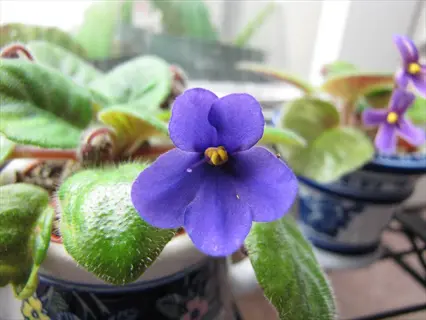
Miniature And Semi-Miniature
- Size: These stay under 8 inches (20 cm) across, making them ideal for small windowsills, terrariums, and tight tabletop spots.
- Care note: Their small pots dry out faster, so check soil moisture more often than you would for a standard plant.
- Blooming: Despite their size they flower freely and can carry a surprising number of blooms for such a compact rosette.
- Display: A row of miniatures suits a bright kitchen sill where a full-size plant would crowd the space.
- Variety: They come in the same wide range of colors and flower forms as larger types, just on a smaller frame.
- Good for: Beginners short on space who still want year-round color from a tidy little plant.
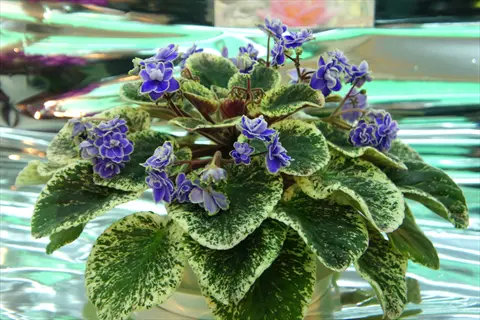
Standard African Violets
- Size: The classic form spans 8 to 16 inches (20 to 40 cm) across and is what most people picture as an African violet.
- Care note: Their larger pots hold moisture longer, so the once-a-week bottom watering rhythm fits them well.
- Blooming: A healthy standard in good light can carry several clusters of blooms at once for weeks on end.
- Display: They suit a tabletop or a deeper windowsill where the full rosette has room to spread flat.
- Variety: Standards offer the widest selection of colors, from blue and lavender to pink, red-violet, and white.
- Good for: Growers who want a showy centerpiece plant and have a bright spot with a little more room.
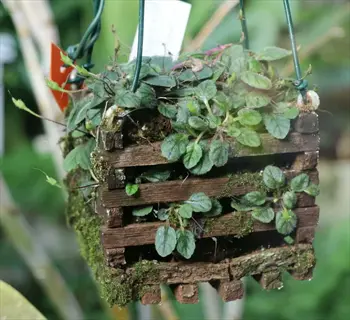
Trailing And Variegated Types
- Form: Trailing violets grow multiple crowns that spill sideways, while variegated types carry cream or white markings on the leaves.
- Care note: Variegated leaves have less green tissue, so they often want slightly brighter light to stay vigorous.
- Blooming: Trailers can flower along several stems at once, giving a fuller, looser look than a single tidy rosette.
- Display: Trailers look striking in a hanging planter or raised pot where the stems can cascade over the edge.
- Variety: Both add visual interest beyond flower color, which keeps them appealing even between bloom flushes.
- Good for: Collectors ready for something past the standard single-crown rosette.
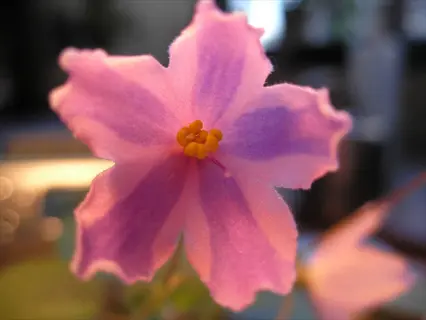
Flower Forms And Colors
- Forms: Blooms come as single, double, semi-double, star, fringed, and ruffled, so two plants of the same color can look very different.
- Colors: The palette spans blue, violet, lavender, pink, red-violet, and white, often with edging or speckles.
- History: All of these descend from wild plants found in 1892 and the Blue Boy hybrid that launched the craze in 1927.
- Not a true violet: Despite the name, the African violet belongs to the Gesneriaceae family and is unrelated to garden violets.
- Choosing: Pick size first to fit your space, then choose color and flower form purely to taste.
- Good for: Anyone who enjoys collecting, since several hundred named varieties exist to mix and match.
Match the size class to your spot and the rest is pure preference. You might want a row of minis on a kitchen sill. You might want one showy standard on a table. A trailer spilling out of a hanging pot works too. They all run on the same care rules you have already learned. The wild forest plant set those rules, and every named type still follows them.
5 Common Myths
African violets need to be misted often because their native rainforest home is humid, so spraying the leaves keeps them healthy.
Misting wets the fuzzy leaves and invites spotting and disease. Raise humidity with a pebble tray or grouping plants instead of spraying foliage.
You should water African violets only from the bottom, because any water touching the leaves will instantly kill the plant.
Top watering is fine as long as you keep water off the leaves and crown. The real danger is cold water and waterlogged soil, not the method itself.
African violets are fussy, delicate plants that only experienced growers with greenhouses can keep alive for very long.
They are beginner-friendly. Most failures trace back to overwatering or too little light, and both are easy to correct on a sunny windowsill.
African violets bloom best when you give them direct sunlight on a bright south-facing windowsill all day long.
Direct sun scorches the leaves. They bloom best in bright indirect light for 14 to 16 hours a day, like light through a sheer curtain.
A bigger pot gives African violet roots more room, so repotting into a large container helps the plant grow faster.
African violets bloom best when slightly underpotted. A pot about one-third the width of the leaf spread keeps soil from staying soggy and rotting roots.
Conclusion
Good african violet care comes down to a few steady habits, not constant fussing over the plant. Get the basics right and leave it alone, and this indoor flowering plant will thank you. Most people kill their violets by doing too much, not too little.
Keep the make-or-break numbers in mind one last time. Give room-temperature water about once a week, and never let the roots sit wet. Aim for bright indirect light 14 to 16 hours a day, hold the room near 70°F (21°C), and use a light, well-draining mix at a pH of 6.0 to 6.5. That short list covers almost everything.
Here is the single most useful thing to know. Avoid overwatering and give the plant enough light, and the same violet can bloom for years and even decades. These plants are non-toxic and long-lived, so they reward steady care far more than effort. You get year-round blooms from a plant that asks for very little, which makes it a near perfect beginner houseplant.
The best part comes later. One healthy plant gives you the leaves to start more, and a single leaf can grow into a whole windowsill of color over time. Start with one violet, learn its rhythm, and soon you may have a small collection blooming side by side.
Glossary
- Bottom watering
- Watering by setting the pot in shallow water so the soil draws moisture up through the drainage holes, keeping the leaves and crown dry.
- Crown rot
- A fatal fungal rot of the dense center of an African violet, usually caused by water sitting against the crown or in soggy soil.
- Cyclamen mites
- Tiny pests that cause tight, crinkled, stunted new growth at the center of the plant and are effectively impossible to cure.
- Foot-candle
- A unit that measures how much light falls on a surface, used to describe how bright a spot is for a plant.
- Photo accumulator
- A plant that must collect a set amount of light energy over time before it will flower, which is why dim spots produce leaves but no blooms.
- Root rot
- Decay of the roots from waterlogged soil that starves the plant of oxygen and is the most common way African violets die.
- Soilless mix
- A light potting blend made from materials like peat and perlite instead of garden soil, used because it drains fast and resists compacting.
- Wick watering
- A self-watering method that uses a string to draw water up from a reservoir into the soil at a steady rate.
External Sources
Frequently Asked Questions
Is the African violet a good indoor plant?
Yes. African violets are compact, non-toxic, and bloom year-round in bright indirect light, making them one of the best indoor flowering plants for beginners.
How often should you water an African violet?
Most African violets need water about once a week. Water when the top of the soil feels barely dry, using room-temperature water and never letting the pot sit in standing water.
Are African violets hard to care for?
No. African violets are easy once you get watering and light right. Most problems come from overwatering or too little light, both simple to fix.
Where is the best place to put an African violet?
Place it within a few feet of a bright window with no direct afternoon sun, such as a north or east window, where it stays warm and out of cold drafts.
Should you use tap water on African violets?
Plain tap water is usually fine if it is at room temperature, but avoid softened or heavily chlorinated water. Letting tap water sit overnight helps.
What triggers an African violet to bloom?
Enough light is the main trigger. African violets need 14 to 16 hours of bright indirect light, steady warmth, and dilute feeding to bloom freely.
How long do African violets live?
With good care African violets can live for many years, even decades. Propagating leaves lets you keep a favorite plant going almost indefinitely.
Is it better to water African violets from the top or the bottom?
Both methods work. Bottom watering best protects the crown and leaves from water damage, while careful top watering is fine if you keep water off the leaves.
What are the most common African violet problems?
The most common problems are crown or root rot from overwatering, failure to bloom from too little light, and leaf spots from cold water on the foliage.
Is it okay to touch African violet leaves?
Occasional gentle handling is fine. The fuzzy leaves can mark or break if rubbed often, so it is best to handle the plant by its pot when you can.