Vegetable · Zingiberaceae
Turmeric
Curcuma longa
Give it warmth, rich moist soil, and a long season, and turmeric fills the ground with golden, orange-fleshed rhizomes.
Partial shade
Every 2–4 days
68–95°F · 20–35°C
240–300 days
Overview
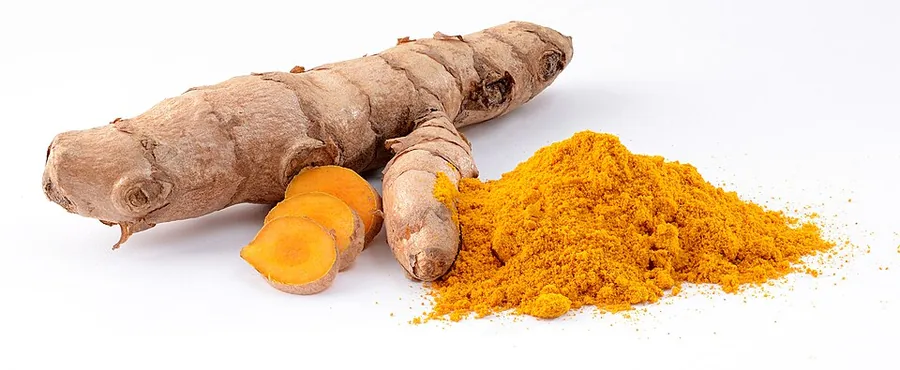
Turmeric grows as a clump of broad green leaves that rise straight from rhizomes buried in the soil, a member of the ginger family out of warm, wet South Asia. Below ground sit the golden rhizomes, which split open to a deep, saturated orange flesh. That orange interior is the part taken to the kitchen, used fresh or dried and ground to a fine spice, while the leafy tops stay in the bed.
The leaves make up the plant's whole visible presence, tall and wide green blades that carry no bright bloom color of their own. Across the long warm season of eight to ten months, the clump fills out while the rhizomes thicken and multiply out of sight. As harvest nears, those green blades fade to yellow and sink down, the plant's own sign that the crop below has finished swelling.
Handling the rhizomes shows the color at full strength: the cut flesh smears a strong orange stain across skin, cloth, and countertop, the same curcumin pigment that dyes food yellow. A healthy rhizome is firm and heavy in the hand, while a rotted one gives way soft and discolored under a light squeeze. Heat, steady moisture, and rich ground keep the clump green and the rhizomes plump right through to the autumn dig.
Care
The short version: turmeric wants partial shade and steady warmth in rich, well-drained soil kept evenly moist but never waterlogged. Monthly feeding through the growing season and a long, warm run let the deep orange rhizomes fill out below the green leaves.
Light
Turmeric sits happiest in partial shade and takes a little direct sun, but a full day of hard sun scorches its broad green leaves. Bright, filtered light, or morning sun eased by afternoon shade, keeps the blades a clean green.
Water
Keep the soil evenly moist the whole time the plant is in active growth, never dry and never sodden, since waterlogged ground turns the firm rhizomes soft with rot. As the green leaves yellow toward harvest, taper the water off.
Soil
Set it in rich, well-drained loam dark with organic matter, soil that holds moisture without packing into mud. A pH of 5.5 to 7.5 suits it, so most garden ground will do once plenty of compost is worked in.
Temperature
Steady warmth from 68°F to 95°F (20°C to 35°C) keeps the clump growing and green. It is a frost-tender tropical, so even a light cold snap blackens the leaves and shuts the season down early.
Humidity
Bred by the wet tropics, turmeric likes the air on the damp side, around 60% to 90%. Summer outdoors covers that on its own, while an indoor plant keeps its leaves fresh with a humidity tray or an occasional misting.
Feeding
Feed it monthly through the growing season with a balanced fertilizer, working compost or other organic matter into the soil. The plant draws hard on that richness to pack the underground rhizomes with deep orange flesh.
Pruning
Little cutting is needed. Pull away dead or yellowing leaves and clear spent foliage now and then, enough to keep the clump tidy and the air moving between the blades.
Repotting
In a pot, turmeric wants repotting every year, as the rhizomes spread fast and pack the container tight. Move it up a size once the rhizomes crowd the rim or push out through the drainage holes.
Size & spacing
A grown clump stands 3 to 4 feet (90 to 120 cm) tall and spreads 24 to 35 inches (60 to 90 cm) wide. Give each plant that room so the broad leaves can open flat and air can pass between them.
When to plant
Turmeric holds to a warm-season pattern and has no tolerance for frost. The rhizome pieces start indoors in late winter, go out once the soil warms, and come up in fall as the broad leaves yellow and die back.
Northern hemisphere
Southern hemisphere
Typical months for a temperate climate: start earlier in warm zones, later where spring frosts linger.
- Sow: Late winter to early spring; start rhizome pieces indoors 6-8 weeks before the last expected frost
- Plant: After all danger of frost has passed and soil has warmed
- Harvest: Harvest rhizomes about 8-10 months after planting when the foliage yellows and dies back
Hardiness
USDA hardiness zones: 8–11
Temperature: down to -12°C
Troubleshooting
Turmeric's problems mostly sit at the rhizome or surface as marks on the leaves before harvest. The first job is to tell a true fault from the natural yellowing of the leaves at season's end, then act while it still helps. Match the look of the plant to the likely cause below.
Soft, discolored rhizomes and a plant laid flat
Rhizomes gone soft and discolored, under a plant that has slumped over, are the plain marks of rhizome rot, a trouble that grows out of soggy soil rather than anything a spray can reach. Lift a plant to see it up close: sound tissue stays firm and holds its shape, while rotted tissue turns mushy, dull, and sour-smelling. Cut out every spoiled piece, put the drainage right, water more lightly, and set only firm, clean rhizomes back into fresh ground.
Fix:
- Remove and discard affected rhizomes
- Improve drainage and reduce watering frequency
- Replant healthy rhizome pieces in fresh, well-drained soil
Blackened, wilting leaves after cold
Turmeric is a frost-tender tropical, so a single cold or frosty night turns the green leaves black and limp across the whole plant at once. The ruined top growth will not come back, so cut it away, and in cold climates lift the rhizomes to hold them indoors over winter. Grow it as a warm-season crop and get the rhizomes up, or under cover, before frost arrives.
Fix:
- Cut back damaged foliage
- Lift and store rhizomes in cold climates over winter
Yellow leaves and round spots on the blades
Green blades that yellow or break into round spots well before season's end usually show fungal leaf spot in warm, humid air, or thin soil short on nutrients. Strip the marked leaves, open the clump so air moves through, and top up feeding with a balanced fertilizer or compost. Read it apart from the even yellowing of the whole plant that comes at harvest, which is no fault at all.
Fix:
- Remove affected foliage
- Improve air circulation
- Supplement nutrients with balanced fertilizer or compost
Toxicity
Turmeric is safe all round. The rhizome is a kitchen staple, and the ASPCA does not list the plant as toxic to cats or dogs, so nothing here endangers pets, livestock, or children. The one catch is that deep orange pigment, which stains skin and surfaces on contact yet does no harm.
Safe for
People · Cats · Dogs · Horses · Rabbits · Livestock · Birds
Cats None
Safe around cats. Nothing in the green leaves or the rhizomes will harm a cat that takes a curious bite.
Dogs None
Safe for dogs. Turmeric stays off the ASPCA toxic list, and the ground spice even shows up in some dog foods.
Horses Safe
Harmless to horses, whether one brushes the tall leaves or tastes a piece of the plant.
Rabbits Safe
A rabbit can graze the leaves with no harm, since no part of the plant is poisonous to them.
Livestock Safe
Cattle, goats, sheep, and other grazing stock come to no harm from turmeric in the field.
Birds Safe
Birds are safe near it, and the rhizome is now and then offered in small amounts as a supplement.
People Safe
For people the rhizome is a kitchen staple, eaten fresh, dried, or ground to spice, with no toxic parts to avoid.
The rhizome's orange pigment (curcumin) readily stains skin, fabric, and surfaces during handling and processing; this is a staining nuisance, not a toxicity concern.
Varieties
Most kitchen turmeric comes from a few Indian types, told apart by the color and strength of the flesh and by yield. These are the names worth knowing.
Alleppey
A high-curcumin Indian type whose flesh runs a deep, rich orange, prized as both a cooking spice and a natural coloring.
Madras
A lighter, milder Indian type, paler in the flesh and long favored by the food and condiment trade.
Erode
A South Indian landrace from Tamil Nadu, known for the heavy, well-filled rhizomes it produces.
How to propagate
Turmeric is raised from its own rhizomes rather than seed, so a single clump of rhizomes becomes the source of many more.
DivisionEasy
Late winter to early spring before planting out · Roughly 2-4 weeks to sprout and establish under warm, moist conditions
Turmeric grows from its own rhizomes, not seed. In late winter or early spring, before planting out, a rhizome is broken into pieces that each keep at least one plump, healthy bud, then pressed a few centimeters deep into warm, moist soil. Kept warm and damp, the pieces push up shoots and take hold in about 2 to 4 weeks.
Myths
Turmeric poisons pets and must be kept clear of cats and dogs.
Not so. Turmeric is an edible plant the ASPCA does not list as toxic to cats or dogs, and a curious pet that tastes a leaf is unharmed. The whole plant is safe to grow around animals.
Turmeric grows easily outdoors anywhere, all year round.
Not true. It is a frost-tender tropical that needs a long warm stretch of roughly 8 to 10 months to build a crop. Where winters run cold, grow it as a warm-season or container plant and bring the rhizomes in before the cold arrives.