Ornamental · Solanaceae
Petunia
Petunia × atkinsiana
Give it full sun and steady feeding, and the petunia opens trumpet after trumpet of color from late spring until frost.
Full sun
Every 2–7 days
50–86°F · 10–30°C
70–90 days
Overview
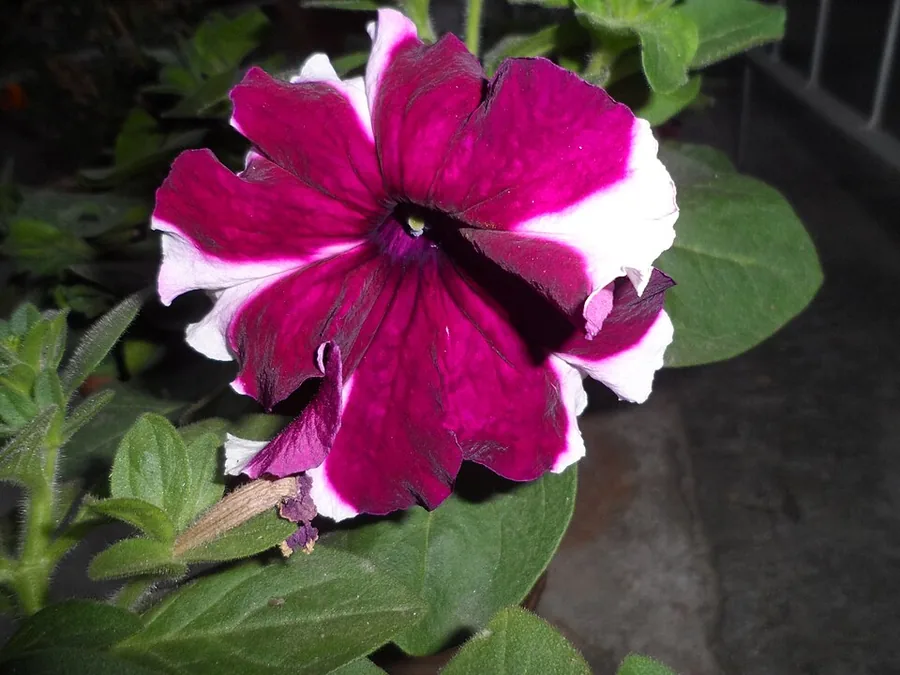
The petunia is built around a soft, flaring trumpet of a flower, its five petals fused into a single funnel that opens flat at the mouth. It belongs to the nightshade family, the same clan as the tomato and the potato, and breeding has stretched its color across hundreds of hybrids in nearly every shade but a true black. Those funnels rise on branching, faintly sticky stems clothed in oval green leaves, and they spill from hanging baskets, line walkways, and crowd window boxes wherever a sunny spot gives them room.
Look closely and four broad types sort themselves out by the size and set of the flower. The old Grandifloras hold the widest, most billowing trumpets, the Multifloras carry smaller, firmer-petaled blooms in far greater number, the Millifloras shrink to dainty little funnels, and the spreading Wave types string their flowers along long, low, trailing stems. The shape and count of the trumpets tell you at a glance which one you are looking at.
The plant grows fast and hungry, throwing up soft new stems that flower almost as quickly as they lengthen. Full sun, rich soil, and steady food and water keep those stems short, leafy, and studded with fresh trumpets. Starve it or let the pot bake dry and the stems draw out thin and bare, carrying only leggy growth and a scattering of small flowers.
Care
The short version: full sun, soil kept evenly moist but never soggy, and regular feeding keep a petunia thick with fresh trumpet-shaped flowers, since it is a heavy feeder that blooms hardest when well fed and well watered.
Light
Petunias open the most trumpets in full sun, ideally six or more hours a day, where the stems stay short and packed with flower. They take a little partial sun, but under heavier shade the stems draw out long and thin, flop over, and carry far fewer blooms.
Water
The soil suits a petunia best kept evenly moist but never soggy, with the top inch drying to a crumb between waterings. Containers and hanging baskets, holding little soil around the fine roots, dry out fast and may need daily watering in summer heat. Soggy, poorly drained ground turns the roots to mush, so drainage counts as much as moisture.
Soil
Petunias root best in well-drained, fertile loam dark with organic matter, loose enough for the fine roots to spread. A pH between 6.0 and 7.0 suits them, and quick drainage keeps the roots pale and firm through a wet spell.
Temperature
The soft tissue of a petunia holds up across a wide band, roughly 50°F to 86°F (10°C to 30°C), and firms up in summer warmth. Frost blackens the stems and leaves outright, which is why cold-winter climates grow the plant as an annual.
Humidity
Average humidity around 40% to 60% keeps the leaves and petals in good condition. Airflow around them counts for more than the reading, since still, damp air trapped among crowded stems is where the gray fuzz of mold takes hold.
Feeding
Petunias are heavy feeders, most of all in a pot, and hunger shows as pale, thin growth, so a feed every two weeks through the growing season keeps the leaves green and the trumpets coming. A balanced water-soluble fertilizer from spring to fall holds the flush of flower instead of letting it thin out by midsummer.
Pruning
A pinch to the soft growing tip of a young plant forces it to branch into a fuller mound. Deadheading the shriveled flowers on older Grandiflora and Multiflora types pushes fresh trumpets, and a midsummer cut of about half on long, bare stems brings the plant back into leaf. Spreading and Wave types drop their own spent blooms and rarely need it.
Repotting
Container petunias are usually replaced each year rather than carried over, since the soft plant ages out. Roots winding around the pot or poking through the drainage holes, quick wilting between waterings, and stunted, sparsely flowered stems all show the fine root ball has filled its space.
Size & spacing
The plants build low mounds 6 to 12 inches (15 to 30 cm) tall and fan 12 to 35 inches (30 to 90 cm) wide by type. Give the spreading kinds room for their long stems to run, and the gaps between them let air move through the foliage to keep it clean.
When to plant
The petunia is a soft, frost-tender plant whose stems and leaves blacken at the first freeze. Its dust-fine seed starts indoors 10 to 12 weeks before the last spring frost, and the young plants go out once the cold has passed and the soil has warmed, after which they open trumpet after trumpet from late spring through fall until frost cuts them down.
Northern hemisphere
Southern hemisphere
Typical months for a temperate climate: start earlier in warm zones, later where spring frosts linger.
- Sow: 10 to 12 weeks before the last spring frost
- Plant: after the last spring frost when soil has warmed
- Harvest: late spring through fall until frost
Troubleshooting
Trouble on a petunia shows first in the details, on the thin petals of the flowers and the soft, sappy new growth, where pests settle in and rot takes its first hold. Look closely and early, and a small blemish stays a small blemish. Match the mottling, fuzz, or holes you see below, then act while it still helps.
A yellowing collapse over dark, mushy roots
Stems that sag and yellow and finally fold over while the soil still feels wet betray root and crown rot creeping up from overwatered ground. Ease the plant out and the roots tell it plainly, firm and pale when sound, brown and mushy and sour-smelling once the rot sets in. A plant rotted this far will not knit back together, so lift it out, open up the drainage, and let the soil dry a shade between waterings to spare the roots that remain white and firm.
Fix:
- Remove and discard severely affected plants
- Improve soil drainage and reduce watering frequency
- Replant in well-drained soil or containers with drainage holes
Bored buds and torn petals dotted with dark grit
Petals pocked with holes and torn along their edges, littered with pinhead-sized dark grit, mark the feeding of budworms, the larvae of the tobacco or geranium budworm moth that bore into the swelling buds. Split a bud open at dusk and the small green, tan, or reddish caterpillars sit curled inside among their crumbly frass. Pluck the caterpillars, pinch away the chewed buds, and treat the young larvae with Bacillus thuringiensis before they eat their way deep into the flower.
Fix:
- Handpick and destroy larvae
- Remove and dispose of infested buds
- Apply Bacillus thuringiensis (Bt) or another labeled product targeting young larvae
Silvery-flecked leaves and twisted, faded petals
Leaves speckled with a silvery, bronzed stipple and petals that twist and lose their color point to thrips, thread-thin insects that scrape the surface open cell by cell. Tap a bloom over a sheet of white paper and the slivers of pale or dark bodies tumble out, scattered among black fecal flecks. Strip off the scarred flowers, wet them down with insecticidal soap, and lay reflective mulch or hang sticky traps, since these same thrips ferry viruses from one plant to the next.
Fix:
- Remove heavily infested blooms and debris
- Apply insecticidal soap or a labeled insecticide
- Use reflective mulch or sticky traps to reduce populations
Gray fuzz over spent flowers and rotting leaves
A soft gray fuzz spreading over spent blooms and crowded leaves, marbled with tan to brown rotting patches, is Botrytis blight, the gray mold that settles in during cool, damp weather. The fuzz itself is a mat of spores, plainest on the slumped, rotting tissue through humid spells. Pull the furred flowers and leaves away, spread the planting open so the air moves through it, and pour the water low at the base to leave the foliage dry.
Fix:
- Remove and dispose of infected flowers and leaves
- Improve air circulation and spacing
- Water at the base and avoid wetting foliage
Puckered new leaves under a sticky glaze
New leaves that pucker and curl under a shiny, tacky glaze are crawling with aphids, soft, pear-shaped insects packed in green or black clusters along the shoot tips and leaf undersides. That glaze is the sticky honeydew they leave as they drain the sap. A hard jet of water knocks the clusters loose, and insecticidal soap or horticultural oil coats the ones still gripping the stems. Round, spotted lady beetles patrol the same leaves and thin the colonies without any spray.
Fix:
- Spray plants with a strong stream of water to dislodge aphids
- Apply insecticidal soap or horticultural oil to affected growth
- Encourage natural predators such as lady beetles
Toxicity
For a home with pets, the petunia is an easy plant to live with: it is safe. The ASPCA lists it as non-toxic to cats, dogs, and horses, and its soft leaves and petals pose no real poisoning risk to other animals or to people. The most a curious bite brings is a brief, mild stomach upset.
Safe for
People · Cats · Dogs · Horses · Rabbits · Livestock · Birds
Cats None
A cat that bites through a soft petal or a sticky leaf takes no harm, since petunia is listed as non-toxic to cats. Eating a large mouthful of any plant might leave one briefly queasy and nothing worse.
Dogs None
A dog can crush the tender leaves and trumpet-shaped flowers between its teeth without any poisoning risk. The most a large mouthful brings is a little passing digestive upset.
Horses Safe
Horses take no poison from petunias, which the ASPCA clears as safe alongside cats and dogs. A few of the soft blooms grazed from a border do no expected harm.
Rabbits Safe
Rabbits can chew the fleshy foliage and thin petals without any toxic effect. As with any rich mouthful, a sudden large helping may loosen the gut, so smaller portions sit better.
Livestock Safe
Cattle, goats, and sheep face no poisoning danger from the leaves or flowers of a petunia. The plant carries no toxic threat to grazing animals.
Birds Safe
Petunias hold no known toxin for pet or backyard birds. A bird that tears at a bright petal comes to no harm.
People Safe
Petunias are not poisonous to people, so a child who bites a velvety petal is in no danger. The plant is grown for the color of its flowers, not for eating, so there is no reason to taste it.
No special handling precautions for toxicity are needed, though ingestion of any plant material may cause mild, transient stomach upset in sensitive animals.
Varieties
Behind the hundreds of named hybrids, petunias sort into four broad groups set apart by the size, firmness, and arrangement of their trumpet flowers. These are the four worth learning to recognize by sight.
Grandiflora
Grandiflora unfurls the largest blooms of any petunia, broad trumpets 4 to 5 inches across, and it is that very breadth of petal that bruises and tatters so easily in rain and heavy weather.
Multiflora
Multiflora sets many smaller flowers in place of a few big ones, and their tighter, firmer petals shrug off rain and rough weather far better than the wide Grandifloras.
Milliflora
Milliflora is the miniature, scattering tidy little trumpets just 1 to 1.5 inches across over neat, close-knit plants.
Spreading/Wave
Spreading and Wave types run in long, low stems that fan wide across beds and baskets and drop their own spent flowers, so deadheading is barely needed.
How to propagate
A petunia can begin as one of its dust-fine seeds or as a green tip cut from a stem you already like. Seed opens up the widest range of flower colors and forms, while a cutting reproduces a single plant exactly, trumpet for trumpet.
SeedModerate
Germination in about 7 to 14 days; bloom roughly 70 to 90 days from sowing
Petunia seed is dust-fine, so it scatters across the surface of a moist seed-starting mix about 10 to 12 weeks before the last frost and stays uncovered, since those tiny specks need light to sprout. Held warm and damp, they push up threadlike seedlings in roughly 7 to 14 days. The seedlings creep along slowly at first and take around 70 to 90 days from sowing to open their first blooms, so they wait indoors until frost has passed and the soil has warmed.
Stem cuttingsModerate
Roots typically form in about 2 to 3 weeks
Cuttings copy a plant leaf for leaf and flower for flower. A 3 to 4 inch tip cut from a healthy, non-flowering stem loses its lower leaves and pushes into a moist, well-drained rooting mix. Kept warm and humid, the bare base grows fresh white roots in about 2 to 3 weeks, and each rooted cutting then moves up into a pot of its own.
Myths
Petunias are poisonous to cats and dogs.
This is not true. The ASPCA lists petunia as non-toxic to cats, dogs, and horses, so a bite of leaf or petal will not poison a pet. A large mouthful may bring a brief stomach upset, but that is the worst of it.
Every petunia needs constant deadheading to keep blooming.
It depends on the type in front of you. Older Grandiflora and Multiflora petunias flush new blooms once the faded, shriveled flowers are picked off. Modern spreading and Wave types shed their own spent flowers and need little to no deadheading.
Petunias are true annuals that live only one season by nature.
By nature they are tender perennials, not annuals. In temperate gardens they run a single season only because frost blackens the soft stems and leaves. Sheltered from frost, the same plant carries its growth on past one season.