Vegetable · Brassicaceae
Mizuna
Brassica rapa var. nipposinica
Sow it in cool weather, keep it watered, and cut it often, and mizuna keeps feeding you for weeks.
Full sun
Every 2–4 days
39–75°F · 4–24°C
20–45 days
Overview
Mizuna forms a low, spreading rosette of thin feathery leaves cut deeply, almost to the midrib, each blade a slender fringe of green edged in fine serrations. The foliage rides on narrow white stems, and a bite gives a mild peppery taste that sits between arugula and young mustard. It belongs to the cabbage family and grows fast, moving from seed to a first cutting in about three weeks.
Up close the plant reads as all texture, a dense clump of ragged, lacy blades springing from a central crown. It is a cool-season crop that takes light frost, regrows after each cutting, and asks for little beyond steady moisture. Heat is its one weakness, since hot, long days drive up a flower stalk and turn the leaves bitter.
Grown as a cut-and-come-again green, one sowing keeps sending up fresh feathery growth for weeks. Sow in early spring and again in late summer, take the outer leaves as you need them, and slim new blades push up from the center of the crown.
Care
The short version: give mizuna full sun to part shade in cool weather, keep the soil evenly moist, plant it in rich, well-drained ground, and cut the feathery leaves often so fresh ones keep coming.
Light
Mizuna colors up best in full sun, around 6 or more hours a day, though it holds its feathery form in partial shade as well. In warm spells that afternoon shade helps, since it slows the heat that drives up the flower stalk.
Water
Keep the soil evenly moist and the blades come in fast, thin, and tender. On leaner, drier ground the leaves grow tougher and the flavor sharpens, so water every 2 to 4 days. Steady moisture is what keeps the greens soft and mild.
Soil
Plant into well-drained ground rich in organic matter, with plenty of dark compost worked through the bed. A pH between 6.0 and 7.0 suits it, a range that spans most garden soils.
Temperature
Mizuna holds its tender green in cool weather, best from about 39°F to 75°F (4°C to 24°C). Its leaves shrug off light frost at the low end, while heat near the top pushes up the flower stalk and sours the blades.
Humidity
Ordinary humidity, around 40% to 70%, is all it needs, so there is no number to chase outdoors. Good airflow around the leaves matters more, since crowded, damp foliage invites pests and rot.
Feeding
Work aged compost or a balanced, nitrogen-rich feed into the bed before sowing, then feed monthly through the growing season. Nitrogen fills out the leafy growth and deepens the green, but soft, overfed blades draw aphids.
Pruning
Harvesting is the pruning. Cut the leaves about 2 inches (5 cm) above the crown, or pick the outer blades one at a time, and the plant pushes fresh growth for cutting after cutting. That cut-and-come-again habit keeps a single sowing sending up new leaves for weeks.
Size & spacing
The plant stays a low, compact clump, reaching 8 to 18 inches (20 to 45 cm) tall and about as wide. Each one fills a 10 to 18 inch (25 to 45 cm) spread of feathery leaves, with room for air to move between them.
When to plant
Mizuna belongs to the cool ends of the year, not the middle of summer. Sow it in early spring as soon as the soil can be worked, then again in late summer for a fall crop. Its feathery leaves take light frost, so the season stretches well past the first cold nights.
Northern hemisphere
Southern hemisphere
Typical months for a temperate climate: start earlier in warm zones, later where spring frosts linger.
- Sow: 4-6 weeks before last spring frost, or direct sow
- Plant: early spring and again in late summer; cool-season and frost-tolerant
- Harvest: baby leaves about 21 days, full leaves about 40 days; cut-and-come-again
Hardiness
USDA hardiness zones: 4–9
Temperature: down to -34°C
Troubleshooting
Most mizuna trouble comes down to a few brassica pests and the heat that drives up its flower stalk. The early signs show plainly on the thin, cut leaves. Match what you see below and act while it still helps.
Wilting seedlings over white-tunneled roots
Seedlings that go limp and fold over often hide the damage below, where pale roots run with white grubs and dark tunnels, the trace of the cabbage maggot. Lifting one plant shows the maggots and the ruined, rotting root. The stricken plants are best pulled and destroyed, row covers shut out the egg-laying flies, and beds freshly dug with manure, which lures those flies in, are best avoided.
Fix:
- Remove and destroy affected plants
- Use row covers to exclude egg-laying flies
A central stalk rising as the blades sour
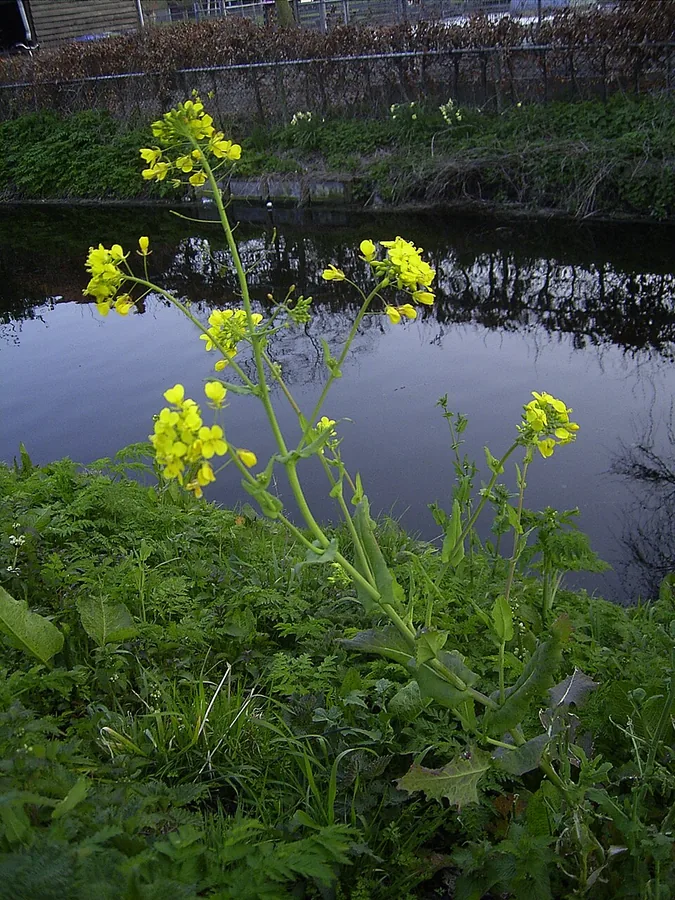
In heat and long days the low rosette stretches upward and pushes a single central flower stalk skyward, the plain sign of a bolt, and the blades sour as it climbs. As temperatures near 90°F (32°C) the change quickens and will not turn back, so the leaves are best cut while they still taste clean. A late-summer sowing brings tender growth again, and afternoon shade eases the plants through warm spells.
Fix:
- Harvest promptly before flavor declines
- Resow in late summer for a fall crop
Round pinholes punched through the feathery blades
Tiny round holes punched clean through the thin, feathery blades are the mark of flea beetles, small dark insects that flick away the moment you disturb them and chew hardest on the youngest seedling leaves. A floating row cover laid over the bed at sowing keeps them off the tender foliage before they can gather. New plantings set well away from a brassica bed troubled last year meet fewer of them.
Fix:
- Cover plantings with floating row cover at sowing
- Relocate plantings away from previously infested brassica beds
Soft green clusters massed on the tender tips
Soft-bodied green or gray specks packed along the leaf undersides and the pale growing tips, coated in a sticky film, are aphids. A hard jet of water knocks the clusters clean off the foliage. Insecticidal soap clears any that creep back, and a lighter hand with nitrogen keeps the soft, sappy new growth they crowd onto from swelling.
Fix:
- Rinse plants with a strong jet of water
- Apply insecticidal soap to affected foliage
Toxicity
Mizuna is a food crop and safe all around, its thin green blades grown for the table and harmless to cats, dogs, and the other animals on the farm. No part of the plant is toxic. The only mild note is the goitrogens shared across the cabbage family, which matter only when livestock graze brassicas heavily for a long stretch.
Safe for
People · Cats · Dogs · Horses · Rabbits · Livestock · Birds
Cats None
Cats are safe around the plant. A nibble of the thin peppery blades does no harm, though a large helping of any greens can loosen the stomach.
Dogs None
The leaves hold nothing toxic to dogs. A little of the plain green foliage is fine in small amounts as an occasional treat.
Horses Safe
Horses can graze the feathery leaves without trouble. As a mustard-family green it belongs to a minor share of the diet rather than a staple.
Rabbits Safe
The tender, deeply cut leaves make a healthy green for rabbits. Any new fresh food, this one included, is best introduced gradually.
Livestock Mild
Cattle, goats, and sheep can eat the leaves safely. Only heavy, sustained grazing on brassica forage risks the goitrogenic effects the family shares, so it belongs in a mixed pasture.
Birds Safe
Backyard hens and other birds peck the leaves with no concern. The green foliage adds useful variety to their feed.
People Safe
Mizuna is grown to be eaten, the raw blades tossed into salads or wilted into a dish. Healthy people have nothing to avoid.
Like other brassicas it contains glucosinolate goitrogens, which are mainly a concern for heavily grazed livestock rather than household pets.
Varieties
Mizuna comes in a couple of common forms, and the clearest difference is color, green against burgundy. Both share the same deeply cut, feathery leaf and much the same taste.
Mizuna (green)
The classic green form shows feathery, deeply serrated leaves cut almost to the midrib, carried on slim white stems, with a mild peppery taste.
Red Kingdom / purple mizuna
The burgundy-tinged form flushes its blades and stems purple, a deep contrast set against the green leaves of a salad mix.
How to propagate
Mizuna rises from seed alone, and it is one of the simplest greens to start. Sown straight into the ground, its first thin blades are only weeks away.
SeedEasy
Direct sow in early spring and again in late summer; succession sow for continuous harvest · Germinates in about 4-8 days at 55-75°F; baby leaves ready in roughly 21 days
Mizuna rises from small seed sown right where it will grow, sending up its first thin, notched leaves in place. Seed tucked 1/4 to 1/2 inch deep into cool, moist soil breaks the surface in about 4 to 8 days, with baby leaves ready to cut in roughly 21 days. A fresh row every couple of weeks, grown cut-and-come-again, keeps young feathery growth coming.
Myths
Mizuna is a hot, sharp mustard that has to be cooked before eating.
The thin blades carry only a mild, gentle peppery edge, not a fierce bite. They are at their best eaten raw in salads, and they also braise well, so cooking is a choice and never a requirement.
Mizuna is a warm-season green that needs summer heat to thrive.
Mizuna is a cool-season crop whose feathery leaves shrug off light frost and are slow to bolt. Spring and fall are its seasons, while summer heat drives up the flower stalk and sours the leaves.