Vegetable · Brassicaceae
Collard Greens
Brassica oleracea (Viridis Group)
Broad blue-green leaves in a loose open rosette that keeps unfurling new growth from its center long after frost.
Full sun
Every 3–7 days
60–80 days
USDA 2–11
Overview
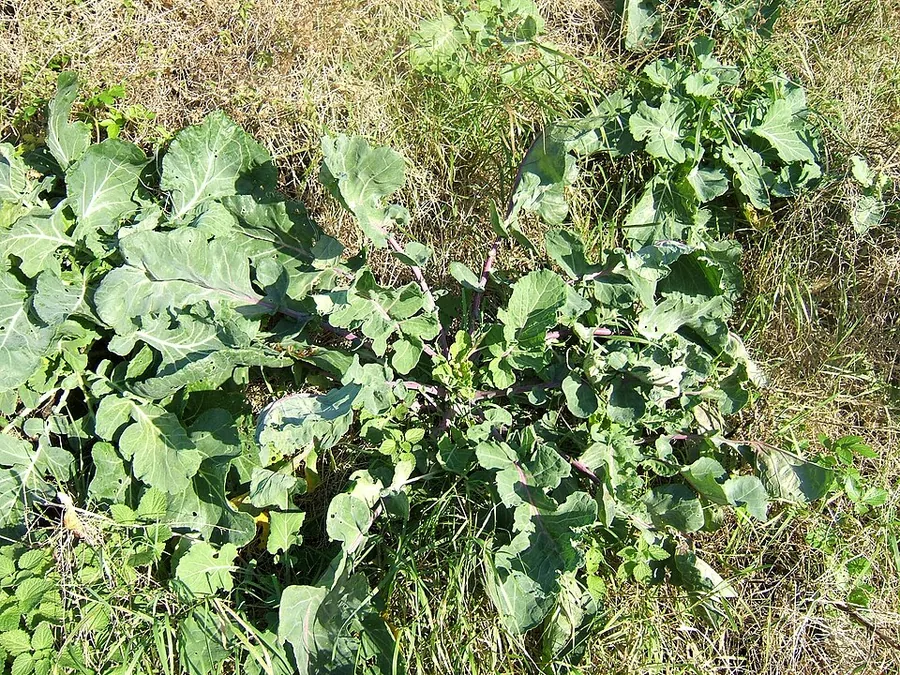
A collard is a leafy cabbage relative that never closes into a head. It grows as a loose open rosette of broad, paddle-shaped leaves on upright stems, each leaf a smooth or lightly waved blade in shades of deep blue-green. Of all the brassicas, none of them holds its color through late-fall cold the way this one does.
Look at how the plant builds and you see why it keeps producing. New leaves push out from the growing center while the oldest, widest ones spread at the bottom, ready to crop a few at a time. The blades sit on long pale midribs, and the whole plant stands tall and open rather than packed tight, so air moves freely between the leaves.
Cold weather changes the leaf itself. A frost does not wilt a mature collard; the broad green blade firms up and the flavor turns sweeter as the temperature drops. Left to its second year, the plant abandons leaf-making and shoots up a stalk topped with small yellow four-petaled flowers, the signal that this leafy stage is over.
Care
The short version: full sun, with light shade tolerated, in rich well-drained soil kept evenly moist at about an inch of water a week. Side-dress with nitrogen as the leaves widen, set plants about 18 inches apart, and crop the lower leaves once they reach size.
Light
These broad leaves color up and widen best in full sun, though the plant takes partial shade, which actually suits a leaf crop where summers run hot. The more sun the rosette catches, the faster and fuller the new blades come in, so give it an open spot.
Water
Hold the soil evenly moist, about an inch of water a week soaking the ground at least 6 inches down. Water early so the broad leaves dry before nightfall and disease cannot settle on the wet blades. Sandy ground drains fast and wants watering more often, and steady moisture matters most while young plants root in and as the leaves fill out.
Soil
Set collards in loamy, well-drained soil thick with organic matter, though the plant will manage in clay or sand once you work in compost. Aim for a pH between 6.0 and 7.5, toward neutral, which also keeps the root-swelling clubroot in check.
Temperature
This is a cool-season plant, easy across a wide band from about 23°F to 86°F (-5°C to 30°C). Mature rosettes take frost and even light freezes without flinching, and that cold is exactly what firms and sweetens the leaves.
Humidity
Ordinary outdoor air is all the leaves need, so there is no number to chase. Air movement counts for more, since still, damp air around crowded foliage is what lets leaf disease grab hold, which is why open spacing and base watering pay off.
Feeding
Work a preplant fertilizer into the bed by soil test, then side-dress with nitrogen such as calcium nitrate about 3 to 4 weeks after planting, and once more after that. Steady feeding keeps fresh leaves unfurling, but go easy, since the soft lush growth is just what the gray-green aphids cluster on.
Pruning
There is no real pruning to do. Crop the lower leaves once they reach usable size and the plant keeps pushing new growth from the center, or cut the whole rosette at maturity. Strip off any yellowed or diseased lower leaves the moment you spot them.
Size & spacing
A plant reaches 2 to 4 feet (60 to 120 cm) tall and the rosette spreads 12 to 24 inches (30 to 60 cm) across. Leave about 18 inches between mature plants so air moves through the broad leaves and disease finds less to settle on.
When to plant
Collards size up their leaves in cool weather and fit two sowings. Get seed in early, as soon as the ground turns over, for a spring stand, then sow again at midsummer for leaves that hold through fall into early winter. That late crop is the one to wait for, since the cold deepens the green and sweetens every bite.
Northern hemisphere
Southern hemisphere
Typical months for a temperate climate: start earlier in warm zones, later where spring frosts linger.
- Sow: 6-8 weeks before the spring transplant date; sow indoors again in early summer (June) for a fall crop
- Plant: early spring as soon as soil can be worked for a spring crop; mid- to late summer for a fall and early-winter crop
- Harvest: harvest leaves 60-80 days from seeding; flavor sweetens after light fall frosts, and mature plants withstand frosts and light to medium freezes
Hardiness
USDA hardiness zones: 2–11
Temperature: down to -46°C
Troubleshooting
Most of what goes wrong on a collard shows on the broad flat leaves or hides down in the roots and soil. Turn a few leaves over each week and look closely at how the plant carries itself. Match the picture below, then step in while the leaves can still recover.
Yellow triangular stains eating inward from the blade's rim
Yellow wedges, shaped like triangles or a V, eating in from the leaf margin with the veins inside turning black, point to black rot, a bacterial disease with no cure once it takes hold. Pull and destroy the infected plants and any debris, and stay clear of the bed while the leaves are wet so you do not carry it along. Start clean next time with certified disease-free seed, water at the base early in the day, and rotate out of brassicas for several years.
Fix:
- Remove and destroy infected plants and debris
- Avoid working among wet plants
- There is no cure once infection is established
Leaves sagging limp in warm sunshine above damp earth
When the ground is moist but the plant still droops and stalls in warm sun, lift one and look at the roots for swollen, club-shaped galls. That is clubroot, and the deformed roots simply cannot draw up enough water. Remove and destroy the whole plant, roots and all, and never compost it. Keep brassicas out of that bed for at least four years and hold the soil pH near neutral, since the disease lingers in acidic ground.
Fix:
- Remove and destroy infected plants including roots
- Do not compost infected material
- Do not replant brassicas in the affected bed
Ragged holes punched through the broad leaves
Ragged holes torn in the blades, with dark green droppings scattered across the surface, mean green caterpillars are feeding: imported cabbageworms, cabbage loopers, and diamondback moth larvae all do it. Pick the soft green bodies off the leaf undersides by hand, then spray Bacillus thuringiensis to clear the rest. The surest fix is a floating row cover laid at planting, before the white butterflies and small gray moths ever land to lay their eggs.
Fix:
- Handpick caterpillars
- Apply Bacillus thuringiensis (Bt) to foliage
- Cover plants with floating row cover at planting to exclude egg-laying adults
Blades crumpled into sticky, twisted folds
Clusters of soft gray-green aphids pack the undersides of the leaves and the crinkled folds of new growth, sucking sap until the blades twist and turn tacky. Knock them off with a hard jet of water, then treat with insecticidal soap, coating the leaf undersides where they hide. Ease off the nitrogen too, since the soft fast growth is just what pulls them in.
Fix:
- Dislodge with a strong stream of water
- Apply insecticidal soap, thoroughly covering leaf undersides
- Remove heavily infested leaves
A tall stalk rising from the rosette as the leaves go bitter
This is bolting, the plant racing to flower instead of widening leaves, the central stem stretching skyward and topping out in small yellow four-petaled flowers. It follows a long cold spell on young plants that then meet warm weather, or it simply marks an overwintered plant reaching its second year. Nothing reverses it once the stalk is up, so crop whatever leaves are still good and resow. For spring stands, pick bolting-tolerant cultivars and do not rush transplants out into lingering cold.
Fix:
- Harvest remaining usable leaves promptly
- Remove the plant and resow for the next season
Toxicity
Every part of a collard plant is a safe, edible green with nothing toxic in the leaves, and the ASPCA does not list it as a poisoning risk to pets. You can grow these broad-leaved plants in a garden shared with children, dogs, cats, and backyard animals without concern. The one mild note is the goitrogens common to all brassicas, which matter only in very large raw amounts and break down in the pot.
Safe for
People · Cats · Dogs · Horses · Rabbits · Livestock · Birds
Cats Safe
Collard leaves are not toxic to cats, and the ASPCA does not flag them as a poisoning risk. A cat that bites a leaf is fine, though a big helping of any leafy green can loosen the stomach for a day.
Dogs Safe
No toxin in the leaves for dogs. Plain cooked collards even turn up in some homemade dog meals. The only thing to watch is gas or a soft stool if a dog wolfs down a large raw pile.
Horses Safe
Horses eat collard leaves with no harm. As with any cabbage-family green, keep it to modest amounts so the bulky leaves do not leave a gassy horse uncomfortable.
Rabbits Safe
Rabbits do well on collard leaves, a common staple in a mix of fresh greens. Bring any new leaf in slowly and serve it alongside variety rather than on its own.
Livestock Safe
Cattle, goats, and sheep graze the broad leaves as forage with no poisoning concern. Animals shifted suddenly onto large amounts of lush brassica can bloat, so ease them onto it.
Birds Safe
Chickens and other birds peck happily at the green leaves, and they make a healthy treat. Hang a whole leaf or chop it small and let them work at it through the day.
People Safe
Collard leaves are a kitchen staple, good raw or cooked, and safe for everyone in the family. Like all brassicas they carry mild goitrogens, which only matter in huge raw amounts and cook away in the pot.
No special handling precautions. Like other brassicas, collards contain goitrogenic compounds, a minor dietary note at very high raw intake rather than a poisoning risk.
Varieties
Collard varieties range from old Southern heirlooms with big loose leaves to modern hybrids carrying tight savoyed foliage. Look closely at the leaf surface and the plant's habit, since that is what sets these apart on a seed rack.
Georgia Southern
A heat-tolerant Southern heirloom that never closes into a head, holding instead a spreading plant of big loose leaves.
Vates
The compact, slow-to-bolt heirloom standard, known for smooth blue-green leaves on a tidy, upright plant.
Morris Heading
An heirloom cabbage collard whose tender leaves draw together into a loose head rather than opening out flat.
Champion
An improved Vates type bred for tougher cold hardiness and a stronger hold against bolting.
Blue Max
A high-yielding hybrid carrying heavily savoyed, deeply crinkled blue-green leaves.
Top Bunch
An early, even hybrid built for cropping individual leaves over and over through the season.
Companions
Collards do best kept well away from their cabbage-family relatives, which trade the same pests and soil diseases back and forth.
Keep apart
other brassicas (cabbage, broccoli, kale, Brussels sprouts): They share the same pests and soilborne diseases such as clubroot; extension guidance is to avoid planting collards where any brassica-family crop has grown within the past four years
How to propagate
Collards come up from seed, about as simple as gardening gets, whether you press it straight into the bed or raise a few seedlings indoors first.
SeedEasy
Direct sow in early spring or in midsummer for a fall crop; or start indoors 6-8 weeks before transplanting · Germinates in about 5-10 days in cool soil; transplant-ready in 4-6 weeks
Collards come up easily from seed, pressed straight into the bed in early spring or at midsummer for a fall crop, or raised indoors 6 to 8 weeks before you set plants out. Sow about a quarter to half an inch deep, and in cool soil the seedlings break the surface within 5 to 10 days, ready to move at 4 to 6 weeks. Thin them to roughly 6 inches at first, then pull and eat the crowded young plants until about 18 inches of room stands between the rosettes you keep.
Myths
Those broad blue-green leaves thrive only under a Southern sun and give up in a northern bed.
No leaf in the cabbage family stands up to late-fall cold like a collard. Gardeners in Illinois and Minnesota grow them well, still cropping firm green leaves long after frost has shut down the rest of the garden.
Frost ruins collard greens.
It runs the other way. The mature plant shrugs off frosts and even light to medium freezes, and a cold snap firms the broad blades and sweetens the leaves and improves their flavor.