Ornamental · Boraginaceae
Lungwort
Pulmonaria saccharata
Give it cool shade and steady moisture and lungwort spreads low, spotted leaves beneath flowers that open pink and ripen to blue.
Partial shade
Every 7 days
USDA 3–9
10–18 in · 25–46 cm
Overview
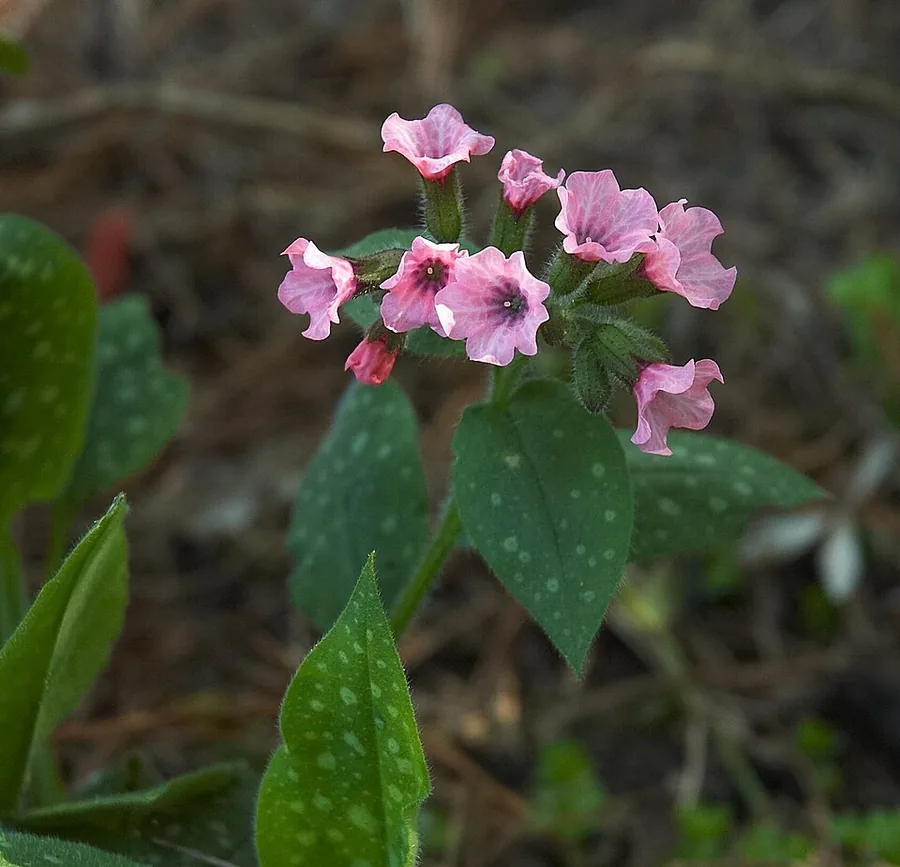
Lungwort is a low, clumping perennial with two features that catch the eye up close: its silver-spotted leaves and its flowers, which open pink and shift to blue on the very same stem. The leaves carry pale spots scattered across a deep green ground, and it is that speckling that named the plant, since old herbalists read the marks as a likeness of diseased lungs. The plant sits in the borage family, and the spots are simply part of the foliage.
The color story runs through the flowers. Each bloom opens pink and matures to blue, so a single stem holds both shades at once as the buds catch up with the older flowers, and the show comes early, in late winter to spring. Around them the spotted leaves stay low and broad, and they hold their pattern long after the last flower has dropped, so the marked foliage carries the plant through the rest of the season.
Underfoot the plant knits into a slow, low mat. Kept in cool, evenly moist shade, the clumps stay firm and dense, the leaves broad and spotted and close to the ground. Push it into hot, dry sun, though, and the leaves crisp and scorch at the edges before the whole plant sinks into a sulky dormancy.
Care
The short version: grow lungwort in part to full shade, keep the soil cool, rich, and evenly moist, feed it lightly each season, and divide the clumps in fall once they crowd.
Light
Lungwort wants part to full shade, the deep, cool kind found under trees or on a building's north side. It holds up in full shade and still flowers, but real sun crisps and scorches the leaves and pushes the plant into early dormancy.
Water
Keep the soil cool and evenly moist but never waterlogged, watering about once a week through dry spells. Let it dry and the broad leaves lose their firmness and wilt, and the plant slips into dormancy to protect itself.
Soil
Give it cool, humus-rich ground that holds moisture yet still drains. Work in plenty of dark compost or crumbly leaf mold, the loose, spongy soil it would meet on a woodland floor.
Humidity
Average
Feeding
A slow-release all-purpose fertilizer once a season is all it needs. Scatter it during the growing season and let the rich, organic soil carry the rest.
Pruning
Pull off the older, tattered, or mildewed leaves as they turn ragged through the year. Cutting the foliage back after the flowers fade brings up a fresh, clean flush of bright spotted leaves for summer.
Size & spacing
Plants stay low at 10 to 18 inches (25 to 46 cm) tall and spread wider than they are high, reaching 18 to 24 inches (46 to 61 cm) across. Given that room, the spotted leaves knit into a slow, low ground cover.
When to plant
Lungwort moves with the cool part of the year. Set new plants out in spring or fall into a shaded bed, and the flowers open in late winter to spring, each one pink at first and ripening to blue, well before most perennials stir.
Northern hemisphere
Southern hemisphere
Typical months for a temperate climate: start earlier in warm zones, later where spring frosts linger.
- Sow: Seldom grown from seed; if used, sow seed in early spring.
- Plant: Spring or fall in a shaded site.
- Harvest: Blooms late winter to spring (April to May), flowers opening pink and maturing to blue.
Hardiness
USDA hardiness zones: 3–9
Temperature: down to -40°C
Troubleshooting
Lungwort keeps its firm, spotted leaves in the right spot, so most trouble shows up first as a change in the foliage, traced back to too much sun or the wrong soil moisture. Look closely at the leaves and crown for the early signs below. Fix the site and the plant usually rights itself.
A darkened, softening crown as the leaves sink flat
When the leaves sink flat and the crown darkens, crown and root rot has set in, striking where soggy soil holds water and turns the roots dark and mushy to the touch. Fork organic matter through the ground to open it up, and keep the plant off any low pocket where water gathers. Lift the crowns that are still pale and firm, split them, and reset them in soil that drains.
Fix:
- Improve drainage with organic matter
- Avoid waterlogged sites
- Divide and replant healthy crowns in well-drained soil
Crisped brown margins and limp leaves in the sun
When the leaf margins crisp to brown and the blades hang limp, that is leaf scorch from too much sun and dry soil, and the whole clump often droops flat in the midday heat. Move the plant into part to full shade, keep the soil evenly moist, and spread mulch to trap water and cool the roots. Lungwort is a shade plant at heart, so the darker, damper spot lets the leaves firm up again.
Fix:
- Move or transplant to part to full shade
- Water to keep soil evenly moist
- Mulch to keep roots cool and reduce moisture loss
A chalky white bloom filming over the leaf surface
That chalky white bloom dulling the green is powdery mildew, and it settles on the leaves when the soil dries out and the air hangs still between them. Pick off the worst-filmed leaves, loosen the crowded clump so air slips through, and keep the soil evenly moist. A hard cutback clears the dusted foliage and lets fresh, clean leaves push up.
Fix:
- Remove and discard affected leaves
- Improve air circulation and keep soil evenly moist
- Cut back foliage to promote clean new growth
Torn holes and glistening trails scoring the leaves
The torn-edged holes and the glistening streaks that catch the light come from slugs and snails, which rasp through the soft leaves after dark and worst after rain. Go out at dusk and lift them off the foliage by hand, then rake away the damp leaf litter where they shelter through the day. When the chewing keeps scarring the leaves, a bait or a barrier turns it back.
Fix:
- Hand-pick slugs in the evening
- Remove leaf litter and debris that shelter them
- Use slug baits or barriers if damage is heavy
Toxicity
For pet owners and parents, the reassurance is plain: lungwort is not toxic. The ASPCA does not list Pulmonaria as poisonous to cats or dogs, and there are no reports of harm to other animals or people. A curious nibble on a spotted leaf is nothing to worry about.
Safe for
People · Cats · Dogs · Horses · Rabbits · Livestock · Birds
Cats None
Lungwort is safe for cats, carrying no toxic compounds even when a curious mouth closes on a spotted leaf.
Dogs None
Dogs can nose through the bristly foliage or chew a leaf without harm, and the ASPCA does not list it as poisonous.
Horses Safe
Horses face no risk from it, as the plant holds nothing that would trouble a grazing animal that size.
Rabbits Safe
Rabbits can move through a planting unharmed, and the coarse, hairy leaves usually turn them away before they bite.
Livestock Safe
Cattle, goats, and sheep are safe grazing near it, with no reports of poisoning from the foliage.
Birds Safe
Garden birds face no danger from the leaves or the flowers.
People Safe
Handling the rough, spotted leaves and growing lungwort poses no poisoning risk to people, children included.
Varieties
Lungwort is grown as much for its leaves as its flowers, and the named cultivars below differ mainly in how heavily the silver splashes the foliage and what color the blooms finally turn.
Mrs. Moon
A classic cultivar whose leaves are heavily splashed with silver, carrying pink buds that unfurl into soft blue flowers.
Raspberry Splash
An upright grower with silver-spotted leaves standing over flowers in deep raspberry-pink to violet.
Spot On
A vigorous, silver-spotted selection whose coral-pink blooms deepen and cool to blue as they age.
How to propagate
Lungwort multiplies with ease, and dividing a settled clump is far more reliable than starting from seed.
DivisionEasy
Fall, when clumps become overcrowded · One growing season
Division is the easy, reliable way to make more lungwort. Lift the crowded clump in fall, split the crown into fresh pieces, and pull off the tired older leaves as you reset each division. A single growing season is enough for each piece to root in and firm up.
SeedModerate
Early spring · Seedlings reach blooming size in about a year
Seed is the slower path, and the named cultivars will not come true, so the seedlings rarely wear the same silver markings as the parent. Sow in early spring to try, and expect the young plants to reach blooming size in about a year.
Myths
The spotted leaves mean lungwort cures lung disease.
The doctrine of signatures read the pale spots scattered across the leaves as a sign the plant could heal the lungs, but that speckling is just a natural marking in the foliage. The name and the herbal lore grew from that resemblance, not from any proven effect on the lungs.
Lungwort spreads fast and turns invasive.
It edges outward slowly on its roots and never runs wild the way invasive plants do. When a clump widens past its space, it is dug up and divided.