Bulb · Amaryllidaceae
Giant Ornamental Onion
Allium giganteum
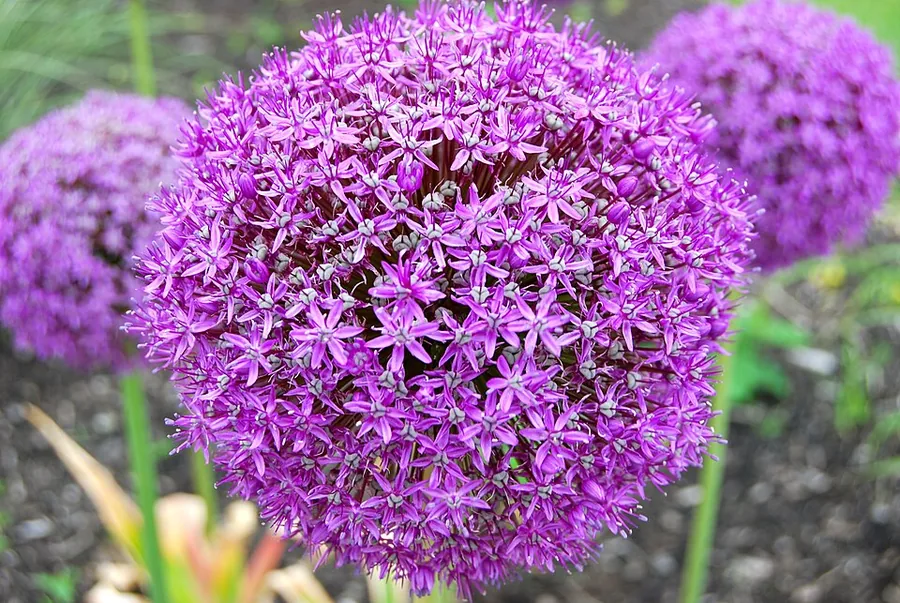
Plant the bulbs in fall, and by early summer giant allium floats round purple globes high on leafless stems over the border.
Full sun
Every 7–10 days
USDA 4–8
3–6 ft · 0.9–1.8 m
Overview
Giant ornamental onion is grown for one sight above all: round purple flower heads, packed tight as a ball, riding atop slim bare stems in early summer. It belongs to the same family as the onion and garlic in the kitchen, yet here the bulb is kept for the look alone. Each globe lifts to head height and sits clear above the leaves and stems around it, a violet sphere suspended in open air.
Below that show is a hardy, long-lived bulb that returns every year and shrugs off winters as cold as -29°F (-34°C). Dormant bulbs sink into the ground in fall, push up tall leafless scapes through late spring, and the globes keep their purple color for two to three weeks before the strappy, ribbon-like leaves yellow and vanish. Once the bloom passes, the plant melts back into the border and lets its neighbors take the foreground.
One warning runs beneath the beauty. Every part of the plant is toxic to cats, dogs, horses, and livestock, just as a chewed onion would be, so it wants a spot beyond the reach of any grazing animal. Given an open, sun-washed bed, it stands as a bold, low-effort bulb with few rivals for sheer presence.
Care
The short version: full sun and quick-draining soil, bulbs buried deep in fall, even moisture through the growing season, and a stake holding the tall bare stems upright where the wind reaches them.
Light
Set in full sun, giant allium throws up the thickest, most upright stems and the fullest globes. A patch of afternoon shade does little harm, but deeper shadow leaves the bare scapes thin and tilting, with fewer flower heads to crown them.
Water
The soil should stay evenly moist through the growing season, then dry down as it weathers summer drought once the leaves wither. A drink every 7 to 10 days covers it, and standing water around the bulbs turns them soft and rotten.
Soil
It roots well in average, well-drained soil, gritty sand, heavy clay, or crumbly loam alike, so long as water slips through rather than pooling. A broad pH band from 5.5 to 8.0 suits it, which takes in nearly any bed.
Temperature
This cold-hardy bulb rides out winters as bitter as -29°F (-34°C) and summer heat up to 86°F (30°C). The deep winter chill is no hardship; it is the very cold that wakes the bulb into setting fine flowers.
Humidity
Plain outdoor air is all it asks, so no humidity reading need concern you. What counts is drainage and moving air, since the damp, still pockets around a bulb are where soft rot creeps in.
Feeding
A balanced or low-nitrogen bulb fertilizer worked into the soil at fall planting, with a second feed in early spring, keeps it fed. Too much nitrogen swells soft, flopping leaves and starves the globes of strength.
Pruning
The spent flower scapes are cut away once the bloom fades, but the strappy leaves are left to yellow and collapse on their own, since they are quietly stocking next year's bulb. In an open spot, a stake holds the tall bare stems before the wind lays them down.
Repotting
Crowded clumps are lifted and split every 3 to 4 years in fall, once the globes come up fewer and smaller. Bulbs jammed shoulder to shoulder underground are the plain sign that the clump wants dividing.
Size & spacing
The plants rise 3 to 6 feet (90 to 183 cm), tall enough to belong at the back of a border. Bulbs spaced 9 to 12 inches apart and tucked 5 to 8 inches deep give each clump the room to swell and fill.
When to plant
Giant allium runs on an autumn-to-summer cycle you can almost watch unfold. The bulbs sink into the ground in fall and root before the soil hardens with frost, winter and spring slip by, and the round globes split open across June and July for a couple of weeks of color.
Northern hemisphere
Southern hemisphere
Typical months for a temperate climate: start earlier in warm zones, later where spring frosts linger.
- Plant: Plant bulbs in fall about 5-8 inches deep and 9-12 inches apart
- Harvest: Late spring to early summer (June-July), blooms lasting 2-3 weeks
Hardiness
USDA hardiness zones: 4–8
Temperature: down to -34°C
Troubleshooting
Trouble with giant allium tends to surface either underground, in the bulb, or up in the wind on those tall stems. Waterlogged soil softens and rots the bulbs, minute mites gouge and pit them, and the bare scapes snap when nothing holds them. Match the look of the damage to the notes below and step in early, before it travels through the bed.
Soft, mushy bulbs and plants slumping to the ground
Soil that holds water and drains slowly softens the bulb into bulb rot, and in a corner that stays sodden a black rot fungus moves in to finish it. A bulb pulled from the ground feels squishy and gives off a sour, foul smell. The spoiled ones are lifted out and binned, the watering is cut back, and the firm survivors go into soil that lets water run clear.
Fix:
- Remove and discard affected bulbs
- Improve soil drainage and reduce watering
- Replant healthy bulbs in well-drained amended soil
Twisted, stunted shoots from pitted bulbs
Bulb mites burrow into the layered scales and chew, and their feeding leaves the fresh shoots warped and the bulb pocked with little scars and dents. A close look at any doubtful bulb turns up the specks of mites and the rough, eaten patches. The worst are thrown away, only firm clean bulbs go back in, and the growing spot is shifted to fresh ground.
Fix:
- Discard heavily infested bulbs
- Plant only firm, healthy, mite-free bulbs
- Practice crop rotation and good sanitation
Tall stems bowing over or snapping clean
The heavy globes balance at the top of long bare scapes, so a gusty day arcs them over or snaps them outright, most often once the head carries its full weight. The cause is plain: wind shoving against stems with nothing to brace them. A sheltered nook and a stake driven in before bloom keep them standing.
Fix:
- Stake tall stems for support
- Site plantings in locations sheltered from strong winds
Toxicity
The whole plant should be kept clear of any animal's mouth. Within the bulbs, leaves, and flowers sit the organosulfur compounds that give onions and garlic their bite of danger, and they can shatter red blood cells and bring on hemolytic anemia. Cats feel it most keenly, while dogs, horses, and grazing livestock face real harm too, so the plant belongs somewhere none of them can reach.
Toxic to
Cats · Dogs · Horses · Rabbits · Livestock · Birds · People
Cats Severe
Cats take the sharpest blow of all. Even a small bite can set off vomiting and start tearing through their red blood cells, surfacing as limp weakness, a galloping heartbeat, open-mouthed panting, and dark, stained urine.
Dogs Severe
A dog that chews any piece may vomit and then sink into a weak, listless droop as its red blood cells break apart. Pale, washed-out gums, rapid breathing, and discolored urine are the warning marks, and a vet should be reached fast.
Horses Severe
Horses meet the same red blood cell damage when they crop the leaves or bulbs, left dull-eyed and weak. The anemia can creep up through repeated small bites, with no single big mouthful required.
Rabbits Toxic
Those same onion-family compounds are toxic to rabbits, so the whole plant stays well clear of them. Not even a scrap is safe to hand over.
Livestock Toxic
Cattle, sheep, and goats can sink into hemolytic anemia from eating alliums, the leaves green in the field or dried gray in the hay. A fence keeps them off the plantings, and any cut trimmings within reach are swept away.
Birds Toxic
Birds feel onion-family toxins too, so chickens and pet birds should never get at the bulbs, leaves, or flowers.
People Caution
This is an ornamental onion raised for its flowers, not a crop for the plate, so it is not meant to be eaten. Handling does no harm, though hands want a wash afterward, and curious children are best kept clear of the bulbs.
Keep all parts, including bulbs, foliage, and flowers, out of reach of pets and livestock. Store bulbs securely and clean up trimmings; wash hands after handling.
Helpline numbers

United States
ASPCA Animal Poison Control: (888) 426-4435 (fee applies)
Poison Control: (800) 222-1222



Canada
Poison Centres: 1-844-764-7669
Varieties
A handful of big-flowered alliums arrive under the giant-onion name, joined by a few close relatives offered in its place. These are the ones worth picking out by sight.
Globemaster
This hybrid puts up the grandest heads, dense violet globes of 8 to 10 inches balanced on thick, unbending scapes.
Allium hollandicum (aflatunense)
A close ornamental onion carrying smaller umbels in rose-purple, often sold as a cheaper stand-in for the true giant allium.
Allium cristophii (Star of Persia)
A lower-growing relative whose broad, loosely open umbels spread into shimmering pink-violet stars.
Companions
Plant near
Roses: Tall allium scapes rise through and complement roses and other border plants while filling early-summer gaps.
Peonies: Allium bloom coincides with and extends color in the perennial border alongside peonies.
How to propagate
Giant allium multiplies without fuss, whether from fresh bulbs or by splitting a stand already in the ground. Almost all of the work belongs to fall.
Bulbs & cormsEasy
Fall · One growing season to bloom
The plainest beginning is a dormant bulb set out in fall. Buried 5 to 8 inches deep and spaced 9 to 12 inches apart, it sends up its first round globe the following growing season.
Offsets & pupsEasy
Fall · 1-2 seasons
An established bulb crowds small offset bulblets around its base. Lifted in fall, the offsets snap loose by hand, and replanting them spreads the stand wider, though each takes a season or two to swell to blooming size.
DivisionEasy
Fall · 1-2 seasons
A clump grown tight underground is dug in fall every few years and pulled into pieces to keep the bulbs plump and vigorous. Each split roots over a season or two and lifts its flowers again on its own clock.
SeedModerate
Fall to spring · Several years
Alliums drop and sprout their own seed with ease, and seed can be sown any time from fall through spring. It is the slow road, since seed-grown plants spend several years swelling before a single globe appears.
Myths
Ornamental flowering alliums are merely pretty and safe for pets, unlike kitchen onions and garlic.
Ornamental alliums share the very genus that holds onion and garlic, and they carry the same toxic organosulfur compounds. From the round bulb underground to the purple flower up top, any part can break down a pet's red blood cells. They threaten cats, dogs, and horses just as surely as anything sitting on the spice shelf.