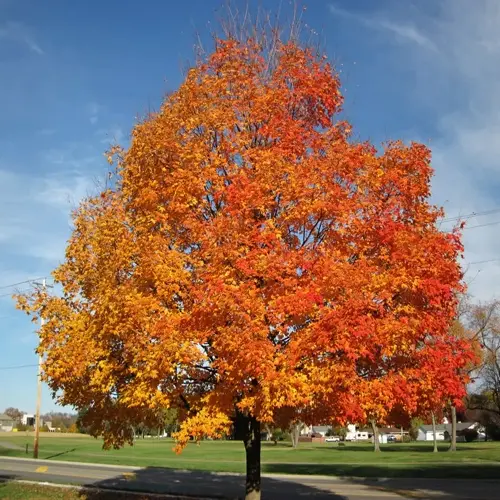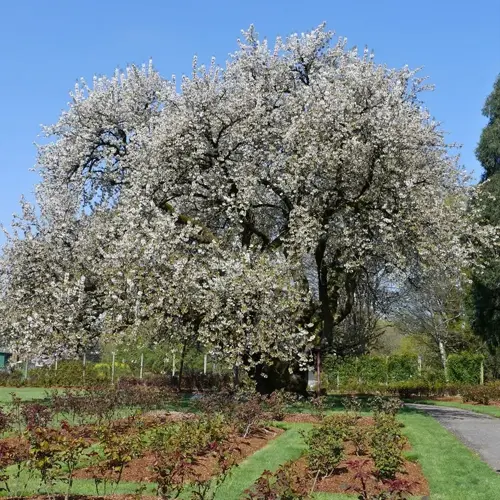

Plum trees grow best in full sun on deep, well-drained soil with a pH near 6.5. Get the plum tree growing location right and the tree does most of the work itself. Pick a poor spot and you fight rot and weak harvests for years.
Picture two of the same young plum planted on the same day. One sits in an open spot that bakes in sun all afternoon, on ground that drains fast after rain. The other hides in a damp, shaded corner where puddles linger. By the third summer the sunny tree is wide, leafy, and loaded with fruit. The shaded one is thin and slow, and it drops half its plums before they ripen.
That gap comes down to two things. Sun feeds the flower buds that turn into next year's crop, so a tree in shade sets far fewer plums. Full sun also helps the wood harden off before winter, which makes the tree tougher in the cold. Full sun means at least six hours of direct sun a day, per University of Maine guidance. More is better. A spot that gets sun from morning through late afternoon gives you the fullest crop and the sweetest fruit, because the leaves have all day to feed the tree.
Drainage matters just as much. Plum roots sit in wet ground and rot, and that opens the door to root and crown diseases plums catch fast in soggy soil. The best soil for plum trees is deep and loose so water runs through instead of pooling. Heavy clay that stays wet for days is the wrong start. You can check your own ground with a simple test. Dig a hole about a foot deep, fill it with water, and let it drain. Fill it again and time the second drain. If the water is gone within a few hours, the spot drains well enough for a plum. If it still sits there the next morning, look elsewhere or build the soil up first.
If your only open, sunny spot drains poorly, you still have options. Plant on a low mound or raised bed about a foot high so the roots sit above the wet zone. Mixing compost into heavy clay also opens it up over time and helps water move through. A slight slope works in your favor too, since gravity pulls extra water away from the trunk and downhill.
Soil pH is the other number to check. Clemson and Utah State both point to a target range that keeps nutrients available to the roots.
Now put it to work on your own yard. Skip the middle of a lawn, where grass roots steal water and you can never dig a clean planting hole. Stay off any low spot where rain or snowmelt collects, since that is where wet roots start. Walk the yard after a hard rain and watch where puddles sit longest. Cross those spots off the list.
Test the soil before you plant, not after. A cheap pH test tells you where you stand, and you have time to fix it while the hole is still empty. Stir in lime to raise a low pH, or work in sulfur to bring a high one down toward 6.5. Both take weeks to shift the soil, so do this a season ahead if you can.
One more piece rounds out the right plum tree growing conditions. Pick a spot with steady air movement, like an open side of the yard rather than a tight nook between buildings. Moving air dries the leaves faster after rain and dew, and dry leaves fight off the fungal diseases plums are prone to. Full sun, sharp drainage, a pH near 6.5, and a breeze add up to a tree that fruits well and stays healthy for decades.
Read the full article: Plum Tree Guide: Grow, Harvest, and Eat