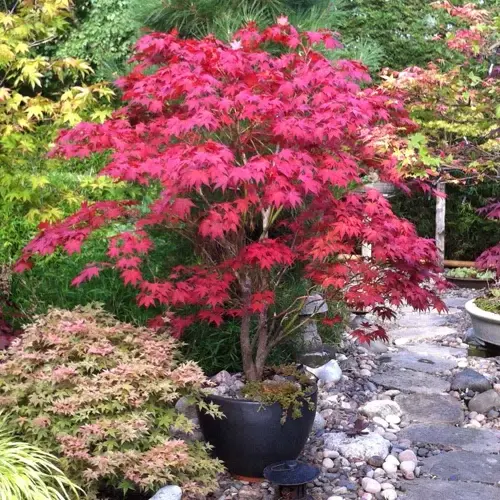
The back corner of my upstate New York yard sat bare and slow for years, right where the lawn meets the wood line. A young Legacy sugar maple went in there about twenty years ago, and it crept up at a snail's pace. The side facing the driveway turned brown and crisp each spring. Road salt did that. The rest of the tree limped along behind every other plant I owned.
The main sugar maple disadvantages come down to a few real problems. The tree grows slowly, gets huge at maturity, and reacts badly to road salt, summer heat, and wet feet. These traits make it a poor pick for small lots, salted streets, and hot southern yards. None of them are deal breakers on the right site, but they will frustrate you on the wrong one. Know them before you dig the hole.
Slow growth is the first of the sugar maple drawbacks you notice. A young tree puts on only about 12 inches (30 centimeters) of height per year early on. You wait years for real shade, and you wait even longer for that classic broad canopy. Faster trees like red maple or river birch will tower over your sugar maple while it is still finding its feet. If you want shade in five years, this is not your tree.
Then there is the size problem on the other end. A mature sugar maple reaches 90 to 120 feet tall with a wide, dense crown. That kind of tree needs room. Plant one too close to your house or your drive and you buy yourself decades of pruning, lifted concrete, and roots in places you do not want them. The dense shade also makes it hard to grow grass or anything else beneath the tree, so you trade your lawn for bare ground in that corner.
Road salt is the cruelest of the sugar maple problems for many homeowners. The leaves and twigs scorch and brown when de-icing salt splashes up from a driveway or street. My own tree shows it every year on the salted side. If you live on a road that gets plowed and salted all winter, you will fight this damage for the life of the tree. The roots also hate trouble underground, and they are very sensitive to flooding during the growing season. A few days of standing water in summer can kill them outright.
Climate and soil round out the sugar maple disadvantages that catch people off guard. The tree struggles in the hot, dry deep South, where summer heat cooks it and the leaves brown at the edges by August. It also dislikes compacted or swampy soil and sulks in tight city dirt. You need to give it loose, well-drained ground and 30 to 50 feet of space away from your drives and foundations. Skimp on either one and it will never thrive.
So decide with your site in mind. Skip the sugar maple for small yards, salted roadsides, and hot southern lots where these conditions cannot be fixed. Pick a tougher tree like a red maple, a swamp white oak, or a hackberry for those spots. Each of those handles salt, heat, or wet ground far better than a sugar maple does. You will spend less time nursing a struggling tree and more time enjoying the shade. Save the sugar maple for a large, cool, well-drained yard with room to grow. Plant it there and it will pay you back with deep shade and bright fall color for generations.
Read the full article: Sugar Maple: Care, Syrup, and Facts