

Introduction
Almost every list of types of roses sorts them around one date: the year 1867. That is when the first hybrid tea, La France, arrived from French breeder J-B A. Guillot. The American Rose Society draws its line there. Everything bred before it counts as old, and everything after counts as modern. It sounds simple, and the shop pages stop right there. You deserve more than a list that ends where the real choosing begins.
The numbers behind that line are wild. The genus Rosa holds about 200 species in the wild. Yet centuries of breeding have produced tens of thousands of cultivars. Just 10 to 20 ancestral species gave rise to nearly all of them. So you are not picking from 200 neat options. You are facing a sprawling family with thousands of cousins, and that is exactly why a clear map matters before you buy a single plant.
Most guides hand you that map and walk away. This one goes further. You get the rose classification every expert uses, paired with real help choosing and caring for each kind. I have planted hybrid teas that sulked through their first winter and tough shrub roses that bloomed straight through a July heat wave. That gap is the whole point. The right type turns a flat list into a tool you can actually decide with. You will see which roses repeat all summer, which ones smell incredible, and which ones shrug off cold winters without fuss.
Think of it as one big family tree. The wild species roses sit at the root, tough and simple with just 5 to 8 petals each. One branch holds the old garden roses, the heritage classes that existed before 1867. The other branch holds the modern roses, the hybrid teas and floribundas that fill most gardens today. Let's start at the root and work our way up the tree.
Three Main Groups of Roses
All rose classification starts with one simple split. The American Rose Society sorts every rose into three master groups, then breaks those groups into more than 35 classes. The three groups are species roses, old garden roses, and modern roses.
Think of the year 1867 as a single hinge in the rose calendar. Everything bred in a class that existed before that date counts as old garden. Everything in a class that came after it counts as modern. That one date is the cleanest way to keep the whole system straight in your head.
The reason 1867 matters is a single plant. A French breeder named Jean-Baptiste Andre Guillot released the first hybrid tea that year, a rose called La France. The American Rose Society later picked 1867 as the official line to mark that first hybrid tea. So the date earns its place.
The numbers here are smaller than you might guess. The genus Rosa holds about 200 wild species. Yet just 10 to 20 ancestral species gave us every rose you grow now. Two of the big ones to know by name are Rosa gallica and Rosa damascena. Rosa moschata and Rosa wichuraiana round out that short founder list. Here is how the three groups stack up for you.
Species or Wild Roses
- Definition: These are the original wild roses that grow naturally without human breeding, forming the root of the entire rose family.
- Bloom form: Most species roses carry just 5 to 8 open petals, grow in clusters, and produce colorful rose hips in autumn.
- Bloom timing: Almost all species roses bloom once per season, with Rosa rugosa being a well-known exception that reblooms.
- Why they matter: Breeders return to species roses for fragrance and disease resistance, and hips feed birds and make herbal teas.
Old Garden Roses (Before 1867)
- Definition: Old garden roses belong to classes that existed before 1867, the year the first hybrid tea arrived.
- Classes: The American Rose Society lists 14 old garden classes, including alba, bourbon, centifolia, china, damask, gallica, moss, noisette, portland, and tea.
- Strengths: Gardeners prize these heritage roses for deep fragrance, hardiness, and centuries of history in European gardens.
- Bloom habit: Many old garden roses bloom once per year, though bourbons were the first repeat-flowering roses in this group.
Modern Roses (After 1867)
- Definition: Modern roses belong to classes that did not exist before 1867, beginning with the hybrid tea La France.
- Popular classes: This group holds the hybrid tea, grandiflora, floribunda, polyantha, miniature, shrub, and climbing roses.
- Strengths: Breeders shaped modern roses for repeat blooming, a wide color range, larger flowers, and stronger disease resistance.
- Scale: Tens of thousands of modern cultivars now exist, with more than 34,000 plant-variety rights granted in the European Union alone.
The 1867 Dividing Line
- Why 1867: The American Rose Society set this year to mark the introduction of the first hybrid tea, La France.
- Before the line: Any class that existed before 1867 counts as an old garden rose, no matter when a grower first raised the plant.
- After the line: Classes that appeared after 1867 are modern roses, even newer heritage-style shrubs like English roses.
- The scale: Across these groups, the American Rose Society recognizes more than 35 classes of rose.
No other flower has a wider range of size, color, shape and flower form than the rose for attractive and easy adaptation to any garden setting.
Popular Modern Rose Classes
Past the wild and old garden roses, you reach the seven modern classes that fill most nurseries. These are the roses you shop for. Each one earns its spot with a different mix of petal count, height, and breeding, so you can match one to your garden.
Hybrid tea roses give you the long-stemmed look from a florist's box. The American Rose Society puts them at 30 to 50 petals in a high center. They grow 2.5 to 6 ft tall and make one bloom per stem. A hybrid tea hands you one showpiece flower. A floribunda gives up stem length for a cluster of blooms on every shoot.
The breeding lines explain a lot of what you see. Polyantha came from a Rosa multiflora and hybrid tea cross. The floribunda is a hybrid tea crossed with a polyantha. The grandiflora roses you find are a hybrid tea crossed with a floribunda. That last cross got its own class in 1954, and Queen Elizabeth was the first grandiflora ever named.
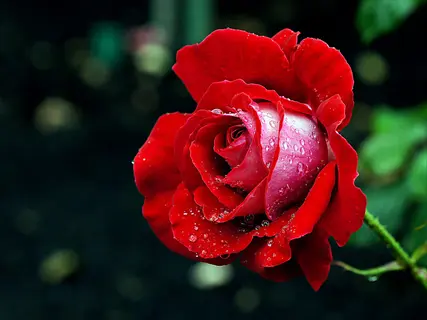
Hybrid Tea Roses
- Bloom: High-centered single flowers with 30 to 50 petals on long, straight stems, ideal for cutting.
- Size: Upright plants reach 2.5 to 6 ft tall and produce one terminal flower per shoot.
- Color: Available across nearly the full rose color range, which is why florists favor them.
- Care note: Often grafted and not fully winter hardy in cold zones, so they need winter protection.
- Best use: First choice for formal beds, cutting gardens, and classic long-stemmed bouquets.
- Example: Mr. Lincoln is a famous deep-red, strongly fragrant hybrid tea.
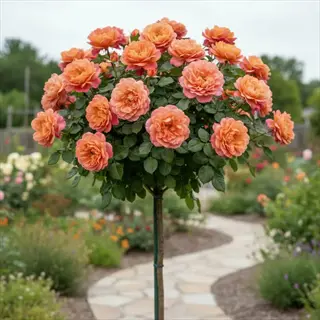
Grandiflora Roses
- Bloom: Clusters of large high-centered flowers that combine hybrid tea elegance with floribunda abundance.
- Size: Tall, vigorous plants that often reach the back of a border at 4 to 6 ft.
- Lineage: A 1954 cross of hybrid tea and floribunda, with Queen Elizabeth as the first of the class.
- Spacing: Plant grandifloras 3 to 5 ft apart to give their larger frames room.
- Best use: Strong vertical accents and abundant cut flowers in larger beds.
- Example: Queen Elizabeth remains the classic clear-pink grandiflora.
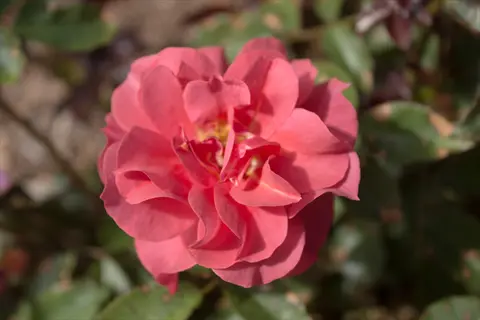
Floribunda Roses
- Bloom: Clusters of flowers on every shoot rather than one bloom per stem, giving heavy color.
- Size: Compact, bushy plants well suited to mass plantings and low hedges.
- Lineage: A cross of hybrid tea and polyantha that blends large flowers with cluster habit.
- Spacing: Set floribundas 2 to 3 ft apart for a full, continuous display.
- Best use: Long-season bedding color and informal borders where impact matters more than stem length.
- Example: Cinco de Mayo is a popular smoky-orange floribunda.
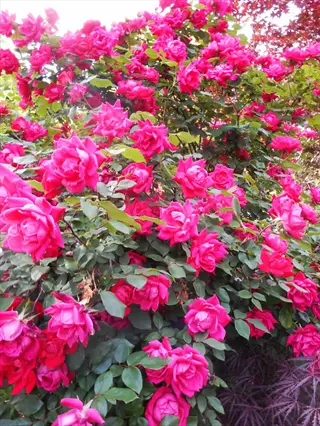
Shrub and Landscape Roses
- Bloom: Repeat-flowering blooms over a long season on tough, mounding plants.
- Size: Typically 1.5 to 4 ft tall, grown on their own roots rather than grafted.
- Care note: Bred for resistance to black spot and powdery mildew, making them the easy-care choice.
- Umbrella: David Austin English Roses belong to the shrub class despite their own marketing label.
- Best use: Low-maintenance landscaping, foundation plantings, and beginner gardens.
- Example: Knock Out and the Iowa-bred Carefree Beauty are widely grown shrub roses.
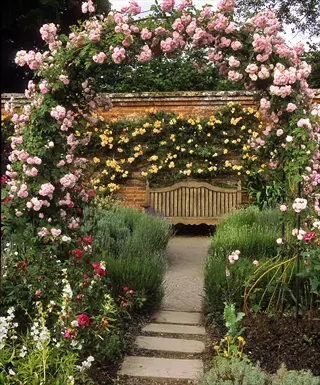
Climbing Roses
- Bloom: Long canes that flower from top to bottom and can be trained for vertical color.
- Habit: Climbing roses have no tendrils or twining habit, so they must be tied to a support.
- Size: Canes can stretch many feet and need a trellis, arch, fence, or wall.
- Care note: Train and tie new canes onto the structure to encourage blooms along the whole length.
- Best use: Arches, pillars, fences, and walls where height and drama are the goal.
- Example: New Dawn is a reliable pale-pink repeat-blooming climber.
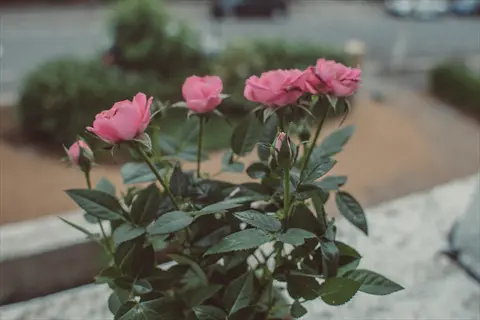
Miniature and Miniflora Roses
- Bloom: Scaled-down flowers and foliage on small plants, often repeat blooming through the season.
- Size: Compact growth makes them ideal for pots, edging, and small spaces.
- Class note: Miniflora was adopted by the American Rose Society in 1999 as a size between miniatures and floribundas.
- Care note: Usually grown on their own roots and hardy enough for container culture.
- Best use: Containers, balconies, front-of-border edging, and tabletop displays.
- Tip: Despite their small size, miniatures need the same sun and watering as full-size roses.
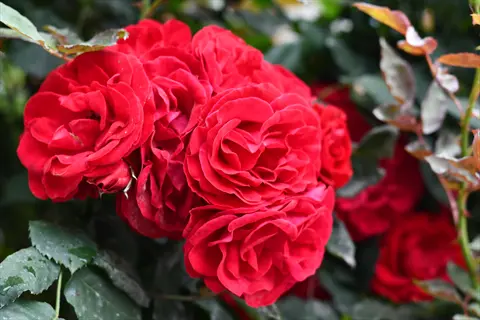
Polyantha Roses
- Bloom: Large sprays of small flowers that cover the plant in continuous color.
- Size: Low, dense, tidy bushes that work well as edging and in containers.
- Lineage: A cross of Rosa multiflora and hybrid tea that became a parent of the floribunda class.
- Care note: Tough and free-flowering, making polyanthas dependable low-fuss roses.
- Best use: Border fronts, mass plantings, and low informal hedges.
- Example: The Fairy is a classic soft-pink polyantha that blooms for months.
The last three classes sort by where they grow. Shrub roses are the tough, own-root pick bred to shrug off black spot. Climbing roses send out long canes you tie to an arch or fence. Miniature roses scale the whole plant down for pots and edging. Pick the class that fits your space first. Then chase the color and scent you want.
Old Garden Rose Classes
Old garden roses are the classes that came before 1867. That was the year breeders made the first hybrid tea. These are the heritage roses your grandparents grew. They shaped every rose you can buy today. The oldest European types break into four groups: gallica, damask, alba, and moss.
When you grow these plants, you grow real history. Empress Josephine grew gallica roses at her garden at Chateau de Malmaison in the early 1800s. She hired the painter Pierre-Joseph Redoute to capture them, and you can still see his rose studies in galleries today.
Each class has its own signature. Damask roses give the deep old-rose perfume that distillers still turn into rose oil. Tea roses carry a lighter scent, the one that named the modern tea rose. And bourbon roses, drawn from hybrid chinas, were the first old garden class to bloom more than once a season.
Gallica Roses
- Origin: Among the oldest cultivated European roses, grown since ancient times and beloved by Empress Josephine.
- Bloom: Richly colored once-blooming flowers in deep pink, red, and purple shades.
- Fragrance: Strong, classic old-rose scent that intensifies as the petals dry.
- Habit: Compact, hardy, suckering shrubs that tolerate poorer soils than many modern roses.
Damask Roses
- Origin: Ancient roses tied to Middle Eastern and European gardens and central to rose-oil production.
- Bloom: Loosely double, usually once-blooming flowers in soft pink and white.
- Fragrance: The benchmark deep old-rose perfume, still distilled into commercial rose oil today.
- Habit: Arching, somewhat lax shrubs that reward gardeners who want scent above all.
Alba Roses
- Origin: Long-grown European roses valued for toughness and pale, refined coloring.
- Bloom: Once-blooming white to soft-pink flowers held against blue-green foliage.
- Fragrance: Clean, sweet scent that is gentler than the damask perfume.
- Habit: Hardy, shade-tolerant shrubs that perform well in less-than-ideal conditions.
Centifolia and Moss Roses
- Origin: Centifolias, the cabbage roses, were favorites of Dutch painters in the 1600s and 1700s.
- Bloom: Densely packed flowers with over 100 petals that nod with their own weight.
- Moss feature: Moss roses are centifolia sports with a fragrant mossy growth on their buds and stems.
- Fragrance: Heavy, sweet old-rose perfume that fills a garden in early summer.
China, Tea, and Bourbon Roses
- China roses: Brought repeat blooming and a wider color range into European breeding.
- Tea roses: Carry a light, distinctive scent that gives the modern tea rose its name.
- Bourbon roses: Derived from hybrid chinas and were the first repeat-flowering roses among old garden classes.
- Legacy: These classes bridged old garden and modern roses by adding the reblooming trait breeders prized.
Centifolias earned the nickname cabbage roses for their tight, layered blooms packed with over 100 petals. Dutch painters loved them in the 1600s and 1700s, and you can spot these heavy flowers in their still-life work. The mossy growth on a moss rose bud comes straight from a centifolia parent.
Breeders still cross old garden roses into modern lines to recover the deep fragrance and disease resistance that many show-bred hybrids lost.
Roses by Growth Habit and Use
I knelt in the dry strip beside the back-fence rose bed last June. I tucked a low groundcover rose into the hot soil where my zone 5 lawn kept dying off. By August the bare strip ran thick with bloom. That same spot starved every patch of grass I tried, and now it glowed pink from the fence to the path.
Habit tells you where a rose belongs in your yard. A bush rose, a sprawler, and a tall grafted standard all want different jobs, so picking by shape saves you more grief than picking by color. Match the plant to the role you need filled and the rest gets easy.
Bush roses like hybrid teas grow 2.5 to 6 ft tall and look best in formal beds and cutting gardens. Space hybrid teas and floribundas 2 to 3 ft apart, and give grandifloras 3 to 5 ft since they reach higher. These need room for air to move through the canes.
For low-fuss spots, reach for shrub roses and landscape roses. They run 1.5 to 4 ft tall on their own roots, which makes them tough and easy to replace if one fails. Plant these along borders and foundation lines where you want steady bloom without much pruning or fuss.
Climbing roses do not actually climb. They have no tendrils and no twining habit, so their long canes just flop unless you tie them to a trellis, arch, or fence. Give them solid support from the start and they'll cover a wall or pillar with bloom in a season or two.
Groundcover roses spread low and wide, so use them on slopes, along edging, and in mass plantings where you want a carpet of flowers. Tree-form or standard roses go the other way. Growers graft them onto a tall single stem to lift the bloom to eye level. Set a pair by your door and you get instant focal points.
Tight on ground? Miniatures stay under 2 ft and rank among the best roses for containers, edging, and small patios. The table below pairs each habit with the garden job it does best, so you can scan it and pick before you ever set foot in the nursery.
Bloom Form and Fragrance
The fastest way to read any rose is to count its petals. Petal count sorts the whole genus into a handful of clear shapes, and once you know them you can name a bloom on sight. Single roses open flat with about 5 to 8 petals, while a packed cabbage rose folds more than 100 into one nodding head.
That count drives the bloom form, which is the word that tells you the shape of the open flower. A single rose looks like an open saucer with the stamens on full show. A high-centered hybrid tea spirals to a pointed peak with 30 to 50 petals. A quartered old rose folds its petals into four soft sections.
Scent runs on its own track, so two roses with the same form can smell nothing alike. The big families of fragrant roses break down into clear profiles. Damask gives a deep old-rose perfume. Tea roses give a light scent named after a fresh tin of leaves. The chart below pairs the main forms with the classic scents so you can match shape and smell before you buy.
Single and Semi-Double Forms
- Single: Open, flat flowers with roughly 5 to 8 petals showing the central stamens, common in species roses.
- Semi-double: Two or three rows of petals that still reveal the center, offering an open look with more fullness.
- Appeal: Both forms attract pollinators easily and often set rose hips for autumn interest.
- Where found: Most wild and many shrub roses fall into these simpler, open forms.
Double and High-Centered Forms
- Double: Many overlapping petals, often 20 to 40 or more, that fill the flower with no visible center.
- High-centered: The classic florist shape with 30 to 50 petals spiraling to a pointed peak, typical of hybrid teas.
- Quartered: An old-rose form where dense petals fold into four soft sections, seen in many heritage classes.
- Cabbage: Centifolia roses pack over 100 petals into a rounded, nodding bloom.
Classic Rose Fragrances
- Old rose or damask: The deep, sweet benchmark perfume distilled into commercial rose oil.
- Tea: A lighter, fresh scent named for its resemblance to a fresh tin of tea leaves.
- Myrrh: A distinctive anise-like fragrance found in some shrub roses, including the Buck rose Distant Drums.
- Musk: A soft, carrying scent common in hybrid musk and many climbing roses.
Reading Fragrance Strength
- Variation: Scent strength differs sharply between cultivars even within the same class, so test before you buy.
- Timing: Most roses smell strongest on warm, still mornings before the heat of the day disperses the oils.
- Trade-offs: Some show-bred hybrids traded fragrance for form, which is why breeders cross old roses back in.
- Tip: If scent is your priority, shop in person and smell the actual bloom rather than trusting a label.
Put form and scent together and your choice gets simple. Want pollinators and bright hips for the birds? Pick single roses with their open faces. Want a full, lush flower for cutting and a strong perfume on the stem? Reach for double roses in the damask or old-rose camp. The shape tells you the look, and the scent profile tells you the mood.
Rose Care and How to Choose
Good rose care starts before you buy. The class tells you the bloom, but it does not tell you which rose will thrive in your yard. Ask one honest question first: how much climate and effort can you handle?
The split that matters most for beginners is the rootstock. Most hybrid teas are grafted, and so are floribundas and grandifloras. They are not winter hardy in cold zones, so they need real winter protection. Shrub and landscape roses grow on their own roots. They shrug off black spot and powdery mildew, and that makes them the easy pick.
Last March I pulled back the mulch on a grafted hybrid tea in the back-fence bed in zone 5. The canes were blackened and dead, with dieback all the way to the graft. Three feet over, the own-root Carefree Beauty pushed clean green growth, no protection, no fuss. Same winter, same bed, two very different roses.
Carefree Beauty is a Buck rose, and that story gets too little air. Dr. Griffith Buck bred more than 85 winter hardy roses at Iowa State, including Distant Drums and Earth Song. These are the low-maintenance roses and disease resistant roses that cold-region gardeners should reach for first. If you want roses for beginners, start here, not with a fussy grafted tea.
Every rose wants the same two things: full sun and well-drained soil. Get those right and you have cleared the basics. After that, matching the type to your climate and effort level is what separates an easy rose from one that struggles. The steps below turn that into a quick decision.
Confirm your hardiness zone first; in cold regions, lean toward own-root shrub roses or winter-hardy Buck roses rather than grafted hybrid teas that need heavy winter protection.
Decide whether you want a cutting rose, a low-care landscape filler, a fragrant heritage shrub, or vertical color from a climber, since the role narrows the class quickly.
If you want minimal spraying and pruning, choose disease-resistant shrub or landscape roses such as Knock Out; if you enjoy hands-on care, hybrid teas reward the attention.
Measure your space and match it to mature size, allowing 2 to 3 ft between hybrid teas and floribundas and 3 to 5 ft between grandifloras.
Site any rose in full sun with well-drained soil, then water deeply and consistently while the plant establishes its roots.
In zone 5 and colder, own-root shrub and Buck roses survive winter far better than grafted hybrid teas, which can die back to the graft without thick mulch or protection.
5 Common Myths
All roses are difficult, fussy plants that only experienced gardeners with lots of spare time can ever hope to grow well.
Many shrub and landscape roses, including Knock Out and Buck roses, are bred for disease resistance and thrive with very little care.
Climbing roses physically climb a wall or fence on their own the way ivy and other true vines naturally do.
Climbing roses have no tendrils or twining habit, so their long canes must be tied to a trellis, arch, or other support.
Old garden roses are simply outdated, inferior plants that modern hybrid roses have completely replaced in every way.
Old garden roses are prized for rich fragrance, hardiness, and history, and breeders still use them to improve modern cultivars.
Every rose blooms again and again all season long, so any rose you plant will keep flowering from spring to fall.
Many species and old garden roses bloom only once per season, while repeat blooming is mainly a trait of modern classes.
There is a genuine blue rose available in nature that gardeners can simply buy and plant like any other color.
Roses lack the pigment for true blue, so blue roses are either dyed or lavender-toned cultivars marketed as blue.
Conclusion
All the types of roses fit one simple framework. The American Rose Society sorts every rose into 3 master groups, and the split falls at the year 1867. Species roses grow in the wild. Old garden roses come from classes born before that date. Modern roses come from every class born after it. That one rule turns rose classification into a frame you can use.
From there, a few modern classes cover most of what you will see for sale. Hybrid teas give you one tall stem and a high-centered bloom. Floribundas trade that size for big clusters of color, and grandifloras land in between. Shrub roses bring easy, own-root toughness. Climbers stretch tall on a wall or fence. On the old side, the heritage classes carry the deepest scent and the most history.
Keep the scale in mind too. The genus Rosa holds about 200 species. Yet only 10 to 20 of them stand behind every modern rose you can buy. Centuries of breeding stretched that small base into tens of thousands of named cultivars sold today. So the lists never end, but the roots stay small and knowable.
Here is the practical takeaway. Choosing roses comes down to one honest question: does this rose fit your space? Match its habit, hardiness, fragrance, and size to the spot you have, and good rose care gets much simpler from there. That plain match is what turns this guide from a list into a real decision you can make this weekend.
Buy with confidence rather than worry. Start with an easy-care shrub rose if you are new to this. It forgives missed waterings, shrugs off most disease, and asks very little while you learn. Once you have a season or two behind you, add a fragrant heritage rose or a dramatic climber and grow your garden from there. The rose family keeps rewarding the people who keep looking.
Glossary
- Cultivar
- A plant variety produced and named through deliberate breeding or selection rather than occurring naturally in the wild.
- Floribunda
- A modern rose class that bears clusters of flowers on each shoot rather than a single bloom per stem.
- Grafted Rose
- A rose joined onto a separate rootstock, which can die back to the graft in cold winters without protection.
- Grandiflora
- A 1954 rose class crossing hybrid tea and floribunda, producing clusters of large high-centered flowers on tall plants.
- Hybrid Tea
- A modern rose class with one high-centered bloom per long stem, favored by florists for cut flowers.
- Modern Roses
- Roses in classes that did not exist before 1867, beginning with the first hybrid tea and bred for repeat blooming and wide color.
- Old Garden Roses
- Roses belonging to classes that already existed before 1867, prized for fragrance, hardiness, and history.
- Species Roses
- Wild roses that grow naturally without human breeding, usually carrying 5 to 8 open petals and producing rose hips.
External Sources
Frequently Asked Questions
What are the main types of roses?
Roses fall into three main groups set by the American Rose Society:
- Species or wild roses
- Old garden roses created before 1867
- Modern roses introduced after 1867
How many species of roses are there?
The genus Rosa contains about 200 species worldwide, though only an estimated 10 to 20 contributed to modern cultivars.
What is the most popular type of rose?
The hybrid tea is widely the most popular type, prized for its high-centered blooms and long stems.
What are the old types of roses?
Old garden roses predate 1867 and include classes such as:
- Gallica and damask
- Alba and centifolia
- Moss and china
- Tea, bourbon, and noisette
What are the different types of simple roses?
Simple or single roses carry 5 to 8 open petals and include most species roses and many shrub types.
What flower is called the poor man's rose?
The geranium is often called the poor man's rose because it gives rose-like color and form at a lower cost.
What is the rarest rose color?
A true blue is the rarest rose color because roses lack the natural pigment needed to make genuine blue.
What does giving 24 roses mean?
A gift of 24 roses traditionally means you are always on my mind, one rose for each hour of the day.
What is the difference between rose types, classes, and cultivars?
Types are the broad groups, classes are the divisions within them, and cultivars are individual named plants.
Which type of rose is best for beginners?
Shrub and landscape roses such as Knock Out and Buck roses are the easiest types for new gardeners.

