

Introduction
The sweet potato vine earns its spot in your garden through pure leaf power, not flowers. You grow it for the bold foliage color that runs from bright chartreuse-lime all the way to a moody, near-black purple. The leaves spread fast and tumble over the side of any pot, so a single plant can fill out a container in weeks.
Here is the fact most people miss. This plant is Ipomoea batatas, the exact same species as the sweet potato you eat. In most of the country it dies back when frost hits, so you treat it as an annual. It comes back year after year only in USDA zones 9 to 11. In those warm spots the cold stays too mild to kill it.
A lot of quick guides cover the same basics. Sun, water, soil, and then they stop. The trouble is the questions you actually type into a search bar. One popular site even calls this plant highly toxic to pets, which is false. So this guide goes deeper and gets the hard parts right, backed by university extension and ASPCA sources.
Think of the ornamental sweet potato vine as the trusty spiller that softens the hard edge of a pot or basket. It is the trailing vine that ties a whole planter together. I planted one chartreuse start in a half-barrel by my front steps, and by August it had spilled almost 4 feet over the rim. Below you will get clear, true answers on a few key topics. You will learn how to keep it over winter, whether you can eat it, if it is safe for pets, and what not to plant near it.
Sweet Potato Vine Varieties
The easiest way to sort through sweet potato vine varieties is by leaf color, not by the product name on the tag. Color is what your eye sees first, and it sets the mood of the whole pot. A lime type acts like a bright highlight in a planting. A dark purple type reads as a dramatic backdrop that makes everything around it stand out.
Foliage runs the full range from glowing chartreuse foliage to near-black purple, with bronze and copper tones in between. Leaf shape adds another layer to the choice. Some plants carry classic heart-shaped leaves, while others show deeply lobed, finger-like outlines that look almost like a maple. Color stays richest in full sun with six or more hours of light, and shade pushes every shade toward a softer green.
Size depends on how you let the plant grow. As a groundcover it stays about 12 inches (30 cm) tall and spreads 3 to 5 feet (0.9 to 1.5 m) wide. Let it trail instead and the trailing foliage can run 6 to 10 feet (1.8 to 3 m) down a wall or basket. Pick a lighter color for a focal point, or reach for a purple sweet potato vine when you want depth and contrast in a single container.
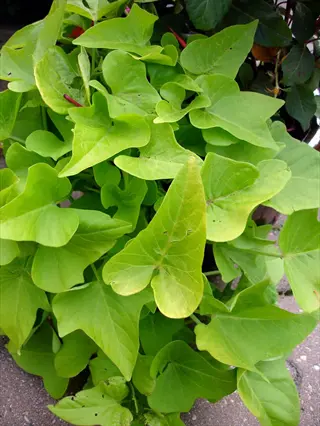
Lime and Chartreuse Foliage
- Color: Bright chartreuse-lime leaves glow against dark mulch, deep green shrubs, and purple flowers, making them a natural highlight in mixed plantings.
- Leaf shape: Most lime types carry classic heart-shaped leaves, though some cultivars show a deeply lobed, almost maple-like outline for added texture.
- Best use: Excellent as a spiller cascading over container rims and hanging baskets where the light color catches the eye from a distance.
- Light: Color stays most vivid in full sun with six or more hours of light, while shade pushes the tone toward a softer green.
- Growth: Vigorous and fast-spreading, so give it room to trail 3 to 5 feet (0.9 to 1.5 m) or trim it to keep a tidy shape.
- Pairing: Works beautifully beside dark purple foliage or hot-colored blooms for high contrast in a single pot.
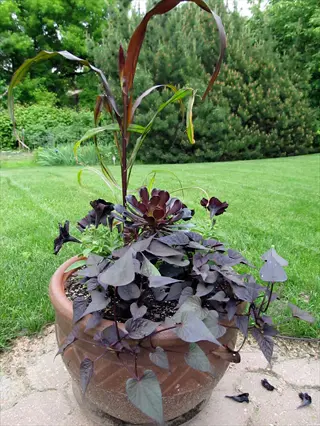
Purple and Near-Black Foliage
- Color: Deep maroon to near-black purple leaves add drama and weight, acting as a rich backdrop that makes brighter plants pop.
- Leaf shape: Dark cultivars often have deeply lobed, finger-like leaves that create a fine, lacy texture in containers and beds.
- Best use: Ideal as a grounding color at the base of tall flowers or trailing down a wall where the dark tone reads as shadow.
- Light: Full sun deepens the purple pigment, while too much shade can fade the color toward a muddy green.
- Growth: Spreads just as vigorously as lighter types and can run 6 to 10 feet (1.8 to 3 m) when allowed to trail freely.
- Pairing: Stunning next to chartreuse foliage, silver-leaved plants, or pink and orange blooms for striking contrast.
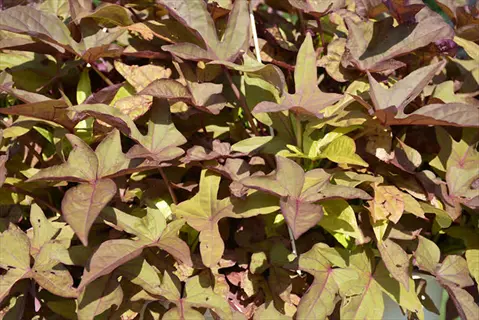
Bronze and Copper Foliage
- Color: Warm bronze and copper tones bridge green and purple, offering a softer contrast that blends into autumn and earth-toned schemes.
- Leaf shape: These cultivars usually show heart-shaped leaves with a subtle metallic sheen that shifts in changing light.
- Best use: A versatile spiller that suits mixed containers where a strong lime or black would feel too bold.
- Light: Bronze tones develop best in full sun and may green up noticeably in deeper shade.
- Growth: Fast and trailing like other types, filling gaps in a planting within weeks during warm weather.
- Pairing: Complements rust, orange, and deep red flowers for a coordinated warm palette.
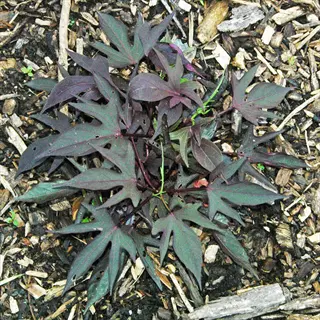
Compact and Mounding Types
- Color: Available across the full range from lime to purple, these are selected for habit rather than a single signature color.
- Leaf shape: Foliage matches the parent colors but appears denser, giving a fuller, more controlled look in small spaces.
- Best use: Bred to stay tighter and less rampant, making them suited to small pots, window boxes, and edging where space is limited.
- Light: Same full sun preference applies, with six or more hours producing the strongest color.
- Growth: More restrained than the classic trailing types, though still fast enough to fill a small container in a season.
- Pairing: A good choice when you want sweet potato vine texture without it overwhelming slower companion plants.
I planted a lime type next to a near-black one in my own front pot one summer, and the contrast carried the whole porch for months. Start with the effect you want, then match the color to it. Want one plant to steal the show? Reach for lime. Need a quiet base that lets your flowers shine? A near-black type does that job better than any other. Once you see how leaf shape and color guide the look, picking the right plant gets much easier.
Sun, Soil, and Watering Needs
By that evening the lime Marguerite in my row of large terracotta pots had perked right back up after a deep soak. A few hours earlier it looked scorched and limp on the sunny back patio, with every leaf drooping toward the bricks. I had been underwatering those pots in the July heat, and the plant was just telling me so. The wilting was a thirst signal, not damage, and the recovery proved it.
That moment sums up how forgiving this plant is once you read its cues. The sweet potato vine thrives in full sun of six or more hours, but it also takes partial shade of two to six hours without much fuss. Sun or shade both work, so you get to pick the spot that fits your yard. The one tradeoff is color, and I will get to that in a moment.
Light level drives the foliage color you actually want from this plant. You get the richest, most saturated color in full sun, where lime cultivars glow and purple-black ones deepen. In shade the same plant still grows fast, but the tones turn softer and a bit more green. So aim the brightest cultivars at your sunniest bed if color is the whole point.
Soil matters almost as much as light. Plant in loamy, well-draining soil that is rich in organic matter, with a pH between 5.5 and 7.0. The roots hate sitting in water, so good drainage keeps root rot away. Mix in compost before planting and you give the vine the steady fuel it needs to sprawl.
Watering frequency is where most people trip up, so here is the plain version. The plant is drought tolerant once its roots settle in, but it grows best in soil that stays consistently moist and never soggy. Pots in summer heat dry out fast and may need water every one to two days. Trust the wilt cue from my patio over any rigid schedule, and you will rarely go wrong.
The vines will let you know when they need water by wilting, and the foliage quickly springs back from a frost or freeze.
Overwintering and Storage
The first cold snap left my back-patio Marguerite pots blackened overnight, the lush chartreuse leaves gone to mush by morning. A week earlier I dug the tubers and packed them in a box of peat in the cool garage, and they came through fine and resprouted in spring. The frost killed the top growth, yet the fat tuber underneath did not care one bit.
That is the whole secret to overwintering sweet potato vine in a cold climate. The vine grows as an annual anywhere below zone 9, so frost ends the foliage every fall. Save the tuber or a few cuttings, though, and you skip rebuying plants each spring.
You have three solid ways to bring indoors what matters most for winter. Store tubers dormant in a box, root cuttings in water on a windowsill, or pot the tuber up and grow it as a houseplant. Whichever you pick, act before the first frost hits, because frost is what kills the part you see.
Prepare Before the First Frost
- Timing: Act before the first frost arrives, because frost kills the top growth and you want to save the plant while it is still healthy.
- Inspect: Check the foliage and stems for insects before bringing anything indoors so you do not carry pests into the house.
- Cut back: Trim the long vines back to make the plant or cuttings easier to handle during the chosen storage method.
- Choose a method: Decide between storing tubers, rooting cuttings, or growing it as a houseplant based on the space you have available.
Store the Dormant Tubers
- When: Cut the vines back to the ground and dig the tubers before the first hard frost, lifting them carefully so the roots are not sliced or bruised.
- Storage medium: Pack the tubers in dry peat moss, sand, or vermiculite inside a box or crate so they do not touch and rot is less likely to spread.
- Conditions: Keep them in a cool, dark, frost-free spot held around 50 to 60 degrees Fahrenheit (10 to 16 Celsius), such as a basement or garage.
- Spring: Replant the stored tubers outdoors after the last frost, and they will resprout fresh vines once the soil warms.
Root Cuttings in Water
- When: Take healthy stem cuttings about 10 to 12 inches (25 to 30 cm) long before frost damages the plant.
- Method: Rinse the cuttings and stand them in a jar of clean water on a warm, bright windowsill or under grow lights through winter.
- Maintenance: Refresh the water regularly to keep it clean, and roots will form along the submerged stem over the following weeks.
- Spring: Pot the rooted cuttings into soil and harden them off before moving them outdoors after the last frost.
Grow It as a Houseplant
- When: Before frost, inspect the plant for insects and cut the vines back to roughly 6 inches (15 cm) to make it manageable indoors.
- Method: Dig and repot the tuber into fresh potting soil and place the pot in a sunny window for the winter months.
- Maintenance: Keep the soil moderately moist and give it bright light so the foliage stays healthy until spring.
- Spring: Move the established plant back outdoors once nights stay reliably mild and frost has passed.
Do not leave plants outside hoping they survive the cold below USDA zone 9. Frost kills the top growth, so dig tubers or take cuttings before the first frost arrives.
I find storing dormant tubers the most reliable route for most cold-climate gardeners. The tuber holds all the energy the plant needs, and a box of peat in a frost-free spot asks almost nothing of you through winter. Come the last frost, you replant and watch fresh vines pour out again.
Cuttings in water are the easy backup if you missed the dig or just want more plants. A few 10 to 12 inch stems in a clean jar will root over the weeks and give you free starts for spring. Either way, a little work in fall means you never pay for the same vine twice.
Edibility and the Tubers
So does sweet potato vine grow sweet potatoes? Yes, it does. The ornamental plant trailing out of your container is the same species as the sweet potato you roast for dinner. Both are Ipomoea batatas, and both form tubers underground as they grow.
Here is the distinction that clears up the confusion. The tubers your ornamental vine makes are real edible tubers, and they are not poisonous at all. The catch is flavor. Breeders chose these cultivars for bold leaf color, not for taste, so the bitter tubers they produce are dull and unappealing on the plate.
NC State Extension backs this up. The ornamental and the food crop are the same species, and both make roots. But the foliage cultivars give you tubers that are edible yet not as tasty. So the plant you see at the garden center is no danger to eat. It just was not bred for the dinner table.
Here is a clear analogy for the explanation. Think of a cherry tree. One tree is grown for its spring blossoms, and another for its fruit, but both are the same plant. The blossom tree still sets fruit. It just is not the fruit you would pick for a pie. That is the ornamental vs edible split in a nutshell.
- Bred and selected primarily for bold, colorful foliage in lime, purple, and bronze tones.
- Forms tubers underground, but they are typically small, bitter, and unappealing to eat.
- Grown as a spiller, groundcover, or container accent rather than as a food crop.
- Leaves and young shoots are edible and non-toxic, though the plant is rarely grown for them.
- Bred and selected for large, sweet, flavorful storage roots harvested as a vegetable.
- Forms generous, palatable tubers that are the whole reason the crop is grown.
- Grown in rows or beds with the goal of a productive root harvest.
- The same species overall, so the two share growth habits but differ in their breeding purpose.
The leaves tell a kinder story. The young shoots and edible leaves are tender and tasty, and people cook them like spinach in many parts of the world. So if you ever trim your vine hard, you can toss the soft tips into a stir-fry instead of the compost.
Still, growing an ornamental variety for food misses the point. You picked it for the lime, purple, and bronze foliage that spills over a pot all season, not for a root harvest. That is the full edibility story. Let the farmers grow the roots, and let your vine do what it was bred to do, which is look stunning.
Toxicity and Pet Safety
Here is the short answer you came for. Sweet potato vine is non-toxic to cats, dogs, and horses. If your pet nibbles a leaf, you do not have an emergency on your hands.
The ASPCA lists Ipomoea batatas on its safe-plants page, and NC State Extension tags the same plant as non-toxic to pets and to people. That means two respected sources agree the plant is pet safe. The foliage is also non-toxic to humans, so a curious toddler grabbing a vine is no cause for panic.
You may have read elsewhere that this plant is highly toxic to pets or carries LSD-like compounds in its leaves. That claim is wrong, and it scares a lot of worried owners for no reason. Neither the ASPCA nor any university extension backs it up, so set it aside.
Some morning glory relatives and certain Ipomoea seeds contain active compounds, which is where the myth starts. That does not apply to sweet potato vine foliage, which the ASPCA and NC State Extension list as non-toxic.
So why the mix-up? Sweet potato vine is part of the morning glory family. The seeds of some morning glory cousins do hold active compounds. That is a seed issue, not a leaf issue. The trailing foliage you grow for color does not carry those compounds, so eating a leaf is not the same as eating those seeds.
None of this means you should let a pet graze on your plants all day. Too much of any leaf can upset a stomach, and the same goes for a vine that is not toxic to cats or dogs. Watch for heavy chewing and call your vet if your pet seems off. But you can grow this plant without the worry that follows truly dangerous houseplants.
Design and Companion Planting
In my hot west-facing front bed, the near-black Blackie looked striking spilling around a clump of bright coleus. Then I noticed from the kitchen window that it had quietly run over a low edging plant and buried it by midsummer. The edging plant was gone. The vine kept going like nothing had happened.
That is the trait you plan around. This vigorous, fast-spreading plant reaches 3 to 5 feet (0.9 to 1.5 m) wide as a groundcover. It trails 6 to 10 feet (1.8 to 3 m) as a vine. That same speed makes it a perfect spiller, but it can also smother slow or delicate neighbors before you spot the trouble.
Your best companion plants are upright and sturdy enough to hold their own. Coleus, cordyline, and grasses all stand tall above the trailing leaves. Mounding annuals like geraniums, petunias, and calibrachoa work well too, since they share its love of sun and steady water. The list below sums up the good pairings and what not to plant with it.
- Upright, sturdy plants like coleus, cordyline, and ornamental grasses that hold their own above the trailing foliage.
- Mounding annuals such as geraniums, petunias, and calibrachoa that share its sun and water needs.
- Tall thrillers at the center of a container, with the vine acting as the cascading spiller around the edge.
- Other vigorous, fast-growing plants in large beds where there is room for everything to spread.
- Slow-growing or delicate plants that the fast vine will quickly overrun and shade out.
- Low, ground-hugging plants in the same bed, since the trailing stems will spread over and bury them.
- Small or crowded containers where the vine has no room and will dominate its neighbors.
- Plants needing far drier or far wetter conditions, since their care needs will not align.
Use the classic thriller, filler, spiller plan for your container combinations. A tall plant goes in the center as the thriller. A rounded annual fills the middle. The sweet potato vine is your spiller, cascading over the rim and softening the edges of the pot.
The avoid side comes down to one rule. Skip pairing it with slow-growing, low, or delicate plants it will quickly shade out. If you mix it with anything that needs its own space, give that plant room or trim the vine back every couple of weeks. A few snips keep it from taking over your whole bed.
5 Common Myths
Sweet potato vines are highly toxic to cats and dogs and should be kept far away from any household pets.
The ASPCA and NC State Extension classify Ipomoea batatas as non-toxic to cats, dogs, and horses, which directly contradicts that claim.
Ornamental sweet potato vines never grow real sweet potatoes because they are a completely different and separate plant species.
They are the exact same species as the edible crop and do form tubers, but cultivars are bred for foliage so the roots taste bitter.
Sweet potato vine is a true perennial that reliably returns on its own in any garden after winter passes.
It is only perennial in USDA zones 9 to 11. In colder regions frost kills it, so most gardeners grow it as an annual.
Sweet potato vines are climbing plants that will scale a trellis or fence the same way other vines do.
They trail and cascade rather than climb. Stems spread along the ground or spill over containers without grabbing onto supports.
Sweet potato vine needs full shade to thrive and will quickly burn and die in any direct sunlight.
It is heat-loving and grows best in full sun. Six or more hours of light actually produces the richest, most colorful foliage.
Conclusion
You now have the full picture on sweet potato vine care. That covers picking a variety and keeping the plant alive through a cold snap. We went over the chartreuse and purple-black cultivars. We covered the sun and soil it wants. We dug into the tubers, the pet safety facts, and the best ways to use it in a design. Each piece builds on the last, so the whole plant makes sense now.
Hold on to a few facts and the rest falls into place. The ornamental sweet potato vine is an annual outside USDA zones 9 to 11. So it dies back when frost hits colder gardens. It wants full sun with six or more hours of light for the richest leaves. It takes partial shade fine too. The ASPCA and NC State Extension both list it as non-toxic to cats, dogs, and horses. The scary toxicity claims online just are not true for this plant.
Here is the simple way to think about it. This plant earns its spot through fast, bold foliage color. It is not a plant you grow for flowers or food. So let it spill over the edge of a pot. Or let it race across a bed as a groundcover. When the season ends, you have three ways to keep it. Store the tubers somewhere cool and dark. Root a few stem cuttings in water. Or keep a potted plant indoors. Smart overwintering means winter does not have to mean starting over.
That makes the sweet potato vine one of the easiest ways to add big color for little work. It grows fast. It asks for almost nothing. And it shrugs off the two worries people raise most. Drop a few plants into your container gardening setup or a tired flower bed. You will see why this trailing vine wins a place in so many gardens.
Glossary
- deeply lobed leaves
- Leaves with deep indentations that give them a divided, finger-like or maple-like shape rather than a smooth outline.
- Ipomoea batatas
- The botanical name for the single species that includes both the ornamental sweet potato vine and the edible sweet potato crop.
- loamy soil
- A balanced soil mix of sand, silt, and clay that drains well while still holding moisture and nutrients.
- slips
- The leafy rooted shoots that sprout from a sweet potato and can be planted to grow new vines.
- spiller
- A trailing plant placed at the edge of a container so its foliage cascades over the rim.
- tender perennial
- A plant that lives for several years in warm climates but is killed by frost, so it is grown as an annual where winters are cold.
- tuber
- A swollen underground stem or root that stores energy, such as the part of a sweet potato plant that grows below the soil.
- USDA hardiness zones
- A map-based system that divides regions by their average lowest winter temperature to show which plants can survive there.
External Sources
Frequently Asked Questions
Does sweet potato vine actually produce sweet potatoes?
Yes. Ornamental sweet potato vine is the same species as the edible crop and forms tubers underground, but cultivars are bred for foliage so the tubers are usually small and bitter.
Can you eat sweet potatoes from an ornamental sweet potato vine?
The tubers are technically edible and not poisonous, but ornamental cultivars are bred for colorful leaves, so the roots are typically bitter and unappetizing.
Are sweet potato vines toxic to cats?
No. The ASPCA and NC State Extension classify Ipomoea batatas as non-toxic to cats, dogs, and horses, which corrects a common online claim that it is highly toxic.
Will sweet potato vine come back every year?
Only in warm climates. It is a tender perennial in USDA zones 9 to 11 but is grown as an annual everywhere colder because frost kills the top growth.
Do sweet potato vines like sun or shade?
Both work. The plant grows in full sun or partial shade, but six or more hours of sun produces the richest, most vivid foliage color.
How often do sweet potato vines need to be watered?
Keep the soil consistently moist but not soggy. The vine wilts to signal thirst, and containers in summer heat may need water every one to two days.
How do you save sweet potato vines over winter?
Use one of three methods: store the dug tubers in a cool dark spot, root cuttings in water indoors, or grow the whole plant as a winter houseplant.
Can you grow a sweet potato vine from a store-bought sweet potato?
Yes. Suspend a store-bought sweet potato partly in water using toothpicks, let it sprout slips and roots, then pot the rooted shoots into soil.
What should you not plant with sweet potato vine?
Avoid pairing it with slow-growing, delicate, or low plants. Its vigorous trailing habit spreads fast and can smother and shade out weaker neighbors.
Should you cut back sweet potato vines?
Yes, regular trimming helps. The vine grows fast, so cutting it back keeps the foliage tidy and bushy and stops it from overwhelming companions.

