

Introduction
Here is the honest truth before you spend a dime at the nursery. No shrub is truly deer proof, and any list of deer proof shrubs is selling you a dream. The good news is real. The right deer resistant shrubs still get left alone almost every time. Deer sniff them, lose interest, and move on to your neighbor's hostas.
That gap between proof and resistance is where this guide lives. Rutgers University rates 527 landscape plants for deer damage. The scale has four tiers. The top tier is Rarely Damaged. The bottom tier is the one deer hit hard and often. The top two tiers are the ones worth planting. Those are the shrubs deer skip in most yards, in most years.
This guide does more than hand you a pile of plant names. You will learn why deer avoid each shrub. The leaves might be too bitter, too sharp, or too strong-smelling for their taste. You also get to see how reliable each pick is, ranked by university ratings and not guesswork. Knowing the reason a shrub works helps you trust it in your own yard.
Keep one thing in mind as you read. One March morning I found neat bite marks on a shrub that every list swears deer ignore. Deer resistant means rarely browsed, not protected. That line shifts with the season, your region, and how hungry the local herd gets. Pressure spikes in late winter when wild food runs out, and even the shrubs deer avoid land on the menu. Plant the deer resistant plants that hold up best, and you tilt the odds in your favor.
Most Reliable Deer Resistant Shrubs
My boxwood hedge along the front foundation has gone six years without a single chewed leaf. Two shrubs I planted before it were not so lucky. A hydrangea and an azalea sat in the damp back corner by the woods edge, and one hard winter the deer stripped both to bare stems. All three plots saw the same hungry deer. The boxwood survived because of what it is, not where it sits.
That gap between plants tells you the real story. The most deer resistant shrub choices share traits deer dislike, and those traits travel with the plant no matter how close the woods are. Pick the wrong shrub in a safe spot and you still lose it.
The shrubs below are the ones I trust first. Each pick names the reason deer leave it alone and, where a university rates it, its score. Rutgers built its ratings with nursery pros and master gardeners. That is why its Rarely Damaged tier is the benchmark most gardeners cite. Boxwood, arrowwood viburnum, and bayberry all earn that top A grade.
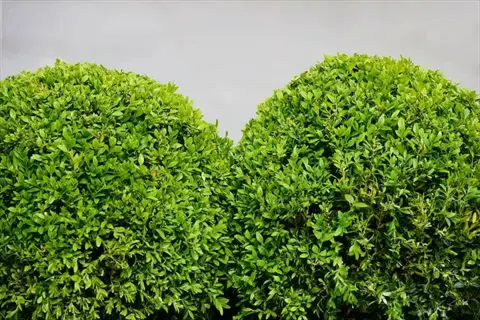
Boxwood (Buxus sempervirens)
- Resistance: Rated A or Rarely Damaged by Rutgers and called one of the most deer-tolerant plants for gardens by extension specialists.
- Deterrent: Its dense, bitter, faintly pungent foliage discourages browsing even when other plants nearby are being eaten.
- Form: Evergreen with small glossy leaves that take well to shearing into hedges, edging, and formal shapes.
- Light: Grows in full sun to part shade, making it flexible for foundation beds and borders.
- Size: Compact varieties stay near 2 to 3 feet (0.6 to 0.9 m) while taller types reach 6 to 8 feet (1.8 to 2.4 m).
- Best use: A dependable evergreen backbone for hedges and structure in deer-prone landscapes.
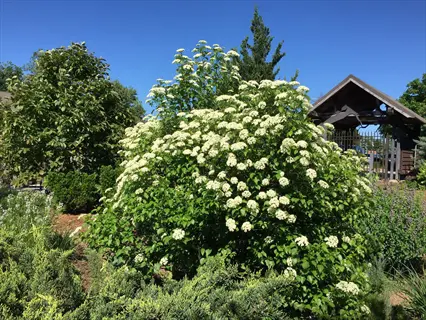
Arrowwood Viburnum (Viburnum dentatum)
- Resistance: Earns the Rutgers A or Rarely Damaged rating, putting it among the most reliable native choices.
- Deterrent: Coarse, toothed leaves and a less palatable flavor make it a low priority for browsing deer.
- Bloom: White spring flower clusters give way to blue-black berries that feed birds in fall.
- Light: Adaptable to full sun or part shade and tolerant of a range of soils.
- Size: A rounded native shrub maturing around 6 to 10 feet (1.8 to 3 m) tall and wide.
- Best use: Wildlife-friendly screening and naturalized borders where deer pressure is a concern.
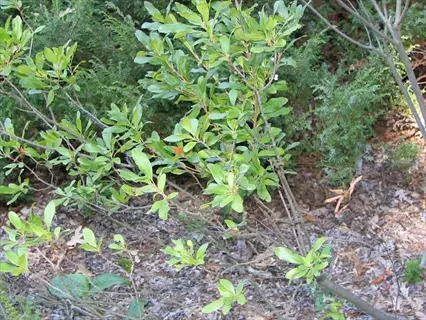
Bayberry (Myrica pensylvanica)
- Resistance: Also rated A or Rarely Damaged by Rutgers, a tough native that deer consistently pass over.
- Deterrent: Aromatic, resinous foliage gives off a scent deer dislike and rarely browse.
- Form: Semi-evergreen in milder zones with waxy gray berries used historically for candle making.
- Conditions: Thrives in poor, sandy, salty soils where many shrubs struggle.
- Size: A bushy shrub reaching about 5 to 10 feet (1.5 to 3 m) tall.
- Best use: Tough hedging and erosion control on exposed or coastal sites.
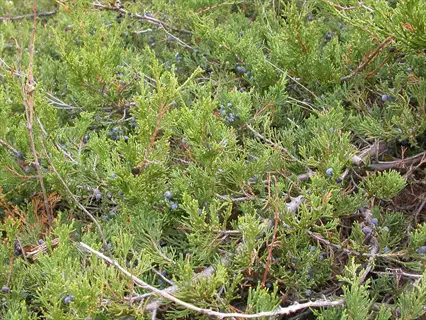
Juniper (Juniperus species)
- Resistance: Listed by multiple extensions among shrubs deer rarely browse thanks to its strong scent.
- Deterrent: Resinous, prickly, aromatic needles are exactly the texture and smell deer try to avoid.
- Form: Ranges from low spreading groundcovers to upright columnar evergreens.
- Light: Needs full sun and tolerates drought, heat, and poor soils once established.
- Size: Spreading types stay low while upright forms can reach 15 feet (4.6 m) or more.
- Best use: Evergreen structure, slopes, and dry sites where a fragrant deterrent helps.
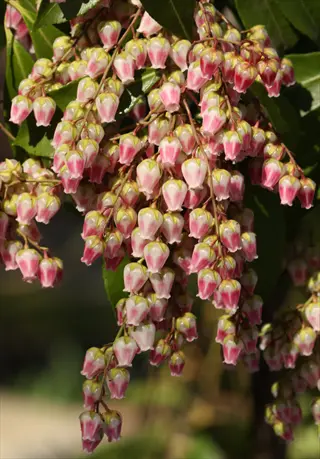
Japanese Pieris (Pieris japonica)
- Resistance: Described by UNH Extension as almost never bothered by deer.
- Deterrent: Its foliage is toxic and unpalatable, which keeps deer away from leaves and buds.
- Bloom: Drooping clusters of white or pink bell-shaped flowers appear in early spring.
- Light: Prefers part shade and moist, acidic, well-drained soil.
- Size: A broadleaf evergreen reaching roughly 4 to 8 feet (1.2 to 2.4 m) tall.
- Best use: Shaded foundation plantings and woodland edges needing early bloom.
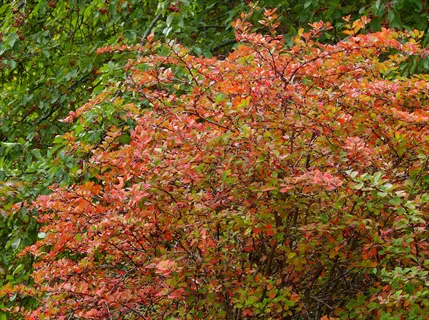
Barberry (Berberis species)
- Resistance: Cited across extension lists among shrubs deer rarely damage.
- Deterrent: Sharp spines along the stems physically discourage deer from browsing.
- Form: Compact deciduous shrub available in green, gold, and burgundy foliage.
- Light: Performs best in full sun, which deepens its colorful leaf tones.
- Size: Many garden varieties stay around 2 to 4 feet (0.6 to 1.2 m) tall.
- Best use: Low thorny hedges and color accents; check local rules since some types are invasive.
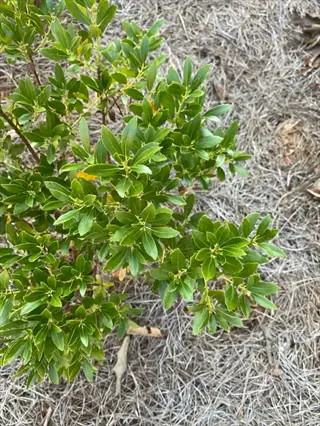
Inkberry Holly (Ilex glabra)
- Resistance: Named by UNH and Cornell among the more deer-resistant evergreen shrubs.
- Deterrent: Tough, slightly bitter evergreen leaves are not a deer favorite.
- Form: A native broadleaf holly without the prickly leaves of classic hollies.
- Conditions: Tolerates wet soils and part shade, useful for damp problem spots.
- Size: Rounded habit reaching about 5 to 8 feet (1.5 to 2.4 m) tall.
- Best use: A boxwood alternative for hedging in moist, shaded, deer-prone areas.
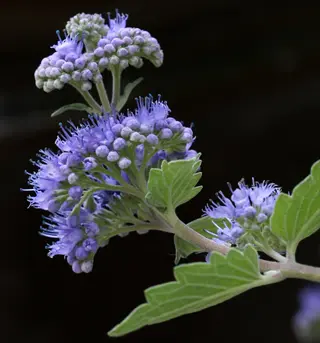
Bluebeard (Caryopteris)
- Resistance: Listed by UGA and other extensions among shrubs deer rarely browse.
- Deterrent: Aromatic foliage releases a scent deer dislike when brushed or crushed.
- Bloom: Clouds of blue late-summer flowers draw bees and butterflies.
- Light: Needs full sun and well-drained soil; drought tolerant once established.
- Size: A compact mounding shrub around 2 to 3 feet (0.6 to 0.9 m) tall and wide.
- Best use: Pollinator borders and sunny beds needing late-season color.
Look at that list and a pattern jumps out. Nearly every one of the rarely damaged shrubs wins on the same three traits: a strong scent, rough or prickly leaves, or a bitter taste. Deer steer around all three. Once you know the traits, you can judge a plant the nursery never labeled and still guess right.
So you do not have to memorize this whole list. Sniff the leaves, feel the texture, and check for thorns. The shrubs deer rarely eat almost always fail at least one of those tests for a deer. The deer resistant bushes that last in my yard all share that same armor.
Why Deer Avoid Certain Shrubs
Think of a deer as a picky grazer walking a buffet. It skips the strong-smelling, prickly, and bitter dishes when easier greens sit right next to them. That single habit explains why deer avoid plants like a fragrant juniper while they mow a tender hosta to the ground.
There is real science behind that choice, not luck. The University of Georgia names three traits deer steer around. They skip a strong smell, prickly or rough leaves, and a bitter taste. I add toxicity as a fourth. Plants that can make a deer sick get learned and left alone fast.
It helps to know what a deer wants from your beds. Roughly one-third of its water comes from the moisture in soft new growth. So tender foliage is part meal and part drink. Aromatic shrubs have tough, resinous leaves, and that keeps them off the menu. Your juicy spring shoots disappear overnight.
Learn these four traits and you stop memorizing lists. You start to read a plant. Brush the leaves with your fingers and ask what smell do deer hate. Then check for spines and coarse texture. This quick test tells you whether any shrub in your yard, listed or not, is one deer will browse.
Strong Or Pungent Aroma
- How it works: Resinous and aromatic foliage overwhelms a deer's sensitive nose, signaling an unappealing meal before a single bite.
- Examples: Junipers, boxwood, bayberry, and bluebeard all carry scents deer consistently avoid in the garden.
- Takeaway: When choosing for scent, look for shrubs whose leaves smell strong when brushed or crushed.
Prickly Or Rough Leaves
- How it works: Spines, bristles, and coarse leaf texture make browsing physically uncomfortable, so deer move on to softer plants.
- Examples: Barberry, many hollies, and coarse-leaved viburnums use texture as a built-in defense.
- Takeaway: Run a leaf or stem between your fingers; if it feels sharp or rough, deer likely find it unpleasant too.
Bitter Or Unpalatable Taste
- How it works: Bitter compounds make foliage taste bad, so even a curious deer rarely takes a second bite.
- Examples: Boxwood is widely avoided in part for its bitter, unpalatable foliage.
- Takeaway: Bitterness is hard to judge by eye, which is why extension ratings are so useful for these shrubs.
Toxicity
- How it works: Naturally toxic foliage poses a real risk to deer, so they instinctively learn to leave these plants alone.
- Examples: Japanese pieris and other toxic ornamentals are almost never browsed for this reason.
- Takeaway: Toxic-to-deer shrubs can also be toxic to pets and people, so site them thoughtfully.
There is no such thing as a deer-resistant plant, and when deer populations are high and food becomes scarce, deer may feed on plants that are thought to be deer-tolerant.
So lean on the odds, not on a promise. A shrub that hits two or three of these traits at once gives you the best protection. That is why plants deer don't like the smell of are often the tough, bitter ones too. Your picks ahead all stack these defenses. They keep standing when softer plants vanish.
Best Deer Resistant Evergreens
By late winter my neighbor's young arborvitae had a clean line chewed across the bottom. Every soft tip was stripped to bare twig, up to about chest height. Twenty feet away, the boxwood hedge along my own front foundation sat untouched. It stayed full and green right down to the mulch. Same yard, same deer, two very different results.
That gap comes down to one choice you make at the nursery. Deer resistant evergreen shrubs keep their leaves all winter, so they give you a year-round privacy wall. Your job is to pick the ones deer walk past, not the ones they treat as a winter buffet.
Some of the most popular screening plants are exactly the wrong pick. Arborvitae, yew, rhododendron, and standard holly are deer favorites, and they get hit hard when food runs low. If you want an evergreen privacy hedge that survives, start by crossing those four off your list.
University of New Hampshire Extension names a short list that deer usually leave alone. Common boxwood and inkberry holly take sun to part shade. Japanese pieris and mountain laurel are your best shade tolerant deer resistant shrubs for the dim side of the house. For a taller screen, you can lean on eastern red cedar and Chinese juniper.
Even a strong deer resistant hedge earns extra help in late winter. That stretch is the riskiest window because the deciduous food deer prefer has died back, so they turn to whatever stays green. A light spray of repellent early in the season carries your screen through the lean weeks until spring growth returns.
Flowering Shrubs Deer Tend To Avoid
You want color in the yard, but you do not want to feed the local deer herd. The good news is that plenty of deer resistant flowering shrubs give you big blooms while staying low on a deer's menu. These plants flower hard and still get passed over most of the year.
Most people get one thing wrong. A deer reads a shrub by scent and texture first, not by how pretty the flowers look. So a fragrant bluebeard is safer than a soft-leaved hydrangea even though both put on a great bloom. Color and petals do not equal protection.
That brings us to the question gardeners ask the most. Are hydrangeas deer resistant? Mostly no. I watched deer strip the fresh buds off a bigleaf hydrangea in one night and leave the spirea right next to it alone. Most hydrangeas get browsed, and deer go straight for the tender new growth and flower buds. Panicle types fare a bit better, but do not treat any hydrangea as a safe bet.
The shrubs below are flowering shrubs deer don't eat in all but the leanest times. Each one earns its spot for a real reason, so I have flagged what keeps deer away from each bloomer.
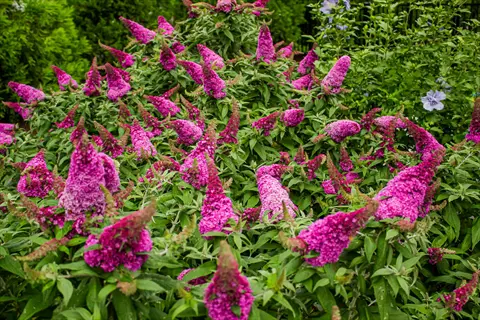
Butterfly Bush (Buddleja)
- Resistance: A regular on lists of flowering shrubs deer tend to skip.
- Deterrent: Aromatic foliage and a fast-growing habit make it a low browsing priority.
- Bloom: Long fragrant flower spikes in summer draw butterflies and hummingbirds.
- Light: Needs full sun and well-drained soil for the best flowering.
- Size: Typically 4 to 8 feet (1.2 to 2.4 m) tall depending on variety.
- Note: Choose sterile or non-invasive cultivars in regions where butterfly bush spreads.
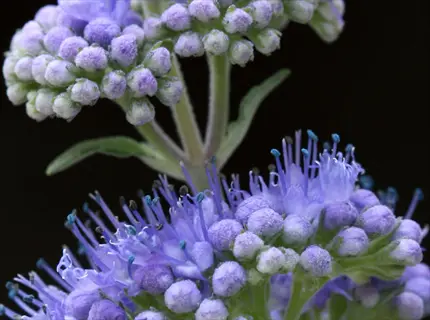
Bluebeard (Caryopteris)
- Resistance: Named by extensions among shrubs deer rarely damage.
- Deterrent: Sharp aromatic foliage releases a deer-repelling scent when brushed.
- Bloom: Hazy blue flowers blanket the plant in late summer.
- Light: Thrives in full sun with sharp drainage and tolerates drought.
- Size: A neat mound around 2 to 3 feet (0.6 to 0.9 m) tall and wide.
- Best use: Sunny pollinator borders needing late-season blue color.
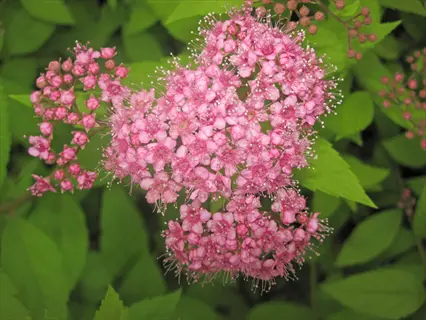
Spirea (Spiraea)
- Resistance: Commonly listed among flowering shrubs deer tend to avoid.
- Deterrent: Less palatable foliage keeps it lower on the browsing list.
- Bloom: Clusters of white or pink flowers appear from late spring into summer.
- Light: Performs best in full sun and tolerates a range of soils.
- Size: Compact types stay near 2 to 4 feet (0.6 to 1.2 m) tall.
- Best use: Easy-care mass plantings and low informal hedges.
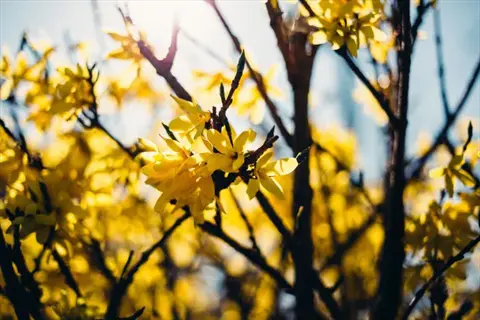
Forsythia
- Resistance: Listed by Cornell and others among shrubs deer seldom severely damage.
- Deterrent: Unremarkable flavor and quick growth make it a low priority for deer.
- Bloom: Bright yellow flowers blanket bare stems in very early spring.
- Light: Flowers best in full sun and adapts to most spots.
- Size: An arching shrub reaching 6 to 10 feet (1.8 to 3 m) tall.
- Best use: Early-season color and informal screening hedges.
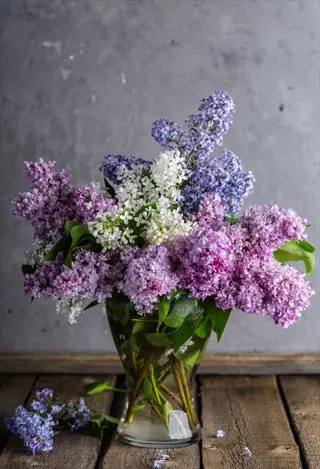
Lilac (Syringa)
- Resistance: A common name on deer-resistant flowering shrub lists.
- Deterrent: Heavy scented blooms and foliage deer tend to pass over.
- Bloom: Fragrant spring flower clusters in purple, pink, or white.
- Light: Needs full sun for the heaviest, most fragrant bloom.
- Size: Common types reach 8 to 15 feet (2.4 to 4.6 m), with dwarf forms available.
- Best use: Fragrant spring borders and classic cottage-garden hedges.
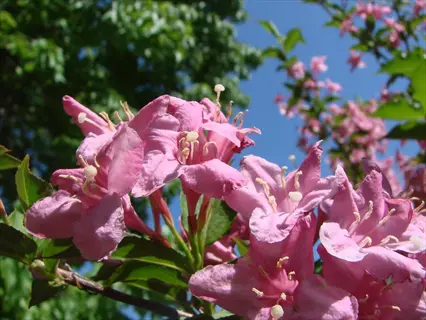
Weigela
- Resistance: Listed among flowering shrubs deer rarely browse.
- Deterrent: Foliage is not a deer favorite, leaving its blooms mostly intact.
- Bloom: Trumpet-shaped pink or red flowers in late spring attract hummingbirds.
- Light: Blooms best in full sun and tolerates part shade.
- Size: Most garden varieties reach 3 to 6 feet (0.9 to 1.8 m) tall.
- Best use: Colorful mixed borders and hummingbird gardens.
One quick note before you buy. Some popular blooming deer resistant shrubs like butterfly bush spread fast and count as invasive in parts of the country. If that is a worry where you live, look for sterile or non-invasive cultivars so you get the blooms without the spread.
Do not assume every hydrangea is deer safe. Most hydrangeas are readily browsed, especially tender new growth and flower buds, though panicle types tend to fare somewhat better.
Keeping Deer Away Beyond Plants
Resistant shrubs get you most of the way, but they are step one, not the whole plan. The surest way to keep deer out of garden beds is to stack several defenses so a hungry deer hits a wall at every turn. No single trick does it all.
Think of it like home security with layers. Your resistant shrubs are the locked door, your repellents are the alarm, and your fence is the fence around the yard. Skip any one layer and you leave an easy way in for a deer that wants to test your beds.
Be honest about repellents from the start. UGA research found that no store spray is 100% effective. Home remedies like soap, human hair, and animal dung are even less reliable. The strongest deer repellent sprays use putrescent egg or hot pepper, but even those fade and need help from the other layers.
A simple homemade deer repellent of egg and water can work for a while, yet it washes off in the rain just like the store-bought kind. Pair any spray with a buffer planting of strong-scented shrubs at the edge, and save your deer fence for the beds you care about most.
Choose rarely damaged shrubs as your foundation so deer have little reason to enter in the first place.
Ring the garden edge with strongly aromatic or prickly shrubs like junipers, boxwood, and barberry to discourage deer at the perimeter.
Apply repellents before deer start feeding and rotate between scent and taste types so they do not get used to one product.
Protect prized plantings with fencing that is tall, angled, or doubled, since a determined deer can clear an eight-foot fence.
Refresh sprays after heavy rain and through late winter, when hungry deer pressure on the garden peaks.
One more thing about that fence. A motivated deer can clear a standard eight-foot fence, so a short garden fence barely slows them down. To really stop them, go tall, angle the top outward, or run two shorter fences a few feet apart so the deer cannot judge the jump.
Apply repellents as early in the season as possible, before deer establish a feeding habit on your shrubs. Putrescent egg and capsaicin sprays are among the strongest, but none are fully reliable on their own.
When Deer Resistance Breaks Down
Resistance is a preference, not a promise. A deer resistant shrub works like a less popular item on a menu. It stays on the plate while better food sits nearby, but the moment the kitchen runs out of everything else, that item gets eaten too. Three forces decide when deer eat resistant plants, and none of them care what a plant tag claims.
The first force is deer population density. When a herd grows past what the land can feed, the deer strip the easy food fast and then start working down the list. A shrub that deer skip in a quiet suburb can get browsed hard in a neighborhood packed with animals. More mouths than food means even tough shrubs take damage.
The second force is seasonal deer pressure, and late winter is the worst stretch. Grass is gone, acorns are gone, and tender browse is months away. Hungry deer push onto evergreens and fat buds they would walk past in June. Here is a real case from one state's experts. When too many deer crowd the land, they strip the lower leaves off shrubs they would skip in summer. That hits even a tough plant like red cedar. The deer leave a bare deer browse line up the trunk. Green growth shows only above where a deer can reach.
The third force is plain taste. Deer learn local food the way you learn a grocery store, so one animal browses a shrub the herd next door ignores. This is also why published lists sometimes contradict each other. Resistance shifts by region, herd size, and season, so a plant rated safe in one state shows up as browsed in another. No list is a guarantee, only a strong head start.
Knowing this keeps your expectations honest. You are not buying a force field. You are stacking the odds so deer pick your neighbor's garden first during the lean weeks. Pair a strong list with smart placement and a backup repellent in winter, and the breakdown stays rare instead of routine.
5 Common Myths
Some shrubs are completely deer proof and deer will never touch them no matter how hungry the local herd gets.
No plant is truly deer proof. Extension programs rate shrubs as rarely or seldom damaged, and hungry deer will browse almost anything when food is scarce.
If a shrub is labeled deer resistant at the nursery, deer in every region will reliably leave it alone all year.
Resistance varies by region, season, and individual deer taste. Published lists sometimes contradict each other, so treat any label as a guide rather than a guarantee.
Planting shrubs right against the house keeps deer away because they are too nervous to approach a home so closely.
Proximity to a house does not stop hungry deer, especially in late winter. They will browse foundation plantings when preferred food runs out elsewhere.
Homemade remedies like soap bars, human hair, and coffee grounds are dependable ways to keep deer out of a garden.
Extension research finds these home remedies unreliable. Deer often ignore them within days, so they work best only as part of a rotating, layered defense.
A standard garden fence is always enough to stop deer from reaching shrubs and other plants inside the yard.
A motivated deer can clear an eight foot fence. Effective deer fencing usually needs to be tall, angled, or doubled to reliably keep determined animals out.
Conclusion
The big idea behind deer resistant shrubs is simple. Resistant means deer skip the plant most of the time, not that they never touch it. No shrub is truly deer proof, and even the experts say so. So you build a planting that gets browsed far less, instead of chasing a magic plant that does not exist.
Your shortlist falls into clear groups. Need a green screen all year? Lean on boxwood, Japanese pieris, and inkberry holly. For color, deer skip butterfly bush, spirea, and weigela. These are shrubs deer avoid because of bitter taste or strong scent. Want a hedge? Boxwood and arrowwood viburnum hold their shape and shrug off most browsing.
Trust the ratings when you can. Rutgers ranks 527 plants. The best picks all carry the top grade. So start your short list with three of them: boxwood, arrowwood viburnum, and bayberry. That top A grade is the closest thing you get to a safe bet. It beats guessing from a random list online.
One tactic alone rarely holds. The strongest plan stacks a few of them. You pair deer resistant plants with a scented buffer of mint or sage. You rotate repellents so deer never settle in. You add fencing where the pressure runs high. Smart deer resistant landscaping layers these together so a failure in one spot does not cost you the whole bed.
Plan hardest for late winter, when food runs short and deer test every plant you own. A thoughtful, layered garden will be browsed far less than a bare one, even in that lean stretch. No garden is ever fully deer proof, but the right shrubs and a few smart habits will keep your yard green while the neighbors replant.
Glossary
- Browse line
- The bare zone on a shrub or tree where deer have eaten all the foliage they can reach from the ground.
- Buffer planting
- A protective border of strong-scented or prickly shrubs planted around a garden to discourage deer from entering.
- Capsaicin
- The hot compound in chili peppers used in deer repellents to make foliage taste unpleasant when a deer bites it.
- Deer resistant
- A plant that deer rarely browse, but that is not fully protected when deer are hungry or numerous.
- Panicle hydrangea
- A cone-flowered hydrangea type that tends to fare somewhat better against deer than other hydrangeas.
- Putrescent egg repellent
- A deer repellent made from rotted egg solids that smells foul to deer and helps keep them away from plants.
- Rarely Damaged
- The top deer-resistance tier in the Rutgers rating system, given to plants deer almost always leave alone.
- Semi-evergreen
- A shrub that keeps some of its leaves through winter in mild climates but may drop them where winters are cold.
External Sources
Frequently Asked Questions
What is the most deer-resistant shrub?
Boxwood is widely cited as the most reliably deer-resistant shrub, rated A or Rarely Damaged by Rutgers, alongside arrowwood viburnum and bayberry.
What smell do deer hate the most?
Deer dislike strong pungent aromas. Shrubs and scents they tend to avoid include:
- Junipers and other resinous evergreens
- Boxwood foliage
- Aromatic herbs like sage and lavender
- Putrescent egg and garlic based sprays
What is the most deer-resistant evergreen?
Boxwood is the most reliable deer-resistant evergreen, with Japanese pieris, junipers, inkberry holly, and mountain laurel close behind.
Are hydrangeas deer resistant?
Most hydrangeas are not deer resistant and are readily browsed, especially new growth and buds, though panicle hydrangeas tend to fare a little better.
What flowering shrubs are deer resistant?
Deer tend to avoid these flowering shrubs:
- Bluebeard (caryopteris)
- Butterfly bush
- Spirea
- Forsythia
- Lilac
- Weigela
What can I plant around my garden to keep deer away?
Plant a buffer of strongly aromatic or prickly shrubs such as junipers, boxwood, bayberry, and barberry around the garden edge to discourage deer from entering.
What is the strongest deer repellent?
Putrescent egg solids and capsaicin (hot pepper) repellents are among the strongest, but extension specialists stress no repellent is 100 percent effective.
Do coffee grounds keep deer away?
Coffee grounds are an unreliable deer deterrent. Like soap, hair, and dung, they may help briefly but deer quickly ignore them once hungry.
What is the cheapest way to keep deer out of your garden?
The cheapest reliable approach combines planting resistant shrubs with rotated low-cost homemade egg or cayenne sprays rather than relying on one method.
How far away can a deer smell a person?
Deer have an exceptional sense of smell and can detect human and other scents from hundreds of yards away under the right wind conditions.

