
Introduction
If you want a houseplant that survives almost anything, snake plants are the easiest place to start. They shrug off low light, skipped waterings, and forgetful owners better than just about any plant you can buy. You will find them in offices, dorm rooms, and dim hallways for one simple reason: they are very hard to kill.
You also know how every care guide reads the same. The same list, the same tips, the same recycled claims. This one is different because it sticks to what plant scientists and extension offices have actually proven. You get honest snake plant care here, not a copy of the page next door.
Let me set the name straight first. The plant you know is now called Dracaena trifasciata. It was moved out of the Sansevieria group back in 2017. Many people still call it mother-in-law's tongue for its stiff, sword-shaped leaves. Those leaves can grow up to 4 feet long. It comes from West and West-Central Africa, where the soil stays dry and tough.
Here is where this guide parts ways with the crowd. Almost every article repeats the old NASA air-purifying claim without question. But a peer-reviewed 2019 Drexel University study looked at 30 years of data. It found that potted plants do not clean a real room's air in any real way. You deserve the true story, not the hype.
So that is the promise. This is a low-maintenance houseplant that rewards patience. But too much water will rot the roots. Below you will learn the care basics and how to water it the right way. You will also get the best light and placement, the honest air-quality truth, the main varieties, and what pet owners need to know.
Snake Plant Care Basics
Good news for anyone who forgets to water their plants. The snake plant thrives on the kind of neglect that kills most houseplants. Snake plant care comes down to a handful of settled numbers, and once you know them you can leave the plant alone for weeks at a time.
Last spring I lifted my eight-year-old Laurentii out of its pot at the kitchen table, expecting a tangle in fresh soil. The roots had wound themselves into a tight white spiral, packed against the walls of the same pot it had sat in since I bought it. They held the exact shape of the container, and they were firm and pale all the way through.
That root ball is why this plant earns its name as a low-maintenance houseplant. The real danger is not forgetting it, it is loving it too much. Overwatering causes root rot, and root rot is the number one way you can kill a snake plant. Leave yours dry for a month or more and a healthy plant comes back none the worse.
The numbers below come straight from plant experts at major universities. The sources agree so closely that you can trust every figure. Treat them as the settled basics, not one gardener's guess.
Soil is the part most people get wrong. Snake plants want well-draining soil that lets water rush through fast, so reach for a cactus mix or stir extra perlite into regular potting soil. Just as important, pick a pot with drainage holes in the bottom. Without them, water pools at the roots and rot sets in.
Keep your plant warm, above 50°F (10°C), and it stays happy as a houseplant in any climate. Grown outdoors, it only survives year-round in USDA zones 10a to 12b. You barely need to worry about repotting snake plant roots either. Penn State puts it at roughly once every 5 years. As my root-bound Laurentii proved, you can leave yours cramped in the same pot for a long time.
Watering and Root Rot
The base of my Laurentii went soft and yellow one February, right where the leaves meet the soil. I had kept watering it every week through a dark winter because the top looked a little dry. So I stopped cold and let the soil bake out for almost three weeks. The plant pushed out a firm new shoot by spring, and the yellowing leaves never spread past the two I lost.
That soft base was early root rot, and it teaches you the real danger fast. Penn State Extension says overwatering is the primary cause of death for this plant, and root rot is its most common affliction. The good news cuts the other way too. The same plant can sit a month or more with no water at all and come out no worse for wear.
So the rule for how often to water snake plant soil is simple. Wait until it is fully dry, then soak it deeply. In the growing season that lands at roughly every 2 to 6 weeks, depending on your light and pot size. A good snake plant watering schedule is less a calendar and more a finger test an inch into the soil.
Winter watering is where most new owners slip, and it is the exact trap I fell into. The plant barely grows in low winter light, so it drinks almost nothing. NC State Extension puts the cold-month cadence at just every 1 to 2 months. Keep your warm-season habit going through January and you set up the slow soggy rot that killed my lower leaves.
Your leaves will tell you which way you have gone wrong before the roots do. Overwatering snake plant roots shows up as soft mushy bases, droopy falling leaves, and broad yellowing. Too little water reads as wrinkled curling leaves or crispy brown tips. The table below ties each symptom back to its cause so you can self-diagnose fast.
Never let the pot sit in a saucer of standing water. Empty it after watering so the roots are never left soaking, which is how root rot starts.
If you build one habit as a new owner, make it watering restraint. Nearly every problem on that table traces back to too much water, not too little. When you are unsure, wait another week. This plant forgives a dry spell far more easily than a wet one.
Light and Best Placement
Few houseplants are as easy to place as snake plants, and that flexibility is their real charm. They grow best in bright indirect light, yet they shrug off the dim, shaded spots where most plants would sulk and drop leaves. So the question is not really whether your room has enough light. It is which of the good options you want to use.
Aim for about 2 to 6 hours of partial or indirect sun each day for steady, healthy growth. Picture bright indirect light like this: the spot is bright enough to read a book without flipping on a lamp, but no sunbeams ever land on the leaves. A few feet back from an east or north window hits that mark. Harsh direct sun from a hot afternoon window is the one thing to skip, since it can scorch and bleach the leaf surface over time.
Where to put a snake plant has an easy answer: almost anywhere indoors. Snake plant low light tolerance means dim hallways, north-facing corners, and interior rooms all work fine. A snake plant bedroom setup is a calm, low-care pick, and the plant copes with the softer light most bedrooms have. Bathrooms with a small window suit it too, as long as the soil still dries out between waterings. The best place for snake plant greenery is wherever you want an easy plant and a fussier one would quit.
Bright Indirect Light Spots
- Best growth: A few feet back from an east or north window gives the bright indirect light that keeps variegated leaves coloring up well.
- Why it works: The plant gets steady, gentle light all day without the harsh direct beams that can scorch and bleach the leaf surface.
- Good rooms: Living rooms, home offices, and kitchens with curtained or filtered windows suit this light level nicely.
Low-Light Corners And Hallways
- Surprising tolerance: Snake plants handle dim corners and interior hallways better than nearly any other common houseplant on the market.
- Slower pace: Growth slows noticeably in low light, but the plant stays healthy and keeps its upright, architectural shape for a long time.
- Smart use: Reach for low-light corners when you want greenery somewhere a fussier plant would simply decline and drop leaves.
Bedrooms And Bathrooms
- Bedroom fit: A snake plant is a calm, low-care choice for a bedroom and tolerates the lower light most bedrooms naturally have.
- Bathroom fit: Steady warmth and indirect light from a small bathroom window suit the plant, as long as the soil still dries out between waterings.
- Pet note: Keep it out of reach in any room shared with cats or dogs, since the leaves are toxic if chewed.
Spots To Avoid
- Harsh direct sun: A hot, south-facing windowsill in full afternoon sun can scorch and pale the leaves over time.
- Cold drafts: Avoid spots beside drafty doors or unheated rooms that dip below about 50 degrees Fahrenheit (10 degrees Celsius).
- Wet, dark basements: Combining very low light with damp, cool conditions invites the root rot that snake plants are most prone to.
The Air-Purifying Truth
You have seen the claim a hundred times. Snake plant air purifying powers that scrub your home and pump out fresh oxygen while you sleep. The story sounds great, and it comes from real science, but the popular version skips the part that matters most for your bedroom.
The whole idea traces back to the NASA clean air study from 1989. Researchers sealed plants inside small plexiglass boxes. Then they watched the plants slowly pull out VOCs like benzene and formaldehyde. The plants did remove those chemicals, so that part is true. The catch is the setup. A sealed one-cubic-meter lab box is nothing like your bedroom.
Your room has doors, gaps under them, vents, and an air system that swaps the air all day long. That constant exchange is the thing a sealed box never had. So when people ask do snake plants clean the air in a real home, the honest answer needs that context. Lab results from a tiny box do not scale up to a ventilated space you actually live in.
- Tiny sealed box of about one cubic meter with no airflow at all.
- Plants slowly removed some VOCs like benzene and formaldehyde.
- Conditions never match a normal ventilated home or office.
- Doors, gaps, and ventilation exchange the air constantly.
- You would need 100 to 1,000 plants per square meter to compete.
- A couple of open windows clean the air far faster than plants.
Plants are great, but they don't actually clean indoor air quickly enough to have an effect on the air quality of your home or office environment.
A 2019 Drexel University study set the record straight. The team looked back at about a dozen studies from the last 30 years and ran the math. To match the cleaning power of normal room ventilation, you would need somewhere between 100 and 1,000 plants per square meter. That is a jungle, not a houseplant on a shelf. Even cracking two windows beats a room full of pots.
The other half of the myth is the snake plant oxygen at night claim. You may have read that 6 to 8 plants per room produce life-sustaining oxygen. NASA never said that. The agency confirmed it made no such call. Other people tacked that number onto the research later. Snake plants do take in carbon dioxide at night, but the oxygen they add to your air is too small to notice.
None of this makes snake plants a bad buy. They are still tough, striking, and forgiving plants that thrive where almost nothing else will. You just want to keep one because it looks good and survives your busy schedule, not because you think it scrubs your air. Plant it for the right reasons and you will never feel let down.
Snake Plant Varieties
The golden-edged Laurentii glows in the morning light at my east window, its tall leaves striped with creamy yellow. A few inches over on the same sill, my compact Hahnii bird's nest sits in a tidy rosette, no taller than a coffee mug. I bought them both the same week, and I feed them from the same watering can. Yet they suit two very different spots in your room. You can see the contrast the moment you walk in, and it shapes where you should put yours.
Every one of these snake plant varieties is the same plant at heart. The science name is Dracaena trifasciata, and they all sit in the family Asparagaceae. The tall upright types grow stiff leaves up to 4 feet (1.2 m) long. Each leaf is 2 to 4 inches (5 to 10 cm) wide and sits in a tight rosette. You may still hear people call them mother-in-law's tongue, the old name that stuck around.
The big split between the types of snake plants comes down to color and shape, not care. A plain green form forgives almost anything, but a variegated snake plant asks for one small favor. Give it a bit more bright indirect light, or those yellow and silver markings fade back toward ordinary green over time.
One more thing trips people up when they try to make more plants. The yellow leaf edges and other variegation often vanish if you grow from leaf cuttings. The cutting just reverts to plain green. Divide the pups at the base instead, and your markings stay true to the parent.
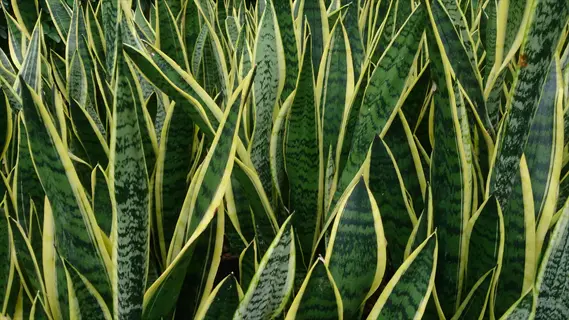
Laurentii
- Look: Tall green leaves edged in bright creamy yellow, the most recognizable and widely sold snake plant variety.
- Light need: Give it a little more bright indirect light than plain types so the yellow margins stay vivid rather than fading.
- Size: Upright leaves reach close to the species maximum of about 4 feet (1.2 m) tall in good conditions.
- Propagation: Divide pups to keep the yellow edge, since leaf cuttings usually revert to plain green.
- Best use: A striking floor or shelf plant where its height and color contrast can stand out.
- Care: Treats exactly like other snake plants, just with slightly more light to preserve the variegation.
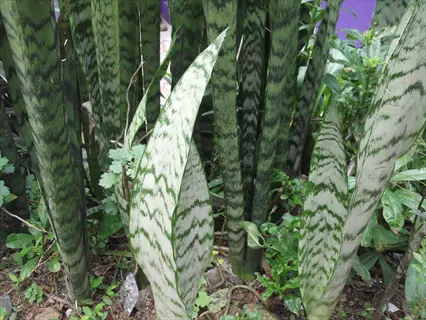
Zeylanica
- Look: Deep green leaves with wavy horizontal banding and no yellow edge, a classic mother-in-law's tongue form.
- Light need: Very forgiving and holds its color well even in lower light, since it has no variegation to lose.
- Size: Sturdy upright leaves that can approach 3 to 4 feet (0.9 to 1.2 m) over time.
- Propagation: Easy from both division and leaf cuttings because there is no variegation to worry about losing.
- Best use: A reliable, budget-friendly choice for beginners and low-light corners.
- Care: Among the most neglect-tolerant types, perfect for forgetful waterers.
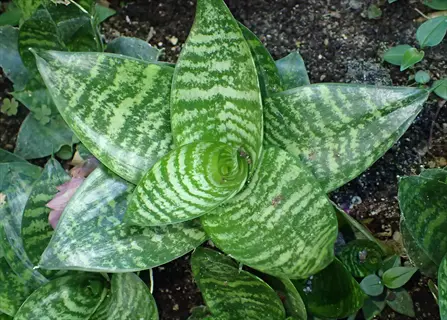
Hahnii Bird's Nest
- Look: A compact rosette of short leaves that stays low, forming a tidy bird's-nest shape on a desk or shelf.
- Light need: Tolerates low to bright indirect light like its larger relatives, with no special demands.
- Size: Stays small at roughly 6 to 8 inches (15 to 20 cm) tall, unlike the tall upright types.
- Propagation: Spreads by pups that you can divide to make more compact clusters.
- Best use: Ideal for small spaces, windowsills, and tabletop arrangements.
- Care: Same dry-soil, low-water routine as full-size snake plants.
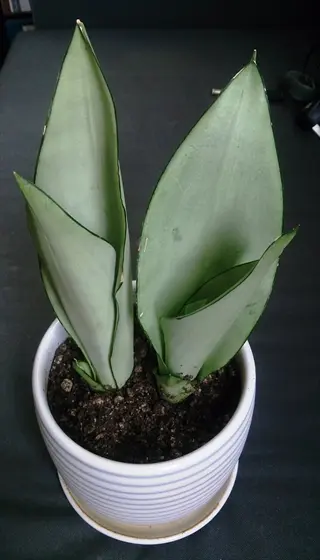
Moonshine
- Look: Pale, silvery-green leaves with a soft sheen that brighten a space without any strong markings.
- Light need: Prefers steady bright indirect light to keep its silvery tone from dulling to ordinary green.
- Size: Upright leaves of moderate height, typically reaching 1 to 2 feet (0.3 to 0.6 m) indoors.
- Propagation: Best kept true by division, as the pale color can shift through leaf cuttings.
- Best use: A modern, minimalist accent plant for bright rooms.
- Care: Standard snake plant care with attention to keeping light levels consistent.
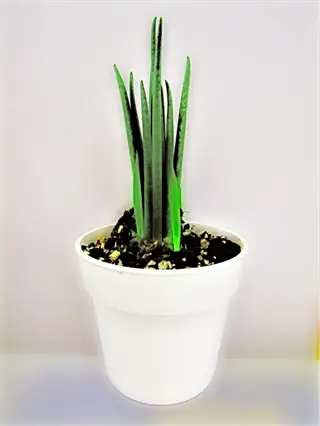
Cylindrica
- Look: Round, cylindrical spear-like leaves instead of flat blades, sometimes braided when sold.
- Light need: Handles the same range as flat-leaf types, from low light to bright indirect.
- Size: Stiff cylindrical leaves that can grow several feet long over many years.
- Propagation: Divide offsets at the base to expand a clump reliably.
- Best use: A sculptural, architectural option for a contemporary look.
- Care: Same overwatering caution applies; the thick leaves store plenty of water.
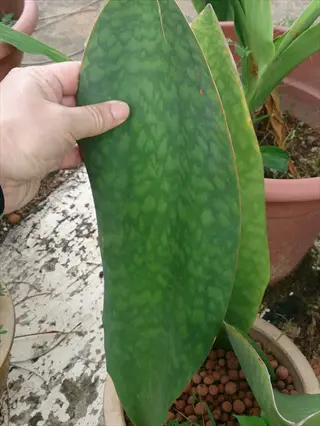
Whale Fin
- Look: A single broad, paddle-shaped leaf with mottled patterning, prized as a statement specimen.
- Light need: Bright indirect light keeps the large leaf strong and well-marked.
- Size: One dramatic leaf that can grow wide and tall, unlike the multi-leaf rosette types.
- Propagation: Slow to multiply; division of pups is the most reliable route.
- Best use: A collector's centerpiece where a single bold leaf makes the impact.
- Care: Especially sensitive to overwatering given its slow growth, so keep the soil on the dry side.
Pick the form that fits your light and your space, then treat it like any other snake plant. The bold-colored types earn a spot near a brighter window, while the plain green ones thrive in the shady corner that kills most houseplants. Whatever you choose, the dry-soil, low-water routine stays the same across the whole group.
Toxicity and Pet Safety
If you own a cat or dog, you have likely asked the big question first. Are snake plants toxic to pets? The short answer is yes. But the full picture is far less scary than that one word sounds. Every kind carries the same risk. The danger only shows up when a pet chews and swallows a leaf.
The trouble comes from natural compounds called saponins. The plant makes them inside its tough leaves. A snake plant toxic to cats is just as risky for dogs, and a snake plant toxic to dogs can bother horses and kids too. The ASPCA says a pet that bites a leaf may show nausea, vomiting, and diarrhea. NC State Extension rates the poison level as low, so a small nibble is rarely a real crisis.
- Placement: Set snake plants on high shelves, plant stands, or rooms pets cannot reach so curious cats and dogs cannot chew the leaves.
- Know the signs: Watch for nausea, vomiting, drooling, and diarrhea, which are the main symptoms if a pet bites a leaf.
- Severity: Poison severity is rated low, so a small nibble is rarely a true emergency, though large amounts can cause more discomfort.
- If ingested: Call your veterinarian, or the ASPCA Animal Poison Control hotline at (888) 426-4435, and bring a leaf sample if you can.
- Teach children not to put any houseplant leaves in their mouths.
Here is the calm part. Saponins taste bitter, so most pets spit out a leaf after one chew and never go back. I've seen cats sniff a snake plant once and stroll off bored. If your cat or dog does swallow some, call your vet or the ASPCA Animal Poison Control hotline at (888) 426-4435 and bring a leaf sample if you can. The team can tell you in minutes whether you need to act or just watch and wait.
So you do not need to give up the plant to keep a safe home. Many people who want pet-safe houseplants simply set their snake plant on a high shelf or in a room the animals skip. Smart placement and a little supervision handle the whole problem, and you still get one of the easiest plants you can grow.
Snake plants are toxic to cats, dogs, horses, and children because of saponins. Keep them out of reach, and save the ASPCA poison hotline (888) 426-4435 just in case.
5 Common Myths
Snake plants are powerful air purifiers that clean your home and remove harmful chemicals from the air you breathe.
Peer-reviewed research found a real room would need 100 to 1,000 plants per square meter to match normal ventilation, so the effect is negligible.
A few snake plants in a bedroom produce enough oxygen at night to noticeably improve the air and your sleep.
The nighttime oxygen release is real but tiny; NASA never claimed a handful of plants could meaningfully sustain a room's oxygen.
Snake plants are nearly impossible to kill, so you can water them often and place them almost anywhere without worry.
They are forgiving, but overwatering causes root rot, the single most common way owners actually kill a snake plant.
Snake plants are completely safe houseplants, so there is no reason to worry about curious pets or small children nearby.
All snake plants contain saponins and are toxic to cats, dogs, horses, and children, causing vomiting, nausea, and diarrhea if chewed.
Snake plants need a sunny windowsill with plenty of direct sunlight to grow well and stay a healthy green color.
They prefer bright indirect light and tolerate low light very well, while harsh direct sun can actually scorch their leaves.
Conclusion
Snake plants earn their reputation as one of the most forgiving houseplants you can own. Good snake plant care comes down to a few honest facts, not the marketing hype you see everywhere. Get those facts right and your plant will reward you for years.
The biggest risk is always water. Overwatering snake plant roots leads to rot, and that single mistake kills more of these plants than anything else. So let the soil dry out, and skip the watering can if you are not sure. Bright indirect light is ideal, but the plant will tolerate a dim corner without complaint. You only need to repot it about every 5 years, which makes it a true low-maintenance houseplant.
Be honest with yourself about the snake plant benefits too. This plant is wonderful for its bold looks and its easy care, not because it scrubs your air clean. The 2019 Drexel research showed that effect is negligible in a real room. You would need hundreds of plants per square meter to match a single open window.
So enjoy a plant that is close to unkillable. Keep it out of reach of cats and dogs, since the leaves are toxic to pets. Resist the urge to fuss over it, and trust that accurate care beats hype every time. With that, you can keep a snake plant alive for many years, even decades.
Glossary
- bright indirect light
- Light bright enough to read by without a lamp, but where no direct sunbeams land on the leaves.
- CAM photosynthesis
- A water-saving photosynthesis process used by snake plants that releases a small amount of oxygen at night.
- Clean Air Delivery Rate
- A measure of how quickly something removes pollutants from air, used to show plants clean air far slower than normal ventilation.
- Dracaena trifasciata
- The current botanical name for the snake plant, reclassified from Sansevieria trifasciata in 2017.
- root rot
- Decay of a plant's roots caused by soggy, poorly drained soil, and the most common way snake plants are killed.
- saponins
- Natural plant compounds in snake plant leaves that irritate the digestive system and make the plant toxic to pets and people if chewed.
- variegation
- The patterned coloring, such as yellow leaf edges, that is often lost when a snake plant is grown from leaf cuttings instead of division.
- VOCs
- Volatile organic compounds, the airborne chemicals like benzene and formaldehyde that plants were once thought to remove from indoor air.
External Sources
Frequently Asked Questions
How often should I water a snake plant?
Water only when the soil has fully dried out, roughly every two to six weeks in the growing season and every one to two months in winter.
Where is the best place to put a snake plant?
A spot with bright indirect light is ideal, but snake plants also tolerate low-light corners, hallways, and bedrooms very well.
Is it safe to sleep with a snake plant in your bedroom?
Yes, it is safe for people to sleep near a snake plant; the oxygen and air-purifying benefits are real but far too small to matter.
What are the disadvantages of a snake plant?
The main drawbacks are:
- Toxic to cats, dogs, horses, and children if chewed
- Slow growth compared with many houseplants
- Easily killed by overwatering and root rot
- Overstated air-purifying reputation
What is the lifespan of a snake plant?
With proper care a snake plant commonly lives for many years to decades, since it is a slow-growing, durable perennial.
What makes a snake plant happy?
A happy snake plant needs:
- Well-drained soil in a pot with drainage holes
- Bright indirect light, with tolerance for low light
- Infrequent, deep watering only when soil is dry
- Warm room temperatures above about 50 degrees Fahrenheit
Is a snake plant lucky for your home?
In feng shui tradition snake plants are seen as protective and lucky, though this is cultural belief rather than scientific fact.
How many snake plants should be in a bedroom?
Choose snake plants by how the room looks and feels, since even several plants cannot meaningfully change a bedroom's air quality.
Is the snake plant the most unkillable indoor plant?
Snake plants are among the most durable and forgiving houseplants, easily grown and hard to kill except by overwatering.
Are snake plants toxic to cats and dogs?
Yes, snake plants are toxic to cats and dogs because of saponins, causing nausea, vomiting, and diarrhea if chewed.