
Introduction
Bare soil is a problem waiting to happen. It bakes in the sun, washes away in the rain, and grows weeds faster than you can pull them. Ground cover plants fix all three at once. These low-growing plants spread into a dense carpet that shades the dirt, holds it in place, and crowds weeds out before they get started. Think of them as a living mulch that fills in the gaps grass and bark never reach.
The payoff here is real, not marketing. One big study pooled 85 peer-reviewed trials in the journal Soil and Tillage Research. Ground cover cut runoff by 48.5% and soil loss by 70.5% versus bare, tilled ground. That data comes from farm fields. So treat it as proof the idea works, not a promise for your exact yard. Plants that cover the ground protect the ground.
Most quick guides run around 1,000 words and stick to a plant list. This one digs deeper. You get picks for the spots that give people the most trouble. That means ground cover for shade under trees, plus tough options for hot full sun, raw slopes, and weedy beds. You also get the science behind weed control and erosion, the steps to plant it right, and the honest catch. Some popular plants spread out of control, and this guide shows you how to fence them in with simple edging.
One idea ties this whole guide together. Match the plant to the spot you already have. That is the core advice from Miri Talabac, a horticulture lead at Maryland Extension. You have better luck when you pick plants that fit your site as it is. Trying to bend the site to fit a fussy plant is the hard road. Do that and the work mostly takes care of itself. Want a full lawn alternative or just a fix for one bare corner? Read your site first. Then pick from there.
Best Ground Cover Plants
By the third summer, my own sunny slope beside the driveway was a solid purple carpet of creeping thyme. Before that it was raw, washed-out dirt that lost a little more soil with every hard rain. I planted small plugs one autumn, and they crept downhill on their own. The bees showed up the first June, and the bare seasons that used to streak that bank with mud were gone.
Bare soil cannot hold a slope, but the right spreader can. That is the real job of ground cover plants, the low growers that knit across your open ground and choke out weeds. Most stay well under 24 inches (61 cm) tall, so they sprawl sideways instead of up. Give them time and they fill your space, with full coverage by the end of the third growing season. You get a living carpet where bare dirt used to sit.
Each plant below spreads in its own way, so I note how it moves for you. Some trail and root as they go. Some send out runners, and others creep by underground stems or seed themselves. That spread mechanism tells you how fast it fills your bed and whether you will need to edge it back. I grow creeping thyme and sweet woodruff myself, and you can trust the rest for tough, reliable habits in your soil and light.
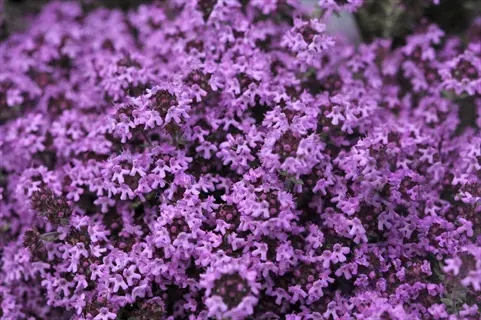
Creeping Thyme
- Best for: Full sun, hot dry slopes, gaps between pavers, and lean soils where many plants struggle to thrive.
- Habit: A low, mat-forming creeper, well under 24 inches (61 cm), that hugs the ground and spreads outward steadily.
- Spreads by: Trailing stems that root as they go, so it knits into a dense weed-suppressing carpet over time.
- Bloom: Tiny pink to purple flowers in early summer that draw bees and other pollinators to the planting.
- Care: Drought tolerant once established and happiest in well-drained soil with plenty of direct sunlight.
- Bonus: Releases a pleasant herbal scent when brushed or lightly walked on, unlike most cover plants.
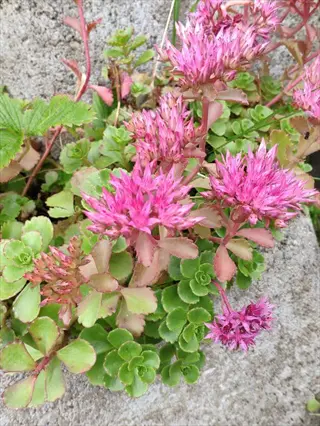
Sedum (Stonecrop)
- Best for: Full sun, rocky banks, dry borders, and water-wise xeric plantings that get little supplemental water.
- Habit: Low, succulent foliage forming a tidy spreading mat, well under the 24 inch (61 cm) ground cover range.
- Spreads by: Creeping stems and easy rooting, filling bare ground without becoming hard to manage.
- Bloom: Star-shaped summer flowers in yellow, pink, or red that attract pollinators to the garden.
- Care: Highly drought tolerant, storing water in fleshy leaves, and needs sharp drainage to thrive.
- Bonus: Many types stay evergreen or semi-evergreen, holding cover and color through the colder months.
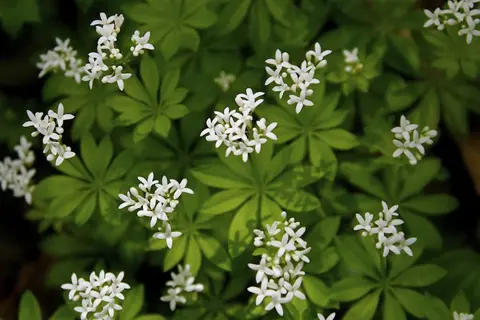
Sweet Woodruff
- Best for: Dry shade, woodland beds, and shady strips under trees where lawn grass refuses to fill in.
- Habit: A soft, low spreader with whorled leaves that forms a fresh green carpet in shaded ground.
- Spreads by: Creeping rhizomes and self-seeding, knitting quickly into a dense mat in the right shade.
- Bloom: Clouds of small white star flowers in late spring that brighten dim corners of the garden.
- Care: Prefers moist, humus-rich soil and shade; tolerates dry shade once it has settled and established.
- Bonus: A favored native-friendly alternative to invasive shade ivy, with a sweet hay scent when dried.
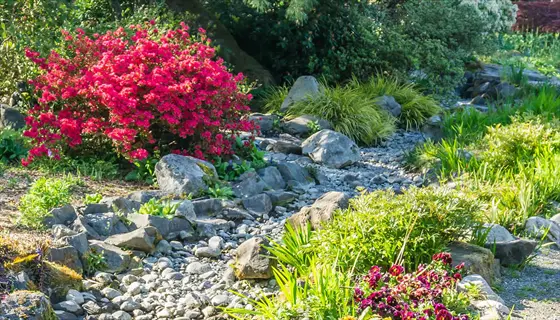
Creeping Phlox
- Best for: Sunny slopes, banks, rock gardens, and edges where a sheet of spring color holds the soil.
- Habit: A dense, low, mat-forming evergreen creeper that stays compact and well under 24 inches (61 cm).
- Spreads by: Trailing stems that root along the ground, building a thick mat that resists weeds.
- Bloom: A vivid carpet of pink, purple, blue, or white flowers in spring that nearly hides the foliage.
- Care: Wants full sun and well-drained soil; a light trim after flowering keeps the mat tidy and dense.
- Bonus: Its dense spreading roots help anchor sloping ground, making it a popular choice for banks.
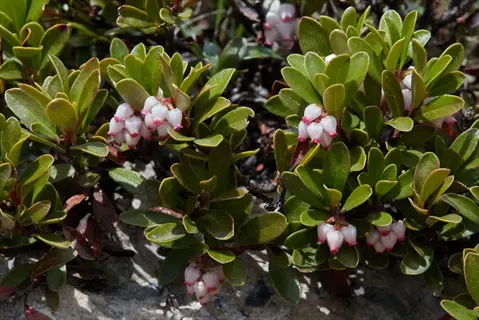
Bearberry
- Best for: Sunny, dry, sandy, or poor sites and slopes where tougher, low-water cover is needed.
- Habit: A low, woody, trailing evergreen shrub that forms a glossy mat across difficult ground.
- Spreads by: Long trailing branches that root where they touch soil, slowly building dense cover.
- Bloom: Small pink-white bell flowers in spring followed by red berries that feed birds and wildlife.
- Care: Very drought tolerant and low maintenance once established, thriving in lean, well-drained soil.
- Bonus: Evergreen leaves give year-round cover and a reddish winter tint in cold weather.
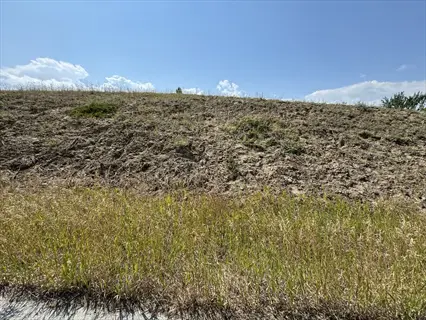
Creeping Juniper
- Best for: Full-sun slopes, banks, and large open areas needing tough, low-care evergreen erosion control.
- Habit: A spreading, low, woody evergreen conifer that forms a wide carpet of needled foliage.
- Spreads by: Long horizontal branches that extend outward and root, covering wide ground over time.
- Bloom: Grown for foliage rather than flowers, with blue-green to silvery needles and small berry-like cones.
- Care: Drought tolerant, sun loving, and very low maintenance once its roots are well established.
- Bonus: Deep, anchoring roots make it a reliable choice for stabilizing soil on exposed slopes.
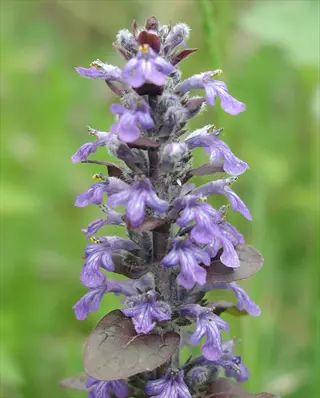
Bugleweed (Ajuga)
- Best for: Part shade to shade, damp spots, and quick fill where a fast spreader is wanted.
- Habit: A low rosette-forming spreader with glossy, sometimes bronze or purple, leaves close to the soil.
- Spreads by: Above-ground runners (stolons) that root quickly, making it one of the faster cover plants.
- Bloom: Spikes of blue-purple flowers in spring that rise above the foliage and attract pollinators.
- Care: Easy and adaptable, but its speed means it benefits from edging to keep it in bounds.
- Bonus: Note that bugleweed is flagged as invasive in some regions, so check local guidance before planting.
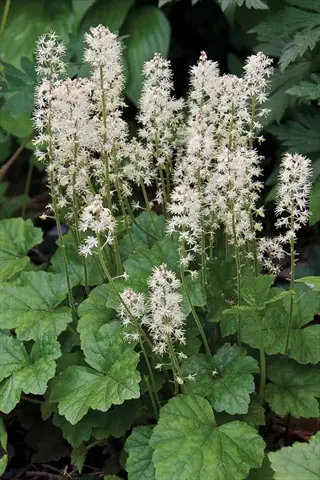
Foamflower
- Best for: Shade and woodland gardens, native plantings, and moist shady beds beneath trees.
- Habit: A clumping, low shade perennial with lobed leaves that slowly forms a soft green colony.
- Spreads by: Short runners and clumping growth, spreading gently rather than aggressively over time.
- Bloom: Airy spikes of foamy white to pink flowers in spring that light up shaded ground.
- Care: Prefers moist, rich, woodland soil in shade and rewards that with healthy, steady growth.
- Bonus: A well-behaved native ground cover that supports pollinators and rarely outgrows its space.
Match the plant to your spot and the rest gets easy. Hot dry banks want creeping thyme, sedum, or juniper, while your shady beds call for sweet woodruff or foamflower. For cover that holds its color in winter, pick an evergreen ground cover like bearberry or creeping juniper. Most of these are perennial ground cover plants too, so they come back stronger each year and fill in wider without making you replant.
Ground Cover for Every Situation
The right plant depends on your worst patch of yard. Shade and full sun ask for opposite plants, and a slope needs a different job done than a weedy bed. Match the plant to the spot you actually have, and the work mostly takes care of itself after that.
Shade and sun sit at opposite ends. A ground cover for shade like sweet woodruff or wild ginger fills the dry, dim strips under trees where grass gives up. A ground cover for full sun faces the other extreme. Creeping thyme, sedum, and bearberry want heat and lean soil, and these drought-tolerant ground covers shrug off dry spells once their roots take hold.
Slopes and weeds are jobs, not spots. A ground cover for slopes such as creeping juniper or creeping phlox sends roots deep to hold soil and slow runoff on a bank. For a weedy bed, you want a plant that knits into a thick mat and shades out the seedlings before they ever sprout.
One trap catches new gardeners here. A plant that spreads fast is not always invasive, and an invasive plant is not always the fastest grower. The two traits overlap but do not always line up, so a vigorous pick can be perfectly safe in your area while a slower one runs wild. Check your local invasive list before you plant, not after.
Color comes at a price too. Flowering and fruiting ground covers need more upkeep than the plain evergreen types. If you want the least fuss, lean toward an evergreen mat that holds its cover all year. A water-wise ground cover like sedum or thyme gives you both low care and low thirst, and that combination is hard to beat for a hot, dry yard.
Success is more likely when you choose plants that suit the current site conditions, instead of trying to change conditions to meet the needs of particular plants.
How Ground Cover Stops Weeds
A weed needs sunlight to sprout from a seed near the soil surface. A dense mat of ground cover to stop weeds blocks that light before the seed ever wakes up. The leaves shade the ground, and the roots claim the water and food that a weed seedling would need to push through.
This crowding does more than choke out weeds. The same thick layer of growth acts as living mulch over the whole bed. It softens the blow of every raindrop, holds the soil grains in place, and slows the water that would otherwise sheet off and carry your dirt with it.
The numbers back this up, and they are strong. One big review pooled 85 studies in Soil and Tillage Research. It found ground cover cut runoff by 48.5% and soil loss by 70.5% against bare, tilled ground. The cover also held food in the soil. Nitrogen loss fell 53.4% and phosphorus loss fell 56.9%.
Field trials show the same pattern on real slopes. On citrus farmland, a 2024 study in Frontiers in Plant Science found ryegrass cut soil loss 58.34% and surface runoff 27.17%. These come from farm research, so treat them as proof the effect is real rather than an exact promise for your back garden.
Remove every weed before you plant, not after. Once a ground cover knits together, pulling weeds out of it is very difficult, and weed pressure stays highest in the first two years.
The benefit goes beyond clean dirt and fewer weeds. A 2014 PLOS ONE study in orchards found that ground cover raised helpful predator bugs by about 85 to 87% and cut pests by more than 30%. The dense growth gives spiders and beetles a place to live, and they hunt the aphids that would chew on your plants. Diverse plant cover feeds the whole food web, from insects up to birds.
Picture a bare slope after a hard rain. The water carves gullies, the soil washes to the bottom, and weeds move into the gaps. Now picture that same bank under a knit of weed-suppressing ground cover. The roots grip the soil, the leaves break the rain, and the bank holds firm. That contrast is why erosion control plants earn their place on any tricky site.
Lean on this living system and it works as one. The same dense cover that does the weed blocking also handles runoff control and soil stabilization at no extra cost. You plant once, the mat fills in, and the ground stays put while the weeds stay out.
Planting and Caring for Cover
Most guides tell you to dig a hole and drop in the plant. The real work happens before that. As the experts at CSU put it, good soil prep is the key to a cover that fills in and stays. Get your ground right and the plants do the rest of the work for you.
Knowing how to plant ground cover the right way comes down to four things in order. You clear the weeds, fix the soil, space the plants, then mulch and water while roots take hold. Skip the soil preparation step and you will fight thin growth for years.
A dry shady strip ran along my north fence and stayed bare for two summers. Sweet woodruff went in one autumn and just sulked there, thin and patchy, with bald gaps showing the dirt. I dug the bed up again, worked it 8 to 10 inches (20 to 25 cm) deep, and mixed in a thick layer of compost. By the third season it had knit into a solid green carpet. Do the same and you save yourself two wasted years.
Remove all existing weeds before planting, since taking them out after the cover fills in is very difficult. If using glyphosate, wait 10 to 14 days before planting.
Work the soil 8 to 10 inches (20 to 25 cm) deep and mix in a 2-inch (5 cm) layer of organic matter, or amend with 3 to 5 cubic yards of compost per 1,000 square feet.
Set plants in staggered rows for the quickest cover, spacing them so they will knit together as they grow rather than crowding immediately.
Apply a 2-inch (5 cm) mulch layer for weed control until plants establish, and water regularly through roughly the first three months while roots settle in.
Plant in autumn, then spring, avoiding summer; expect full coverage by the end of the third growing season, with weed pressure highest in years one and two.
Your ground cover spacing decides how fast the bare patches close up. Set plants in staggered rows and space them so they reach toward each other as they grow. Pack them tight and you waste plants. Space them too far and you wait an extra year for the gaps to fill.
The question of when to plant ground cover has a clear answer. Autumn wins because the soil stays warm and rain does most of your watering for you. Spring is the solid backup. Summer is the worst time to try, with heat and dry spells working against young roots.
Be patient with the establishment time. Plan for full coverage by the end of the third growing season, and expect the heaviest weed pressure in years one and two. That 2-inch (5 cm) mulch layer carries you through the early stretch while the plants are still too small to crowd weeds out on their own.
How It Spreads and Stays Tidy
A ground cover earns its keep by spreading. That same trait is what sends it into the lawn, the flower bed, and the neighbor's yard if you let it. Knowing how a plant moves is the whole secret to keeping it where you want it.
University of Maryland Extension lists six ways ground covers spread. A plant might creep across the soil, travel under it, sprout from its roots, or scatter seed nearby. Each path needs a different fix, so the plant in your garden decides how you fence it in.
Think of it like plumbing. A spill on the surface stops at a raised lip or strip of edging. A leak under the floor needs a barrier sunk into the slab. Surface runners give in to above-ground edging, while plants that travel underground need a barrier sunk down into the soil to block them.
Stolons (Above-Ground Runners)
- How it spreads: Sends out horizontal stems across the soil surface that root wherever they touch down.
- Examples: Bugleweed and creeping plants spread this way, knitting into a dense mat fairly quickly.
- How to contain it: Above-ground edging works well, since the runners travel on the surface where a raised barrier stops them.
Rhizomes (Underground Stems)
- How it spreads: Pushes horizontal stems below the soil surface that send up new shoots some distance away.
- Examples: Sweet woodruff and many vigorous spreaders travel underground, surfacing well beyond the original plant.
- How to contain it: Below-ground edging sunk into the soil is needed, because surface barriers will not stop underground stems.
Suckering and Offsets
- How it spreads: Suckers rise from spreading roots, while offsets are small plantlets that form beside the parent.
- Examples: Woody spreaders sucker from the roots, and rosette plants like hens-and-chicks multiply by offsets.
- How to contain it: Deeper edging limits suckering roots, while offsets are easy to lift and replant or remove by hand.
Self-Seeding and Bulblets
- How it spreads: Some ground covers drop seed that sprouts nearby, and a few form tiny bulblets that grow into new plants.
- Examples: Self-seeders pop up around the planting, gradually widening the patch beyond where you first set them.
- How to contain it: Deadhead before seed sets and lift stray seedlings or bulblets early while they are still small.
Plant Responsibly
- Why it matters: Several popular ground covers are invasive in many regions and can escape into natural areas.
- Watch out for: English ivy, periwinkle, bugleweed, and creeping Jenny are flagged in some areas, so check local guidance first.
- Better choices: Where these are a problem, native spreaders such as foamflower or sweet woodruff give cover without the risk.
One word of caution carries more weight than any edging trick. A few popular ground covers count as invasive plants in many regions. They jump the garden fence into woods and wetlands, where they crowd out wild plants. English ivy, periwinkle, bugleweed, and creeping Jenny all show up on those lists, so check your local guidance before you plant.
Keep one fine point in mind here. A fast, pushy plant is not always an invasive one, and the two traits do not always go together. Knowing how to contain ground cover is half the job. The best way to stop ground cover spreading into wild ground is to pick a native ground cover like foamflower or sweet woodruff from the start. You still get edging to hold the plant in, but you skip the bigger risk of an escape you cannot undo.
5 Common Myths
Any ground cover can be walked on like a lawn, so it makes a perfect grass replacement for busy play areas.
Most ground covers tolerate foot traffic poorly compared with lawn grass, so they suit areas you look at more than areas you regularly walk across.
Ground cover smothers weeds instantly, so you can plant it straight into a weedy bed and skip the cleanup.
Weeds must be removed before planting, because pulling them out once the cover has filled in is very difficult and weed pressure is highest in years one and two.
All spreading ground covers are friendly garden plants that are safe to plant anywhere you want fast cover.
Several popular ground covers, such as English ivy and periwinkle, are invasive in many regions and can escape into natural areas, so check local guidance first.
Ground cover is purely decorative and offers no real practical benefit beyond hiding patches of bare soil.
Research shows ground cover cut runoff by 48.5% and soil loss by 70.5%, while also suppressing weeds and supporting beneficial wildlife.
You can change any difficult site to suit the ground cover you like best, so plant choice barely matters.
Success is far more likely when you choose plants that suit current site conditions, instead of trying to change the conditions to fit a chosen plant.
Conclusion
The best ground cover plants are never one perfect pick for every yard. The right choice depends on your site. Match the plant to your shade, sun, slope, or weed problem, and lean on the situational picks above to point you toward the few that fit. A creeper that thrives in dry shade under trees will struggle in full sun, and the reverse holds true too.
These plants do real work, not just decoration. In farm trials, ground cover cut runoff by 48.5% and soil loss by 70.5% against bare, tilled soil. Those numbers come from tree-crop fields, so treat them as proof of the mechanism rather than a promise for your back garden. Still, the takeaway holds. A living mat of roots and leaves slows water, holds soil in place, and acts as living mulch that feeds the ground as it grows.
Two steps drive success more than the plant itself. First, clear out every weed before you plant, because pulling them later from a dense mat is brutal work. Second, prepare the soil well and dig it 8 to 10 inches (20 to 25 cm) deep so roots can spread and settle fast. Get those two right and almost any well-chosen plant will take hold. Skip them and even a low-maintenance ground cover will limp along.
One last word before you buy. A few of the fastest spreaders can escape into wild areas. A strong grower in one region can be a banned pest in another. Responsible planting means you check your local invasive list before you put a known runner in the ground. Choose well and you end up with a lawn alternative that works with your site instead of against it. That is the whole point. Read the conditions you have, then plant what wants to live there.
Glossary
- Clean tillage
- Keeping soil bare and regularly tilled with no plant cover, used as the comparison baseline in erosion research.
- Living mulch
- A low, spreading plant that covers bare soil the way mulch does, holding moisture and suppressing weeds while staying alive.
- Offsets
- Small new plantlets that form right beside a parent plant and can be lifted and replanted.
- Rhizomes
- Underground horizontal stems that travel below the surface and send up new shoots some distance from the parent plant.
- Runoff
- Rainwater that flows off the soil surface instead of soaking in, often carrying soil and nutrients away.
- Stolons
- Above-ground runner stems that creep across the soil surface and take root where they touch down.
- Suckering
- New shoots that rise directly from a plant's spreading roots, forming additional plants nearby.
- Xeric ground cover
- A water-wise spreading plant suited to dry, low-water sites such as hot slopes and parking strips.
External Sources
Frequently Asked Questions
What are ground cover plants?
Ground cover plants are low-growing, spreading plants, generally under 24 inches (61 cm) tall, that form a dense mat over bare soil and act as living mulch.
What is the best low maintenance ground cover?
The best low maintenance ground cover is one matched to your site. Strong easy options include creeping thyme, sedum, and bearberry in sun, and sweet woodruff in shade.
What is the fastest growing ground cover plant?
Fast spreaders include creeping thyme, creeping Jenny, and bugleweed. With good soil prep, most ground covers reach full coverage by the end of the third growing season.
Do ground cover plants stop weeds?
Yes. A dense ground cover shades the soil and crowds out weeds, but you must remove existing weeds before planting because removal afterward is very difficult.
Which ground cover plants are evergreen?
Evergreen ground covers keep foliage year round and need less upkeep than flowering types. Examples include creeping juniper, bearberry, and many sedums.
What is the best ground cover for shade?
Strong shade ground covers include sweet woodruff, wild ginger, foamflower, and bunchberry, all of which thrive where grass struggles to grow.
What is the best ground cover for slopes?
Spreading, deep-rooted plants like creeping juniper, creeping phlox, and sedum stabilize slopes. Research shows ground cover cut soil loss by up to 70.5%.
How do I prepare soil for ground cover?
Work the soil 8 to 10 inches (20 to 25 cm) deep and mix in a 2-inch (5 cm) layer of organic matter. Good soil prep is the key to success.
How do I stop ground cover from spreading?
Ground covers spread by runners, rhizomes, suckers, seeds, bulblets, and offsets. Above-ground edging contains runners while deeper edging contains rhizomes and suckers.
When is the best time to plant ground cover?
Autumn is the best time to plant ground cover thanks to warm soil and rainfall, followed by spring. Summer is the most difficult time to establish plants.