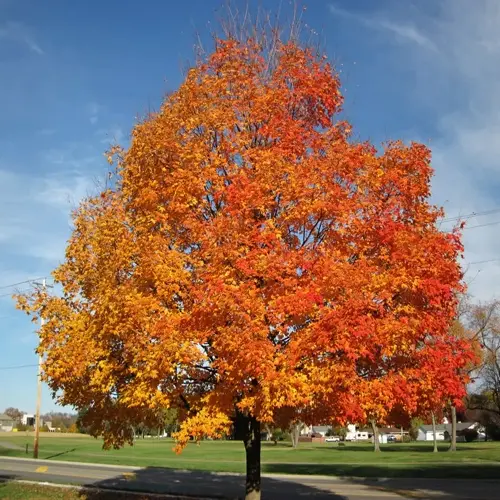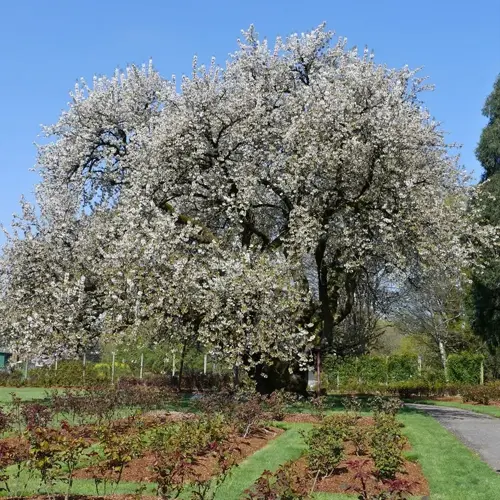

A 2 year old plum tree stands about 6 to 8 feet (1.8 to 2.4 meters) tall in most home orchards. That range is the normal young plum tree height, and your tree can land at either end of it depending on a few things you control.
Last June I stood next to my Stanley plum in the Zone 6 orchard and the top had already cleared my shoulder. I planted it as a short whip the spring before. In one season the leader shot up past my chin. New growth on a healthy plum can stretch up to 6 feet (1.8 meters) in a single year (University of Maine Extension).
So why the spread? Four things set the height of a 2 year old plum tree, and the first one matters most.
Rootstock
- Size control: A dwarf rootstock keeps the tree short, often 8 to 10 feet at full size, while a standard root runs 15 to 20 feet tall.
- At two years: A standard tree outgrows a dwarf at the same age, so two trees planted on the same day can differ by a foot or more by year two.
- Why it matters: This is the one trait you pick at the nursery, and you cannot change it later.
Variety
- Vigor: Strong growers like Stanley push taller than slow types, even on the same root.
- Habit: Some plums grow upright and reach for height, while others spread wide and stay low.
- Pick to match: Read the tag for mature size so the variety fits the space you have.
Soil and water
- Soil: Deep, rich ground feeds fast height, while thin or packed soil holds a tree back.
- Water: Steady moisture in the first two years drives the strong shoots that add real height.
- Together: Good ground and steady water can add a foot of growth over a stressed tree by year two.
This is why two gardeners can both grow a healthy plum and end up a foot apart by the second summer. One bought a standard tree and gave it rich soil. The other chose a dwarf and planted in tight clay. Both trees are fine, but the height tells a different story. I have watched this play out across two rows in my own orchard.
Pick your rootstock to fit your space before you buy. Go dwarf for a small yard or a spot near the house, and pick standard if you have room and want a big canopy. Match the tree to the gap you have, not to the gap you wish you had.
Once it is in the ground, shape the height with early pruning instead of letting the leader run wild. Cut the main stem back in the first winter to push side branches and slow the climb. A young plum that grows past your reach gets hard to pick and harder to spray, so guide it low while the wood is still soft. I top mine at about knee height the first winter and let three or four strong branches take over.
Go easy on the fertilizer in these early years too. A flood of nitrogen pushes tall, weak shoots that snap in wind and draw aphids. Let the roots set first, water through dry spells, and the height will come on its own. A steady tree beats a tall, floppy one every time.
Use plum tree height by age as a quick gut check, not a hard rule. A first-year whip sits around 3 to 4 feet, a two-year tree reaches that 6 to 8 foot band, and a mature tree settles at its rootstock size. If your tree tracks close to those marks, it is growing on pace.
Read the full article: Plum Tree Guide: Grow, Harvest, and Eat