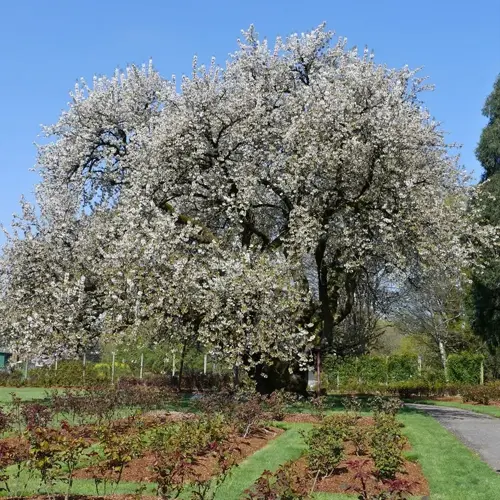

The third spring, I counted my first real handful of plums. I had planted a Methley and a Stanley as bare-root whips in my Zone 6 orchard. That spring they gave me maybe two dozen plums between them. The two springs before that gave me nothing but leaves and a few empty blossoms that dropped before they ever swelled. So the honest answer to plum tree fruiting time is this: most trees start bearing in their third year and reach full production around eight years after planting.
If you are asking when do plum trees fruit, the short version is that you wait. A whip planted this spring will not hand you a bowl of plums this summer or the next. Year one and year two are quiet on purpose, and that quiet is the tree doing its real job underground.
A young plum tree spends those first seasons building roots and a frame before it can carry a crop. Fruit is heavy, and the energy to grow and ripen it has to come from somewhere. The tree puts that early energy into a deep root system and strong scaffold branches first. Only once the structure can support the load does it start setting fruit you can actually pick.
Here is the timeline most growers see. The figures come from the University of Maine Extension.
Years 1-2
No real fruit. The tree builds roots and a strong branch frame to support a crop later.
Year 3
Bearing begins. Expect a small first crop, often just a handful of plums per tree.
Years 7-10
Full production arrives, often around the eight year mark with steady, heavy harvests.
So bearing begins in the third year, and full production lands somewhere between seven and ten years after planting. Eight years is the number to keep in your head. The exact pace depends on the variety, your climate, and how well the tree was cared for in those early seasons.
A grafted tree from a nursery has a head start here. The graft puts mature, fruiting wood on a young root, so it bears years sooner than a plum grown from a pit. A seedling tree can take much longer and may not even match the parent fruit. That is why almost every plum you buy is grafted rather than grown from seed.
You can nudge that timeline in your favor with a few choices up front. Start with a healthy nursery tree that has a clean, white root system and no cracked or girdled bark at the graft. A weak tree wastes its first year just trying to recover, which pushes your first crop back a season.
Pollination matters more than most new growers think. Many plums need a compatible pollinizer nearby to set fruit. So plant a second variety that blooms at the same time. My Methley helps pollinate the Stanley. That pairing is part of why both came into bearing together in that third spring.
One mistake that backfires is over-fertilizing a young tree. Pile on the nitrogen and you get tall, soft, leafy growth instead of roots and fruiting wood. Go light in those early years so the tree's energy goes into getting established, not into shoots you will only have to prune off.
Water and weeds deserve the same care while the tree is young. Keep the grass and weeds pulled back from the trunk so they do not steal water and nutrients from those new roots. Give the tree a deep soak during dry spells in its first two summers. Steady moisture early on builds the root system that carries every crop you pick later.
Counting the years to fruit plum tree by plum tree can test your patience, but the wait is short next to the decades of harvests that follow. Plant a strong tree, give it a partner, and feed it sparingly. By the third spring you should see that first handful, and by year eight your trees will be loaded enough to share.
Read the full article: Plum Tree Guide: Grow, Harvest, and Eat