
Introduction
The golden pothos is the plant most people meet first. You see its heart-shaped leaves trailing off a shelf in almost every coffee shop, office, and friend's apartment. It is the classic beginner houseplant. It forgives the mistakes that kill fussier plants. This guide gives you the pothos care steps you need, and it backs every claim with real sources instead of garden-blog folklore.
You might know this same plant by other names. Some shops sell it as devil's ivy, and its proper botanical name is Epipremnum aureum. It handles low light better than most plants. It shrugs off temperatures down to about 50 degrees Fahrenheit (10 degrees Celsius). It grows best when you keep your rooms between 65 and 75 degrees Fahrenheit (18 to 24 degrees Celsius), which is right where most homes already sit.
Pothos became one of the most common indoor plants sold during the houseplant boom, and the reason is simple. A single cutting roots in a plain glass of water on your windowsill, so one plant turns into ten. That ease is also where this guide goes further than most. We cite the ASPCA on why it harms cats and dogs. We explain the real NASA chamber context behind the famous air-cleaning claims. And we cover the actual science on why your plant almost never flowers.
Pothos is forgiving, but it is not foolproof. Beginners trip up in three spots: light, watering, and pet safety. Get those right and your plant will reward you for years. The sections ahead walk you through each one in plain steps, so you can stop guessing and start growing with confidence.
Golden Pothos Care Basics
Good pothos care comes down to five numbers, and once you know them the rest is easy. This plant wants bright indirect light, a drink only when the top inch of soil dries out, and warm room temperatures. Get those basics right and your vine will reward you for years.
Light is the first pillar, and pothos is easy to please here. It does best in bright indirect light near a window. But it also handles low corners well. SDSU Extension says it even thrives under office and dorm-room fluorescent lighting. That is why you see it on so many desks and shelves.
Pothos temperature needs are just as relaxed. SDSU Extension lists a comfy range of 65 to 75 degrees Fahrenheit (18 to 24 degrees Celsius). The hard floor sits around 50 degrees Fahrenheit (10 degrees Celsius). Most homes land right in that sweet spot. For pothos humidity, the plant likes a higher 50 to 70%, but it copes fine with the drier air most of us live in.
Feeding is light work too. Pothos is a light feeder. It only needs a balanced food about twice a month in the growing season, and none at all in winter. Skip the pothos fertilizer in the cold months and the plant just rests until spring. The quick facts below put all five numbers in one place.
Overwatering, not neglect, kills most pothos. A plant that droops perks up after a drink, but one left in soggy soil quietly rots at the roots.
Put it all together and pothos care feels closer to checking on a low-maintenance roommate than nursing a fussy plant. A quick weekly look is usually enough to spot dry soil or a drooping leaf before it becomes a problem. Touch the top of the soil, glance at the leaves, and move on with your day.
Light, Color and Varieties
My marble queen pothos clawed its way back from almost solid green over one summer on a bright shelf beside the kitchen window. Fresh leaves came in marbled white again, while the older ones stayed plain. The plant had spent a season in a dark hallway corner. The only light there came from a bulb I switched on for maybe an hour a day. That spot was so dim I had to squint to read a book. The marbling washed out leaf by leaf until the vine looked plain green.
Light and leaf color are really one topic with pothos, not two. The white and yellow parts of a leaf hold little chlorophyll, so they lean on the green parts to feed the plant. Give a variegated plant too little light and it fights back. It grows greener leaves that can feed the plant. SDSU Extension says these plants turn all-green when they do not get enough light. Pale or scorched leaves point the other way, a sign of too much direct sun. So bright indirect light is the sweet spot that keeps the pattern without burning it off.
If your plant has gone solid green, the fix is simple. Move it to a brighter indirect spot and wait for new growth, since the faded leaves it already has will not turn marbled again. The fresh vines come in with their color back. A true low light pothos like plain golden or neon pothos copes better in dim rooms because it has less variegation to lose in the first place. Marble queen asks the most of you here, so save your brightest window for it.
One word of warning before you trust an app to name your plant. Plant identification apps often mix up golden, marble queen pothos, and neon. The leaf shapes are nearly identical, so a green-reverted plant fools them even more. The varieties below sort out the real differences in look, growth, and how much light each one needs.
Golden Pothos
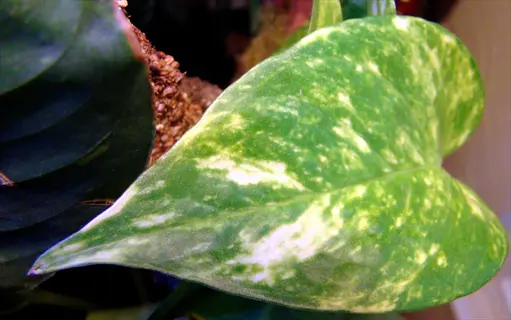
- Look: Heart-shaped green leaves splashed with buttery golden-yellow variegation that brightens any trailing display.
- Light: Holds its gold best in bright indirect light and slowly fades toward solid green in dim corners.
- Growth: Vigorous trailing or climbing vines that reach roughly 6 to 10 feet (1.8 to 3 meters) indoors over time.
- Care: The most forgiving of the group, shrugging off missed waterings and low light better than most houseplants.
- Best for: Total beginners who want a fast, rewarding plant for a shelf, mantel, or hanging basket.
- Note: This is the classic devil's ivy most people picture when they hear the word pothos.
Marble Queen Pothos
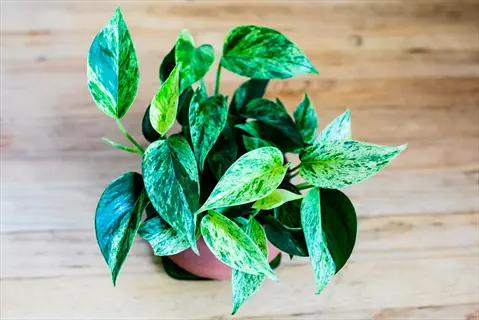
- Look: Dramatic white-and-green marbling that can make leaves look almost painted, with no two quite alike.
- Light: Needs noticeably more bright indirect light than golden pothos, since its white areas hold little chlorophyll.
- Growth: Slower than golden pothos because the pale leaf sections do less photosynthesis to fuel new vines.
- Care: Most prone of these varieties to reverting to green, so consistent bright light really matters here.
- Best for: Growers who love high-contrast foliage and can offer a reliably bright window spot.
- Note: Often mislabeled in stores, so check for the heavy white marbling to confirm what you have.
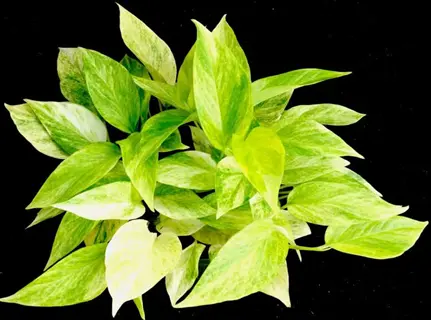
Neon Pothos
- Look: Solid, almost glowing chartreuse leaves with no variegation, bringing a punch of lime-green color.
- Light: Keeps its bright neon tone in good indirect light and dulls to a deeper green in shade.
- Growth: Grows at a pace similar to golden pothos and trails or climbs just as readily.
- Care: Just as beginner-friendly as golden pothos, with the same simple watering and light needs.
- Best for: Anyone wanting bold color from foliage alone without depending on variegation patterns.
- Note: New leaves emerge the brightest and deepen in color as they mature on the vine.
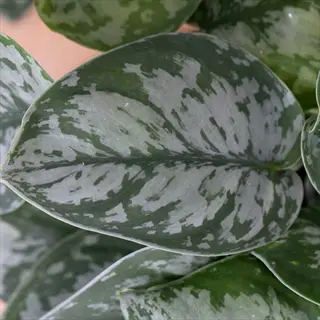
Satin Pothos
- Look: Silvery-spotted, slightly matte leaves on a plant that is technically a Scindapsus but sold alongside pothos.
- Light: Prefers bright indirect light to keep its silver markings crisp and well defined.
- Growth: Trails gracefully with smaller leaves, making a delicate counterpoint to bolder golden pothos.
- Care: Equally easy-going and tolerant of the same watering routine as true pothos varieties.
- Best for: Collectors who want the pothos look with a subtler, more textured leaf.
- Note: Strictly speaking it is a close relative rather than a true Epipremnum aureum pothos.
Match the variety to your room and you will save yourself a lot of grief. A marble queen on a north-facing shelf loses its pattern fast, while that same shelf keeps a neon glowing and a golden pothos happy. So pick your plant for the light you actually have, not the light you wish you had. Get that one choice right and the rest of pothos care gets a whole lot easier.
Watering and Root Rot
The lower leaves on my six-year-old golden pothos by the kitchen window went yellow over a couple of weeks, and a few showed small black spots. I had been giving it a drink every week without checking the soil first. So I stopped, waited until the top inch dried out, and the slide stopped. New growth came in green and firm within a month.
That whole mess came down to pothos watering habits, not the plant being fussy. The soil tells you what to do, so read it instead of following a calendar. Push a finger into the top inch and water only when it comes out dry.
Most pothos problems trace back to the same split. Black spots on the leaves mean the soil stays too wet, which is the first warning sign of overwatering pothos. Soft, drooping leaves usually mean the plant is thirsty and wants a drink. Dry, brown crispy edges mean it sat bone dry for too long.
Here is the part people miss about root rot. Pothos roots need air as much as they need water, and they suffocate when soil stays soggy for days. A pot with drainage holes matters far more than how often you water. It lets the extra water drain away instead of drowning the roots. One small tip helps too: let tap water sit out overnight before you pour it, so the chlorine can fade and the sensitive roots get an easier drink.
Hold off completely and let the top inch (2.5 cm) of soil dry out before you even think about watering again.
Slide the plant from its pot and inspect the roots; healthy ones are firm and pale, while rotted roots are brown, soft, and smelly.
Snip away any mushy brown roots with clean scissors so only firm, healthy root tissue remains to regrow.
Replant in fresh, well-draining potting mix in a pot with drainage holes, choosing a width that just fits the roots.
Give a modest drink and then return to letting the top inch dry between waterings to keep the soil from staying soggy.
Push a finger an inch (2.5 cm) into the soil before watering. If it feels damp, wait; if it feels dry, water thoroughly until it drains from the bottom.
Propagation and Pruning
Learning how to propagate golden pothos is the best part of owning one. A single healthy plant is really an unlimited supply of new plants, since every piece of vine with a node can grow into its own pothos. This matters more than it sounds, because cultivated pothos almost never sets seed. Nearly every pothos alive started as a cutting from another one.
Roots only sprout from a node, the small bump on the stem where a leaf meets the vine. When you take pothos cuttings, cut just below a node with clean scissors. Leave a few inches of stem and one or two leaves on each piece. The node goes in water, and the leaves stay above the surface to keep breathing.
Most people use water propagation, and it works great. The cuttings are forgiving and stay viable in water for a long stretch, so you don't have to rush them into soil. Set the glass in bright indirect light, swap the water once a week, and watch for small white roots in about two to four weeks.
Locate a node, the small bump on the stem where a leaf meets the vine, since roots can only sprout from there.
Use clean scissors to cut just below a node, leaving a few inches of stem with at least one or two leaves attached.
Place the cut end in a glass of room-temperature water with the node submerged and the leaves above the surface.
Set it in bright indirect light and refresh the water weekly; small white roots usually appear within two to four weeks.
Once roots reach an inch or two (2.5 to 5 cm), plant the cutting in moist, well-draining potting mix and water it in.
You can also skip the glass and root cuttings straight in soil. Push the node into moist, well-draining potting mix and keep it lightly damp. Soil-rooted cuttings often handle the move better, since they never have to switch from soft water roots to tougher soil roots. Bright indirect light still helps them along.
Pruning feeds the same cycle. To fix a leggy, bare-stemmed plant, cut just above a node instead of below it. That single cut pushes the vine to send out two new vines from that spot, which fills the plant out and makes it look fuller. And the piece you trimmed off is a fresh cutting, ready to root all over again.
Toxicity and Pet Safety
Most care guides drop one line about toxicity and move on. You deserve more than that. The short answer to is pothos poisonous is yes, but the danger is real and manageable once you know how it works.
The trouble is a crystal called the insoluble calcium oxalate. The leaves and stems are full of these sharp tiny crystals. When a pet or child bites a leaf, the crystals act like little needles in the mouth. That is why the burning starts right away instead of building up over hours.
So yes, pothos toxic to cats is a real warning, and the plant harms dogs and people too. The ASPCA lists golden pothos as toxic and names calcium oxalate as the cause. SDSU Extension backs this up and notes the plant can cause digestion problems and skin irritation in people, though it is not deadly. Treat it with respect, not fear.
What Makes It Toxic
- Toxic principle: The plant contains insoluble calcium oxalates, sharp microscopic crystals found throughout the leaves and stems.
- Who is affected: It is toxic to dogs, cats, and people if any part is chewed or swallowed.
- Source: The ASPCA lists golden pothos as toxic and names calcium oxalates as the cause.
Signs of a Problem
- In pets: Watch for oral irritation, intense mouth burning, heavy drooling, vomiting, and trouble swallowing.
- In people: SDSU Extension notes it can cause digestion problems and skin irritation, though it is not necessarily deadly.
- When to act: Call your vet or the ASPCA poison hotline at (888) 426-4435 if a pet chews the plant.
Keeping Everyone Safe
- Placement: Hang the plant or set it on a high shelf well out of reach of curious pets and toddlers.
- Handling: Wash your hands after pruning, since the sap can irritate sensitive skin on contact.
- Trailing vines: Tuck long vines up and away so a cat cannot bat at or nibble the dangling tips.
If a Pet Eats It
- Stay calm: Reactions are usually painful but not deadly, and most pets recover with prompt care.
- Rinse the mouth: Gently wipe or rinse your pet's mouth to remove any lingering plant material and crystals.
- Get advice: Contact your veterinarian or the ASPCA poison hotline at (888) 426-4435 right away for guidance.
The fix is simple pet-safe placement. Hang the pot or set it on a high shelf where curious paws and toddler hands cannot reach. Tuck the trailing vines up and away so a cat cannot bat at the dangling tips. This one habit removes almost all the risk.
If your pet does take a bite, stay calm and wipe out their mouth to clear any plant bits. Then call your vet or the ASPCA poison hotline at (888) 426-4435 for guidance. Most pets recover with quick care, so a smart spot on the wall lets you keep this plant and your animals happy.
Oral irritation, intense burning and irritation of mouth, tongue and lips, excessive drooling, vomiting, difficulty swallowing.
Air Purifying and Symbolism
You have seen the listings that sell the golden pothos as a one-plant air scrubber for your home. The marketing leans hard on a single famous study, and it leaves out the parts that matter most to you.
That study is the NASA clean air study from 1989. NASA did not run it to clean up living rooms. The goal was to scrub recycled air inside sealed space capsules, where there is no open window to let fresh air in.
In a sealed chamber the size of a small box, pothos sat on top of an activated carbon filter with forced airflow. The plant cut benzene and trichloroethylene from about 36 parts per million to barely detectable in two hours. A newer review, Much et al. 2025, reports up to 73% removal of some harmful compounds. Those numbers are real, but they come from a lab, not your couch.
Inside a small sealed chamber with an activated carbon filter and forced airflow, pothos slashed benzene and trichloroethylene to barely detectable levels within two hours.
In a normal, well-ventilated room without filters, researchers say the benefit is mostly psychological and aesthetic, since fresh air dilutes pollutants far faster than a few plants can.
So the honest take is simple. As a golden pothos air purifier, the plant does almost nothing you would notice in a normal room. Cracking a window moves more pollution out in minutes than a shelf of plants does in a day. Researchers are careful to say the same thing.
At this time the role of plants, though appearing [generally] positive, is not totally clear.
The plant carries meaning that has nothing to do with science, and that is fine on its own terms. In golden pothos feng shui, the trailing vines are read as a money plant that draws in wealth and steady fortune. Many people hang one near an entryway or a desk for that reason.
Plenty of growers keep one purely for golden pothos good luck. That custom runs deep across many cultures. Treat it as belief, not a proven effect. The real reason to grow this plant is honest and easy to back up. It looks great, it forgives your mistakes, and it thrives on a shelf where few other plants would survive.
5 Common Myths
Golden pothos cleans the air in your home as effectively as it did in the famous NASA clean air study.
The NASA result came from a tiny sealed chamber with carbon filters; in a normal ventilated home the air-cleaning effect is modest and uncertain.
Pothos is completely safe to keep around cats, dogs, and small children because it is just a leafy houseplant.
Pothos contains insoluble calcium oxalates and is toxic to pets and people, causing mouth burning, drooling, and vomiting if chewed.
A golden pothos needs lots of frequent watering to stay lush, so you should keep its soil moist at all times.
Constantly wet soil causes root rot; pothos grow best when the top inch of soil dries out between thorough waterings.
Golden pothos can only survive in bright sunny windows and will quickly die in any low-light room or office.
Pothos tolerate low light and fluorescent lighting well, though variegated leaves slowly fade toward solid green without bright indirect light.
Your golden pothos will eventually bloom indoors if you simply give it enough time, light, and patience.
Cultivated pothos almost never flower due to a natural gibberellin deficiency, so nearly all plants are grown from cuttings instead of seed.
Conclusion
Good golden pothos care comes down to three habits, and none of them are hard. Give the plant decent light, water it less than you think you should, and keep it well out of reach of curious pets. Get those right and the rest mostly takes care of itself.
This plant earns its easygoing name. It shrugs off a missed watering, and it holds up as a low light pothos when a bright window is not an option. Let the top inch of soil dry out before you water again, since soggy roots are the one mistake that actually kills it. The vines stay handsome even when you forget about them for a week.
Be honest with yourself about the rest. The leaves hold insoluble calcium oxalates, so they are toxic to cats, dogs, and people. The ASPCA lists it as a plant to keep away from pets that chew. Its fame as an air cleaner is overstated, and the famous study ran in a sealed chamber, not a living room. The real selling points are simpler. It is tough, it is pretty, and it forgives almost everything.
That toughness is also why devil's ivy spreads from home to home so well. My own pothos started as one rooted cutting in a jam jar on the kitchen sill, and three years later I have given away six of them. Snip a healthy vine below a node, drop it in water, and in a few weeks you have a rooted start to pot up or pass on. A single plant on your shelf can become a whole windowsill, then a gift for a friend. Pothos cuttings are how most people fall into the hobby, and this beginner houseplant is a fine place to start small and grow from there.
Glossary
- Aerial roots
- Roots that grow out from the stem above the soil and help a pothos grip and climb surfaces.
- Bright indirect light
- Plenty of daylight that reaches the plant without the sun's rays shining directly onto the leaves.
- Gibberellin deficiency
- A shortage of a natural plant hormone that explains why cultivated pothos almost never produce flowers.
- Insoluble calcium oxalates
- Sharp microscopic crystals inside pothos leaves and stems that cause burning irritation when chewed.
- Node
- The small bump on a stem where a leaf attaches and where new roots can grow from a cutting.
- Root rot
- Decay of a plant's roots caused by soil staying too wet for too long.
- Variegation
- The patches of white, cream, or yellow on a leaf where there is less green chlorophyll.
- Volatile organic compounds
- Airborne chemicals released by some materials indoors, such as benzene and formaldehyde, often shortened to VOCs.
External Sources
Frequently Asked Questions
How do you take care of golden pothos?
Give golden pothos bright indirect light, water when the top inch of soil dries, and keep rooms between 65 and 75 degrees Fahrenheit.
Do golden pothos like a lot of water?
No. Pothos prefer the top inch of soil to dry out between waterings, because constantly wet soil leads to root rot.
How can you tell if a pothos is happy?
A happy pothos has firm, glossy leaves, produces steady new growth, and keeps extending its trailing vines.
Do pothos like to climb or hang?
Pothos do both. They grow happily in hanging baskets, but climbing a moss pole produces larger, fuller leaves.
What is the lifespan of a golden pothos?
A golden pothos can live for decades with basic care, and propagating cuttings can keep the same plant going indefinitely.
Why is pothos called the devil's ivy?
Pothos is called devil's ivy because it is famously hard to kill and stays green even when grown in dark, low-light spots.
What are the disadvantages of golden pothos?
The main drawbacks are:
- It is toxic to cats, dogs, and people if chewed or eaten.
- It can escape and become invasive outdoors in warm climates.
- Variegation fades to plain green in low light.
Do pothos like wide or deep pots?
Pothos prefer wider pots over deep ones, since their roots spread out, and good drainage holes matter more than depth.
Is it okay to touch golden pothos?
Touching pothos leaves is fine, but the sap contains irritants, so wash your hands after pruning or handling cut stems.
Is golden pothos a lucky plant?
In feng shui, golden pothos is treated as a money plant believed to attract wealth and positive energy indoors.