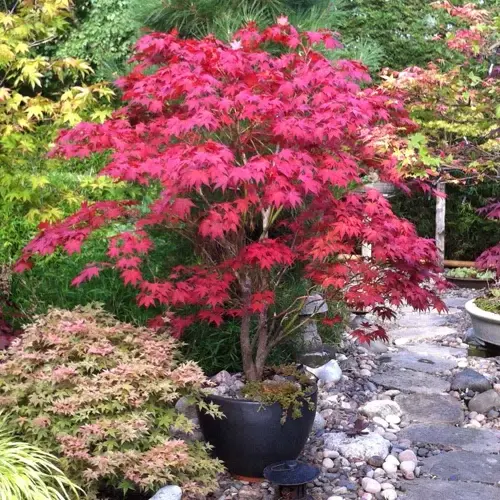
I dumped a whole winter's worth of grounds in a thick mat around the back-corner Legacy sugar maple in my upstate New York zone 5 yard. Within a few weeks the pile dried into a hard crust that shed water like a plastic lid. Rain ran right off it and pooled at the edge of the root zone. I raked the crust off and dropped it into the compost bin. It broke down with leaves and scraps before it ever touched the tree again.
So do coffee grounds maple trees actually benefit from? Yes, but only in small amounts and only the right way. Used coffee grounds for trees work fine as a minor soil amendment when you blend them into compost or mix them thinly into mulch. Pile them raw and thick, though, and they do more harm than good. The crust I made around that maple proved it fast. The grounds that should have fed the soil were starving it of water instead.
Here is why this happens. Grounds add a little nitrogen and a good dose of organic matter, and they feed the worms and microbes that keep your coffee grounds soil loose and alive. That part is real, and it helps. Earthworms love the stuff, and I see more of them every spring near my compost beds. But a thick raw layer packs down tight, repels water, and ties up nitrogen while it rots. The microbes need nitrogen to break the grounds apart. They pull it from the ground around them. So your maple can come up short on the very nutrient you thought you were adding. That is the trap with a big raw pile.
You do not need to worry much about pH here. Sugar maples like a soil pH between 5.5 and 7.3, which is a wide and forgiving range. Fresh grounds run a bit acidic, but most of that washes out into your cup. Used grounds sit near neutral once you brew them, so they will not swing your soil acidic the way people fear. A small handful blended into compost or mulch fits that range with no trouble at all. The heavy raw pile is the real risk, not the acidity. I have never seen a thin layer of grounds move a maple's soil reading in any way that mattered.
Use grounds this way and you will stay on the safe side of all of this:
- Compost first: Mix grounds into a compost pile with leaves and kitchen scraps, then spread the finished compost under your tree.
- Or sprinkle thin: If you skip the bin, scatter a light dusting and rake it into the top inch of soil. Never leave a thick mat sitting on the surface.
- Test before feeding: Run a soil test before you add any fertilizer so you know what your maple actually needs.
- Treat grounds as a small bonus for the soil, not a fix for a struggling tree.
A soil test matters more than any kitchen scrap you can spare. It tells you the real pH and which nutrients run short, so you feed your tree what it lacks instead of guessing. Grounds cannot fix poor drainage on their own. They cannot fix a tree planted too deep, and they cannot feed a hungry maple by themselves. Spend the small cost on a test first, and you will know whether your tree needs anything at all. Then you can decide if grounds even have a job to do.
My Legacy maple did fine once the grounds went where they belonged. Keep yours thin, keep them composted, and they earn a small place in your routine. Pile them raw and you get a water-shedding crust and a hungry tree underneath it. Thin and composted is the whole trick, and a soil test tells you the rest.
Read the full article: Sugar Maple: Care, Syrup, and Facts